You’ll find professional landscaping more cost-effective than DIY in Ellisville due to clay-heavy soils, unpredictable freeze-thaw cycles, and specialized equipment requirements create hidden expenses. Professionals possess terrain-specific expertise for soil amendments, drainage solutions, and cultivar selection that tolerates alkaline conditions. While quarter-acre properties demand 8-12 weekly maintenance hours, certified teams complete projects faster while avoiding costly remediation mistakes. Their ergonomic techniques prevent musculoskeletal injuries from handling 2,500-pound paver pallets and mature trees. Extensive warranty protection and evidence-based sustainable practices guarantee your outdoor space investment delivers long-term value and ecological resilience.
Key Takeaways
- Professional landscapers avoid DIY hidden costs like specialized equipment purchases, material waste, and expensive mistakes requiring remediation.
- Ellisville’s clay-heavy soils and freeze-thaw cycles demand expert knowledge in soil amendments, drainage solutions, and alkaline-tolerant plant selection.
- Certified professionals provide site-specific assessments ensuring proper plant compatibility, strategic placement, and sustainable native species selections for Missouri’s climate.
- Hiring professionals saves busy families 8-12 weekly maintenance hours while eliminating risks of musculoskeletal injuries from heavy lifting and equipment operation.
- Comprehensive warranty protection spanning 1-5 years safeguards homeowners against material defects and workmanship failures with documented maintenance protocols.
The Hidden Costs of DIY Landscaping Projects
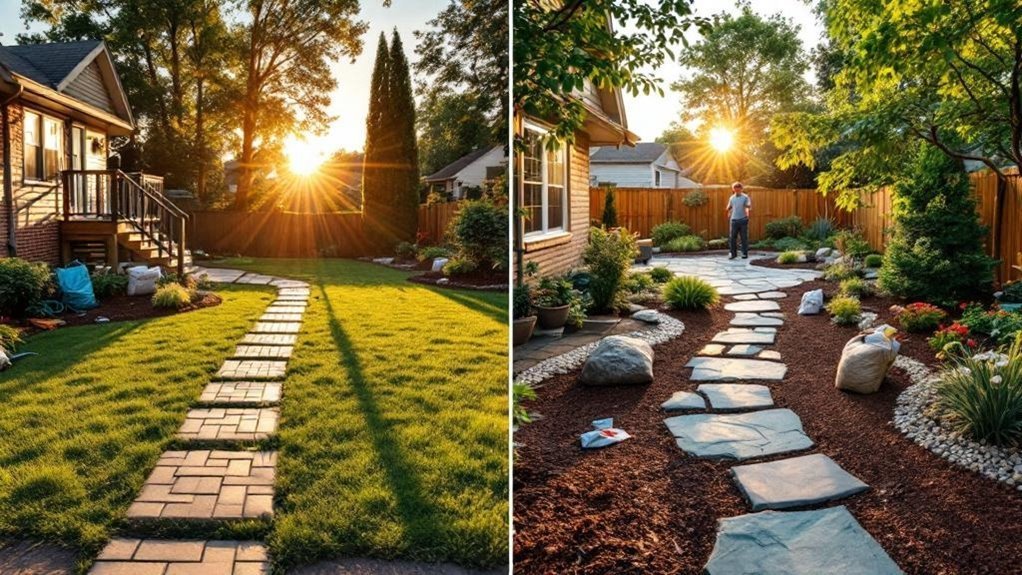
While DIY gardening initially appears cost-effective, homeowners frequently underestimate the financial burden of equipment acquisition, material waste, and corrective interventions. You’ll encounter budget overruns when purchasing specialized tools you’ll rarely use again—aerators, sod cutters, and compactors represent significant capital expenditures. Material calculations often prove inaccurate, resulting in excess mulch, pavers, or insufficient quantities requiring additional delivery fees. Project delays compound costs when you’re juggling responsibilities while serving your family and community commitments. Inexperienced grading leads to drainage problems requiring professional remediation. Improperly installed hardscapes settle unevenly, demanding costly reconstruction. When you factor in your time’s value and potential mistakes, professional gardeners deliver superior outcomes while freeing you to focus on meaningful service to others.
Ellisville’s Unique Soil and Climate Challenges
Since Ellisville sits at the convergence of Missouri’s shifting climate zone, your terrain faces clay-heavy soils with pH levels ranging from 6.8 to 7.5 and unpredictable freeze-thaw cycles that challenge plant establishment. Professional horticulturists understand this soil composition requires strategic amendments—incorporating organic matter, adjusting drainage patterns, and selecting cultivars that tolerate alkaline conditions. Climate variability demands expertise in hardiness zone changes, as Ellisville experiences both Zone 6a and 6b characteristics. You’ll need specialists who can implement proper root protection systems, design moisture management solutions, and choose plant materials that withstand temperature fluctuations. When you’re committed to creating environments that serve your family and community long-term, partnering with professionals who master these technical challenges guarantees sustainable results that honor your investment.
Professional Expertise in Plant Selection and Placement
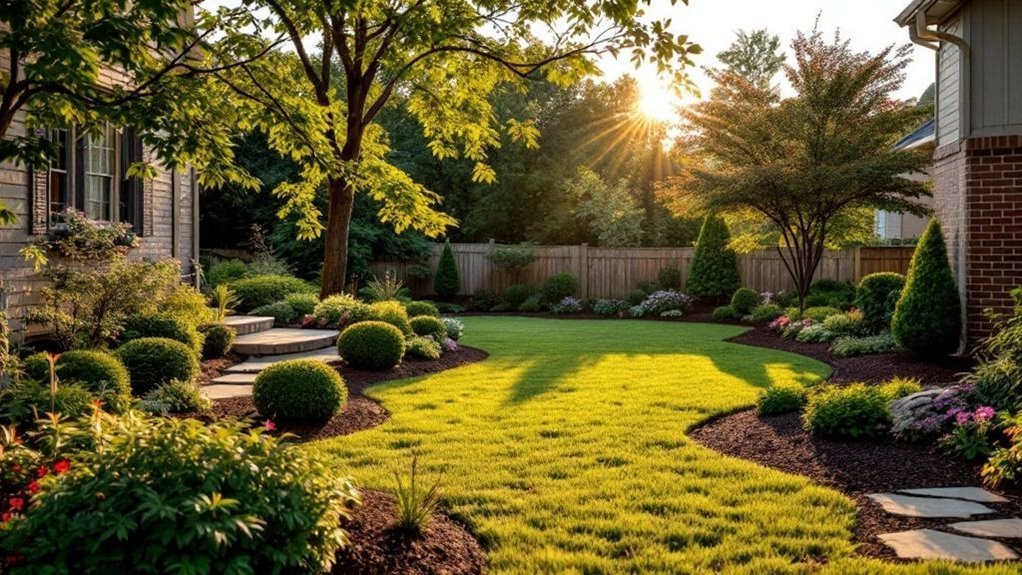
Since Ellisville’s microclimates create distinct growing conditions within individual properties, professionals conduct site-specific assessments that map sun exposure patterns, wind corridors, and moisture retention zones before recommending plant palettes. You’ll benefit from their understanding of plant compatibility—ensuring species share similar water, nutrient, and pH requirements while avoiding competitive root systems. Professionals strategically layer plantings by height, texture, and bloom sequences to maintain year-round visual interest and aesthetic balance. They’ll specify cultivars with proven hardiness ratings for Zone 6b conditions, selecting disease-resistant varieties that minimize maintenance demands. This expertise prevents costly mistakes like placing moisture-loving specimens in drainage swales or shade-preferring perennials in southern exposures. You’re ultimately investing in sustainable environments that serve your community through proper stewardship of resources.
Time Savings for Busy Professionals and Families
Professional grounds maintenance demands 8-12 hours weekly for a typical quarter-acre property when you account for mowing cycles, edge trimming, mulch replenishment, pruning schedules, and irrigation system adjustments. When you’re managing career responsibilities and family commitments, outsourcing outdoor upkeep isn’t luxury—it’s strategic resource allocation.
Professional services eliminate weekend yard work that competes with family involvement in community activities, youth sports, and volunteer initiatives. Your time management strategies improve considerably when you redirect those hours toward mentoring, coaching, or serving your neighbors. Licensed landscaping crews complete tasks in 90 minutes that consume your entire Saturday, applying specialized knowledge of turfgrass nutrition, seasonal pruning protocols, and integrated pest management. You’ll serve your household more effectively by focusing on relationships rather than repetitive maintenance tasks.
Access to Specialized Equipment and Materials
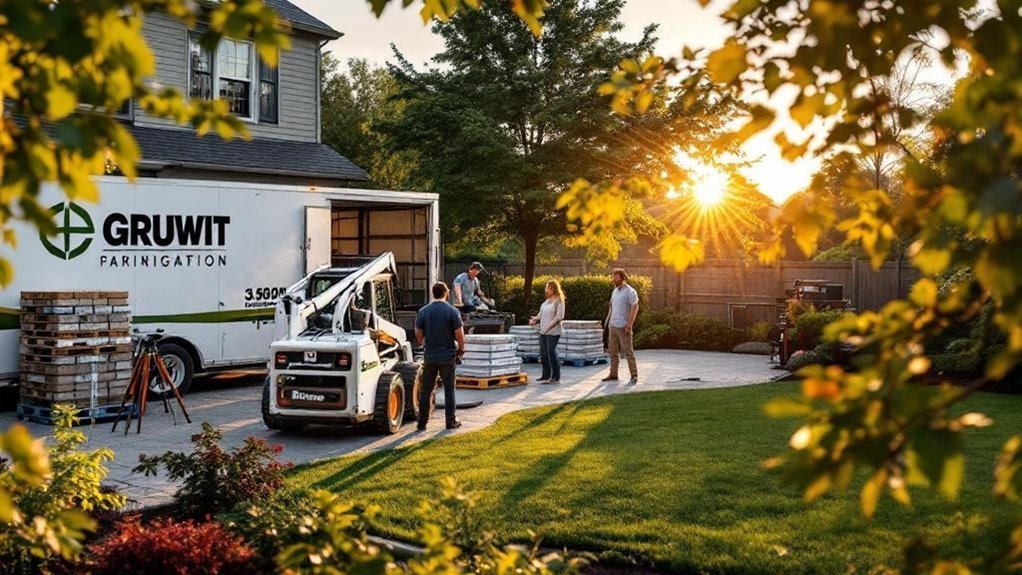
You’ll gain immediate access to commercial-grade equipment that would cost thousands to purchase outright—aerators, sod cutters, stump grinders, and specialized spreaders that homeowner models simply can’t match in power or precision. Professional groundskeepers maintain established relationships with wholesale nurseries and material suppliers, securing higher-quality plants, premium soil amendments, and hardscaping materials at contractor pricing you can’t access as a retail customer. This equipment advantage combined with superior material sourcing translates directly into faster project completion times and longer-lasting results that justify the service investment.
Professional-Grade Tools Matter
High-end gardening equipment—commercial-grade mowers, aerators, soil compactors, and precision irrigation tools—delivers results that consumer-grade alternatives can’t match. You’ll notice the difference immediately when professionals deploy specialized gardening tools that handle challenging terrain and dense vegetation efficiently. Equipment maintenance costs alone make ownership impractical for occasional use.
| Professional Equipment | Homeowner Alternative |
|---|---|
| Hydraulic sod cutters | Manual edging tools |
| Commercial zero-turn mowers | Residential push mowers |
| Truck-mounted sprayers | Handheld spray bottles |
| Laser-guided grading systems | Manual leveling methods |
Professional gardeners maintain calibrated equipment that guarantees precision results for your property. Their investment in specialized machinery—from stump grinders to trenchers—means you’re accessing tools worth thousands without the storage requirements or depreciation concerns. This equipment efficiency translates directly into superior outcomes for your gardening projects.
Quality Material Sourcing Advantages
Beyond equipment superiority, established gardening contractors maintain wholesale relationships with specialty nurseries, hardscape suppliers, and soil amendment manufacturers that aren’t accessible to retail customers. You’ll benefit from premium-grade topsoil, professionally blended mulches, and disease-resistant cultivars that big-box retailers don’t stock. These sourcing benefits translate directly into longevity and performance for your gardening investment.
Professional material quality extends to hardscaping components—pavers, retaining wall systems, and aggregate materials—where contractors access commercial-grade products with superior load ratings and freeze-thaw durability. They’ll source pH-balanced soil amendments, mycorrhizal inoculants, and specialized fertilizers formulated for your region’s specific deficiencies. This procurement advantage means you’re getting materials engineered for peak plant establishment and structural integrity, not consumer-grade alternatives designed primarily for shelf appeal and price-point competitiveness.
Long-Term Property Value Enhancement
While aesthetic improvements deliver immediate curb appeal, strategic outdoor design investments compound annual property values by 15-20% through sustainable design implementation. Professional landscapers engineer drainage systems, erosion control, and native plantings that reduce maintenance costs while maximizing property aesthetics. You’re investing in infrastructure that serves future homeowners and strengthens neighborhood appeal.
| Investment Timeline | DIY Depreciation | Professional ROI |
|---|---|---|
| Year 1-3 | Material failure, replanting costs | Established root systems, warranty protection |
| Year 4-7 | Erosion damage, drainage issues | Mature canopy development, thermal efficiency |
| Year 8-10 | Outdoor design replacement required | Peak valuation enhancement, ecosystem establishment |
Your commitment to professional outdoor design creates generational value, transforming properties into community assets while providing environmental stewardship that benefits everyone.
Sustainable Design Practices for Missouri Landscapes
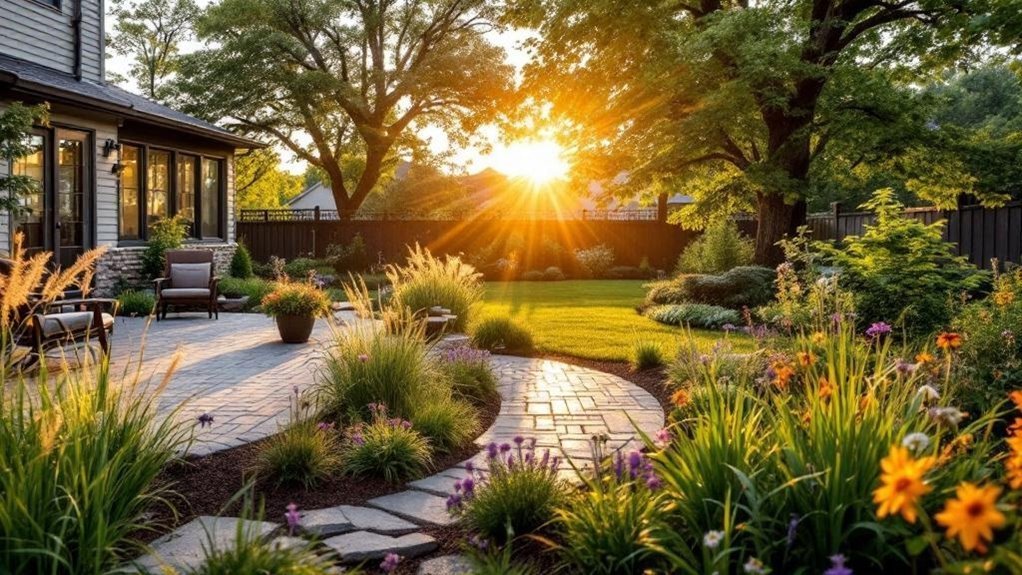
Missouri’s continental climate—characterized by temperature swings exceeding 100°F annually, variable precipitation patterns, and USDA hardiness zones 5b through 7a—demands region-specific terrain architecture that withstands environmental stressors while conserving resources. Professional gardeners implement sustainable frameworks through strategic native plant selection, incorporating species like Missouri black-eyed Susan, purple coneflower, and serviceberry that require minimal irrigation once established. You’ll reduce maintenance costs while supporting local pollinators and wildlife corridors.
Experts integrate eco-friendly materials including permeable pavers, recycled composites, and locally sourced stone that minimize environmental impact. Rain gardens, bioswales, and xeriscaping techniques manage stormwater runoff effectively while reducing municipal strain. These evidence-based approaches create resilient environments that serve your property and community through reduced resource consumption, improved biodiversity, and long-term ecological health.
Physical Demands and Safety Considerations
You’ll face significant physical risks in landscaping operations, from musculoskeletal injuries during material handling to equipment-related accidents and environmental stressors. Understanding proper lifting mechanics, implementing lockout-tagout procedures for powered equipment, and establishing heat illness prevention protocols are non-negotiable aspects of your safety program. These hazards require systematic controls through engineering solutions, administrative policies, and personal protective equipment to maintain OSHA compliance and reduce workers’ compensation claims.
Heavy Lifting Injury Risks
Landscaping professionals face significant musculoskeletal injury risks when handling materials like pavers, natural stone, soil bags, and mature plants that routinely exceed 50 pounds. You’ll encounter constant strain on your lower back, shoulders, and knees without proper lifting techniques and equipment. Professional crews implement injury prevention protocols that DIY homeowners typically lack.
| Material Type | Average Weight |
|---|---|
| Paver pallets | 2,500-3,000 lbs |
| Natural stone slabs | 100-300 lbs each |
| Soil bags (bulk) | 40-80 lbs |
| Mature trees (balled) | 200-500 lbs |
Professional teams utilize mechanical assists—skid steers, pallet jacks, and tree spades—reducing heavy lifting exposure. They’ve mastered ergonomic techniques, wear supportive equipment, and rotate physically demanding tasks. You’re protecting your long-term health by delegating these hazardous activities to trained specialists.
Equipment Operation Hazards
Operating power equipment like walk-behind trenchers, plate compactors, and stump grinders exposes you to vibration-related injuries, noise-induced hearing loss, and laceration risks that require specialized training to mitigate. Without proper operator training, you’re vulnerable to kickback incidents, blade contact injuries, and repetitive strain disorders that can sideline you from serving your clients effectively.
Professional groundskeepers maintain current certifications in equipment safety protocols, understanding load capacities, maintenance schedules, and emergency shutdown procedures. They’ve invested hundreds of hours mastering each tool’s operational parameters and recognizing warning signs of equipment failure. This expertise protects not only themselves but also your property and family. When you hire trained professionals, you’re ensuring that complex tasks are executed with the precision and safety consciousness that homeowners simply can’t replicate through occasional DIY attempts.
Heat Exhaustion Prevention
When ambient temperatures exceed 85°F and humidity climbs above 60%, your risk of heat-related illness increases exponentially during extended outdoor work sessions. Professional horticulturists implement thorough heat awareness protocols that protect both crew members and property outcomes.
| Warning Sign | Professional Response |
|---|---|
| Dizziness, nausea | Immediate work cessation |
| Excessive sweating | Hydration station deployment |
| Muscle cramping | Electrolyte replacement |
| Confusion, weakness | Emergency medical protocols |
Effective hydration strategies require consuming 16-32 ounces of water hourly during peak heat conditions. Licensed gardening teams rotate personnel through shaded rest intervals, monitor core temperature indicators, and schedule heat-intensive tasks during cooler morning hours. You’ll avoid the dangerous combination of physical exertion and thermal stress that sends thousands to emergency rooms annually.
Warranty Protection and Ongoing Maintenance Support
Beyond the initial installation, extensive warranty coverage safeguards your investment against material defects, workmanship failures, and plant mortality during the establishment period. Professional landscapers typically offer tiered protection plans spanning 1-5 years, addressing irrigation components, hardscape materials, and vegetation health. You’ll benefit from documented maintenance protocols that preserve warranty validity while ensuring optimal outdoor environment performance.
Structured maintenance plans provide your clients with seasonal pruning, fertilization schedules, integrated pest management, and system diagnostics. These programs prevent minor issues from escalating into costly repairs while maintaining property values. Licensed contractors document all service interventions, creating thorough care histories that support long-term landscape health. This proactive approach demonstrates your commitment to sustainable stewardship rather than transactional service delivery.
Conclusion
You might think professional landscaping’s upfront investment outweighs DIY savings, but consider the lifecycle costs. When you factor in equipment rentals, material waste, soil amendments for Ellisville’s clay-heavy terrain, and potential installation failures, you’re often spending more without professional results. Licensed contractors leverage bulk purchasing power, proper grading techniques, and zone-specific plant selection that’ll reduce your long-term maintenance costs by 30-40%. You’re not just buying labor—you’re investing in engineered solutions that protect your property value.

Leave a Reply