• Services
    • Landscape Maintenance
    • Landscape Design and Installation
    • Hardscapes
    • Fire Feature
    • Water Features
    • Natural Playgrounds
    • Landscape Lighting
    • Synthetic Turf
  • About Us
    • Testimonials
  • Latest News
  • Contact Us

Transform Your Backyard With Professional Landscape Design in Wildwood and Surrounding Areas

December 18, 2025 By Zac Terrill Leave a Comment

Professional terrain design transforms your Wildwood backyard by addressing Zone 6b climate requirements and Missouri’s challenging clay soils through strategic plant selection and hardscaping solutions. You’ll benefit from native species like Eastern Redbud and River Birch that reduce maintenance while preventing erosion, combined with permeable hardscaping materials that manage stormwater effectively. Expert designers assess your site’s topography, drainage patterns, and microclimates to create functional outdoor living spaces that increase property value and extend seasonal usability. Below, you’ll identify specific strategies for evaluating your space’s potential and selecting region-appropriate design elements.

Key Takeaways

  • Professional designers address Missouri’s clay soils, Zone 6b requirements, and drainage challenges specific to Wildwood’s environmental conditions.
  • Native plants like Eastern Redbud, Purple Coneflower, and River Birch reduce maintenance while supporting local pollinators year-round.
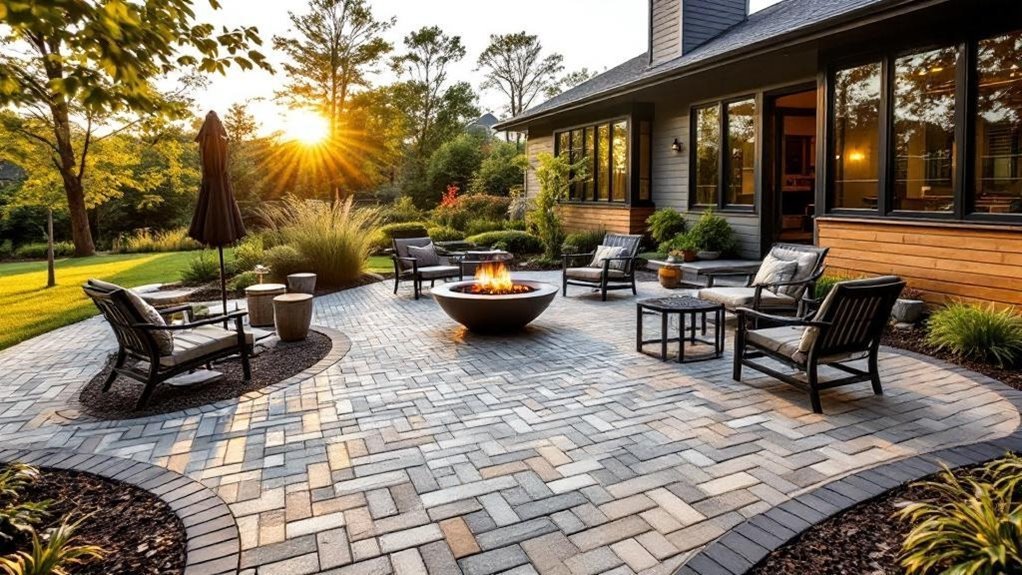
  • Hardscaping elements including permeable patios, natural stone pathways, and fire features extend outdoor usability across seasons.
  • Strategic lighting design enhances safety, creates gathering zones, and transforms backyard functionality beyond daylight hours.
  • Qualified professionals bring regional expertise, portfolio consistency, and understanding of local codes to ensure lasting property value.

Why Professional Landscape Design Matters for Wildwood Homeowners
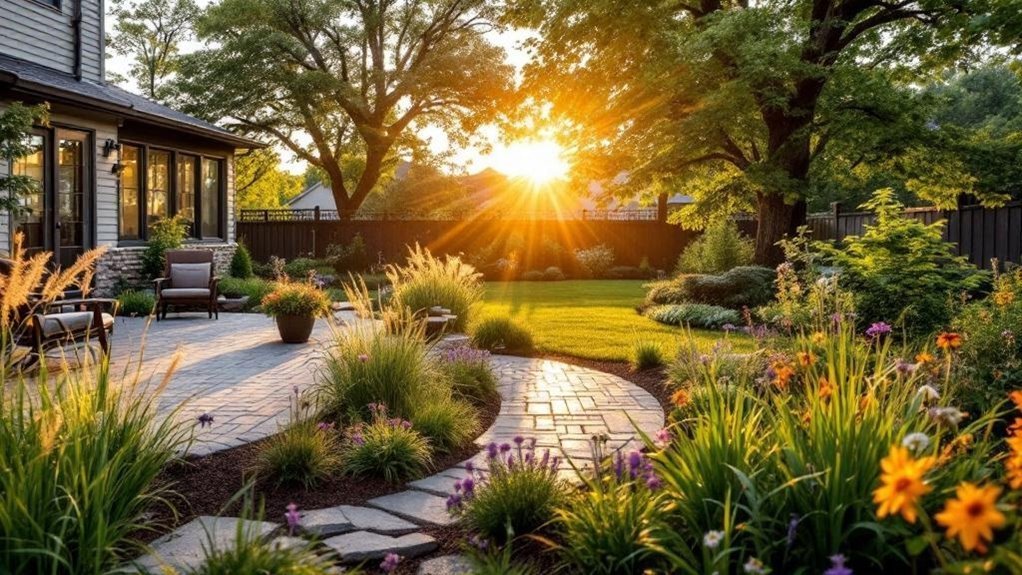
expert landscape design benefits

While many Wildwood homeowners attempt DIY gardening to save money, they often overlook the complex interplay between Missouri’s clay-heavy soils, Zone 6b planting requirements, and the region’s humidity patterns that directly impact plant selection and hardscape longevity. Professional designers bring expertise in current gardening trends that maximize your property’s functionality while enhancing your neighbors’ enjoyment of the community aesthetic. The design benefits extend beyond visual appeal—you’ll receive drainage solutions that prevent water pooling, native plant selections that reduce maintenance demands, and outdoor living spaces that genuinely serve your family’s needs. Professional assessment identifies soil amendments, ideal sun exposure zones, and structural considerations that DIY approaches typically miss, ensuring your investment creates lasting value for those who’ll enjoy your property.

Understanding Your Outdoor Space’s Potential

Before you’ll create an effective design plan for your Wildwood property, you need to systematically evaluate what’s already there. Walk your yard with a critical eye, documenting drainage patterns, sun exposure throughout the day, and existing vegetation health. Start by mapping out the areas that aren’t functioning—whether that’s pooling water near your foundation, dead zones where grass won’t grow, or awkward shifts between hardscape elements.

Assess Your Current Landscape

Every successful terrain design begins with a thorough site analysis that documents existing conditions, spatial relationships, and environmental factors. You’ll need to evaluate your property’s topography, drainage patterns, and microclimates to create functional outdoor spaces that serve your community effectively. Test soil quality to determine pH levels, composition, and amendments required for ideal plant health. Map sunlight exposure throughout the day, identifying full-sun, partial-shade, and full-shade zones that’ll guide your plant selection. Document existing vegetation, hardscapes, and utility locations. Measure sight lines, access points, and property boundaries to establish design parameters. This systematic assessment allows you to develop sustainable environments that address specific site challenges while maximizing your outdoor space’s capacity to welcome and nurture those you serve.

Identify Problem Areas First

Once you’ve documented your site’s existing conditions, turn your attention to spaces that fail to function properly or detract from your scenery’s performance. Systematically catalog challenges that prevent your environment from serving its intended purpose.

Critical deficiencies to address:

  1. Drainage issues – Standing water, erosion patterns, and runoff pathways that compromise plant health and create unusable areas
  2. Soil quality – Compacted earth, nutrient deficiencies, or pH imbalances limiting vegetation success
  3. Access limitations – Circulation bottlenecks preventing efficient movement through outdoor spaces
  4. Visual barriers – Obstructions blocking desirable views or creating unwelcome focal points

Document each problem’s location, severity, and impact on your environment’s functionality. This analysis establishes your design priorities and guarantees solutions address genuine needs rather than cosmetic preferences.

Native Plants That Thrive in the Wildwood Climate
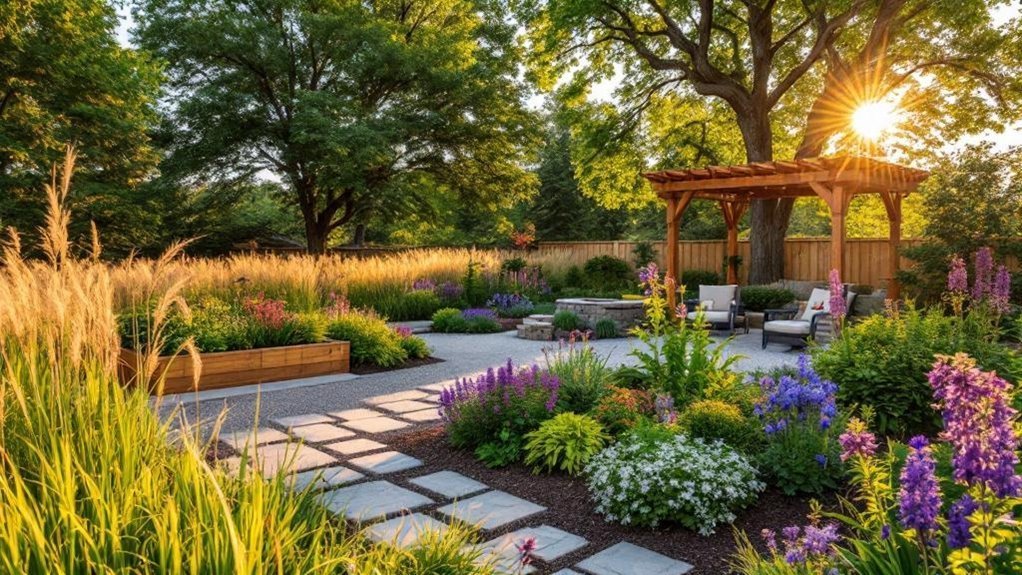
native plants for wildwood

Wildwood’s humid subtropical climate—characterized by hot summers, mild winters, and 45-50 inches of annual rainfall—creates ideal conditions for native species that have adapted to these precise environmental parameters over millennia. You’ll find Eastern Redbud, Flowering Dogwood, and Southern Magnolia provide structural framework while requiring minimal irrigation once established. Switchgrass, Little Bluestem, and Purple Coneflower offer textural contrast in perennial beds. Native plant benefits extend beyond aesthetic appeal: these species support local pollinators, reduce maintenance costs, and eliminate fertilizer dependency. For sustainable landscaping that serves your community’s ecological health, specify River Birch for wet zones, American Holly for evergreen screening, and Black-Eyed Susan for naturalized areas. These selections establish robust root systems that prevent erosion and filter stormwater runoff effectively.

Hardscaping Elements to Elevate Your Backyard

While native plantings establish your terrain’s biological infrastructure, permanent architectural features define spatial organization and functional zones throughout your property. Strategic hardscaping transforms underutilized areas into purposeful gathering spaces that serve family and guests year-round.

Consider these foundational elements:

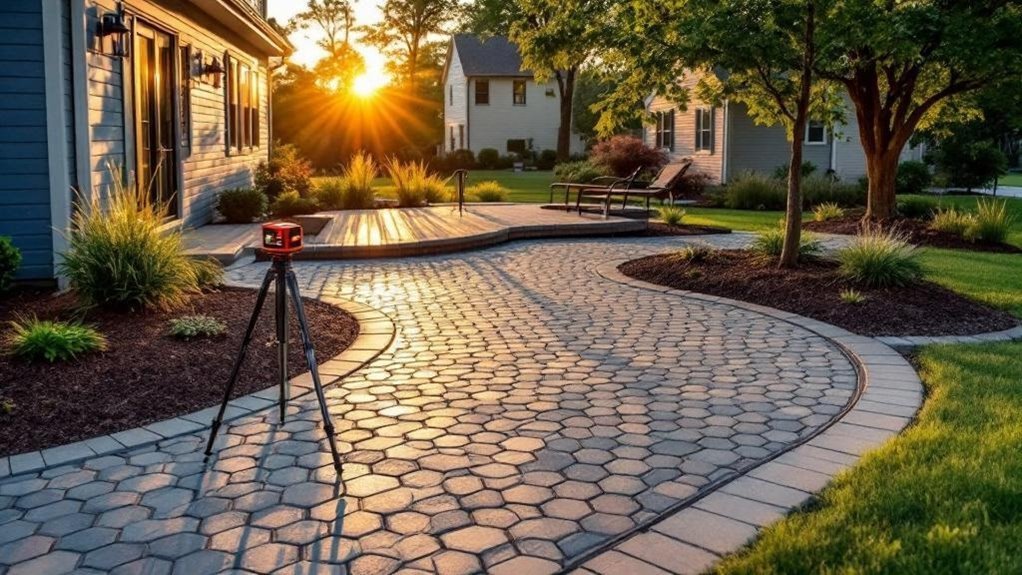
  1. Permeable patio materials like flagstone or porous pavers that manage stormwater while creating entertainment zones
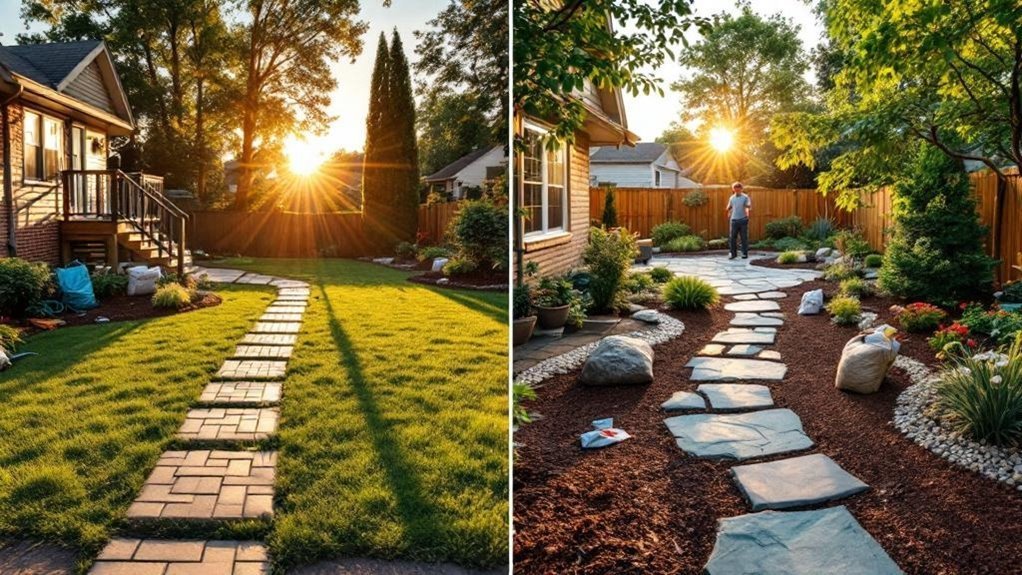
  2. Outdoor pathways constructed from decomposed granite or natural stone that guide movement and protect planted beds
  3. Retaining walls that address grade changes while adding dimensional interest and seating opportunities
  4. Fire features positioned to anchor social areas and extend seasonal usability

Each hardscape component must integrate with Wildwood’s topography and drainage patterns. Proper installation guarantees longevity and minimizes maintenance demands, allowing you to focus on hospitality rather than repairs.

Creating Functional Outdoor Living Spaces
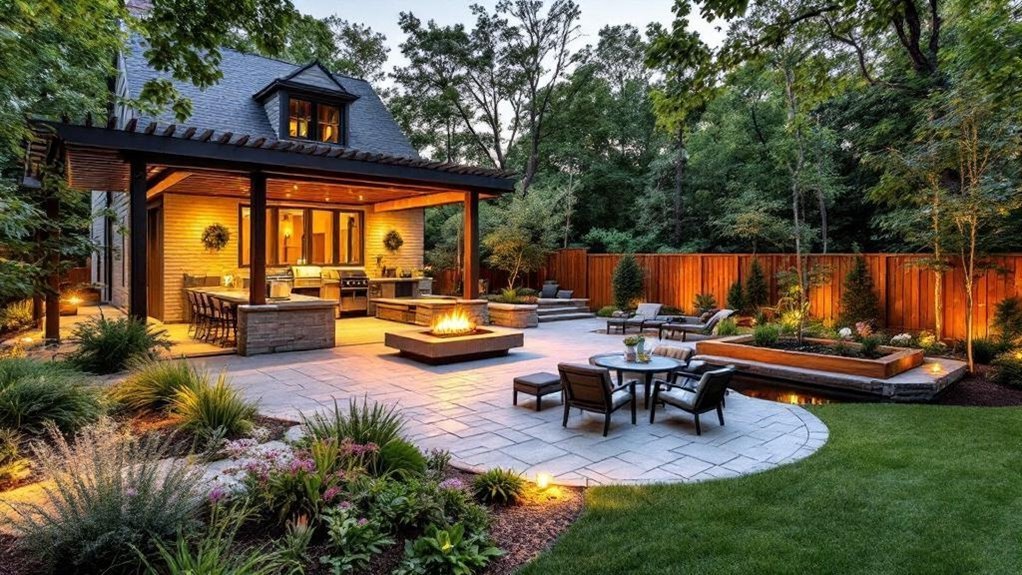
functional outdoor space planning

Your outdoor living space requires the same functional planning as interior rooms, with each element serving a specific purpose within your site’s constraints. Consider how your kitchen prep zones, seating configurations, and fire features will interact with existing grade changes, sun exposure patterns, and sight lines from your home. Strategic placement of ambient and task lighting extends usability while reinforcing the spatial hierarchy you’ve established through hardscaping.

Outdoor Kitchen Design Options

How can you transform your backyard into an extension of your indoor living space while maximizing both functionality and aesthetic appeal? Strategic outdoor kitchen design creates gathering spaces where you can serve family and friends comfortably.

Essential elements include:

  1. Optimal grill placement – Position 10-12 feet from your home’s structure, guaranteeing proper ventilation while maintaining conversation flow with guests
  2. Durable countertop materials – Select granite, concrete, or porcelain surfaces that withstand Wildwood’s climate variations and heavy use
  3. Work triangle efficiency – Arrange cooking, prep, and cleaning zones within 4-9 feet of each other for seamless meal preparation
  4. Utility integration – Install dedicated gas lines, electrical outlets, and water connections to support full-service functionality

These design considerations guarantee your outdoor kitchen serves guests effectively year-round.

Comfortable Seating Area Solutions

Since outdoor seating anchors your backyard’s social functionality, selecting weather-resistant furniture with proper spatial planning determines how effectively you’ll use the space throughout Wildwood’s seasons. Different seating styles serve distinct purposes—conversation clusters require 8-10 feet diameter clearance, while linear benches maximize capacity for gatherings you’ll host. Choose outdoor textiles engineered with UV-resistant, mildew-proof fibers that withstand Missouri’s humidity cycles. Position primary seating 12-15 feet from cooking zones to balance interaction with safety. Incorporate built-in elements like stone bench walls or wooden planter boxes with integrated seating to optimize limited footprints. Layer removable cushions for comfort while maintaining core furniture year-round. Strategic placement near shade structures or fire features extends usability across temperature variations, ensuring your guests remain comfortable during extended outdoor experiences.

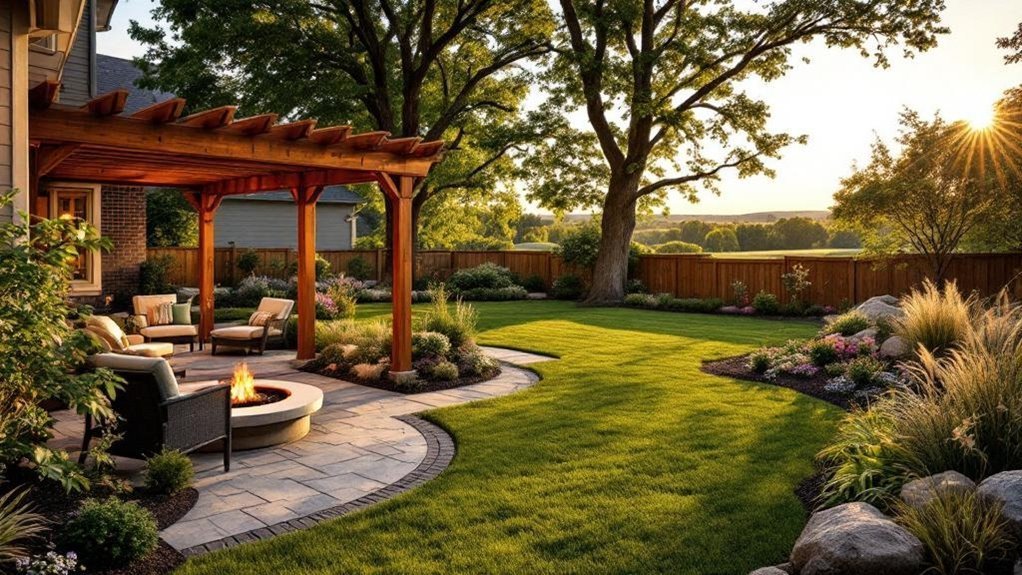
Fire Features and Lighting

Fire features transform your backyard into a year-round destination while establishing a natural gathering point that extends usability beyond Wildwood’s temperate months. Strategic fire pit designs integrate seamlessly with your outdoor environment, from built-in stone configurations to freestanding copper bowls that complement existing hardscapes.

Ambient lighting enhances functionality while creating welcoming atmospheres for guests:

  1. Path lighting guarantees safe navigation between entertainment zones
  2. Uplighting accentuates specimen trees and architectural elements
  3. String lights define overhead spaces without permanent structures
  4. Low-voltage LED systems reduce energy consumption while providing consistent illumination

Layered lighting approaches combine these elements at varying heights, creating depth and visual interest. Well-designed fire features paired with thoughtful illumination extend your hosting capabilities throughout evening hours, transforming outdoor spaces into comfortable retreats.

Designing for Year-Round Beauty and Enjoyment
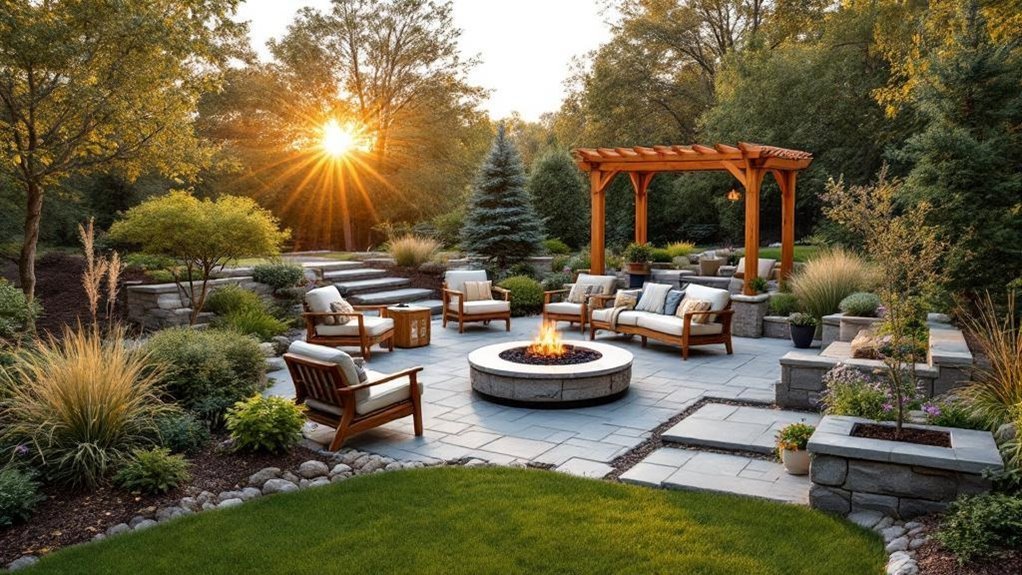
year round landscape design strategy

While seasonal planting showcases peak beauty for brief periods, strategic plant selection and hardscape placement allow your surroundings to maintain visual interest across all four seasons. You’ll create lasting impact through thoughtful combinations of evergreens, ornamental grasses, and structural elements that provide form during dormant months.

SeasonVisual ElementsMaintenance Strategies
SpringFlowering bulbs, emerging perennialsMulch refresh, pruning
SummerBlooming annuals, lush foliageIrrigation monitoring, deadheading
FallColorful deciduous trees, ornamental grassesLeaf management, winterization prep
WinterEvergreen structure, decorative barkSnow removal, hardscape protection

Your environment becomes a continuous gift to those who gather there, offering beauty and comfort throughout the year while minimizing intensive upkeep demands.

Water Features and Focal Points That Make a Statement

Water features transform your backyard into a sensory experience through strategic placement and material selection. When you integrate natural stone fountains, ponds, or waterfalls, you’ll need to contemplate site topography, soil drainage patterns, and proximity to electrical sources for pumps and lighting systems. Properly designed accent lighting enhances these elements from daytime attractions to dramatic nighttime focal points that define your outdoor space’s character and spatial hierarchy.

Natural Stone Fountain Options

Since natural stone fountains anchor outdoor areas with geological permanence and sculptural presence, selecting the right option requires evaluating your site’s scale, architectural context, and hydraulic requirements. You’ll need to match natural stone textures with your existing hardscape while considering fountain maintenance accessibility.

Professional installation guarantees proper foundation support and circulation systems that’ll serve your outdoor entertaining needs for decades:

  1. Tiered basin fountains work best in formal gardens, creating cascading water sounds that mask neighborhood noise
  2. Boulder formations integrate seamlessly into naturalistic environments while requiring minimal structural preparation
  3. Column fountains provide vertical interest in compact spaces without overwhelming smaller yards
  4. Wall-mounted options maximize space efficiency while delivering the sensory benefits guests appreciate

Consider seasonal winterization requirements during your selection process.

Pond and Waterfall Integration

When properly designed, pond and waterfall systems transform residential settings into dynamic ecosystems that balance aesthetic impact with hydrological function. You’ll achieve superior pond aesthetics through strategic placement that considers sun exposure, surrounding vegetation, and sight lines from primary gathering spaces. Your installation should incorporate graduated depth zones, natural filtration systems, and appropriate liner materials that support both aquatic life and structural integrity.

Effective waterfall maintenance begins with accessible pump placement and removable filter components. You’ll want to design with serviceable features that allow you to perform routine cleaning without disrupting the overall composition. Consider incorporating automated systems for water level monitoring and seasonal adjustments. This thoughtful approach guarantees your clients enjoy lasting beauty while minimizing their long-term maintenance commitments and environmental impact.

Lighting for Dramatic Effect

Strategic illumination transforms water features from daytime attractions into nocturnal focal points that define your scenery’s spatial hierarchy. You’ll create compelling outdoor ambiance through these creative illumination techniques:

  1. Submersible uplighting positions LED fixtures beneath waterfalls and fountain jets, casting dramatic silhouettes against surrounding vegetation.
  2. Moonlighting mounts downward-facing fixtures in trees, mimicking natural lunar glow across pond surfaces.
  3. Path-integrated accent lights guide guests while highlighting sculptural elements and specimen plantings.
  4. Color temperature layering combines warm (2700K) and cool (4000K) sources to establish depth perception.

You’re establishing safe navigation pathways while showcasing your investment in premium hardscaping. Strategic fixture placement eliminates harsh shadows, instead producing graduated luminosity that welcomes visitors throughout evening hours. This technical approach guarantees your environment serves gathering needs after sunset.

Lighting Solutions to Extend Your Outdoor Hours

How you illuminate your backyard fundamentally alters its usability beyond daylight hours and establishes the spatial hierarchy of your outdoor arrangement. Strategic pathway illumination guarantees safe navigation while reinforcing circulation patterns you’ve designed for guest movement and accessibility. Install low-voltage LED fixtures at grade changes, steps, and walkway edges to prevent accidents while serving visitors effectively.

Ambient lighting creates welcoming zones where people gather, extending your capacity to host evening activities. Layer multiple light sources at varying heights—wall sconces, post lights, and recessed fixtures—to eliminate harsh shadows and establish comfortable illumination levels. Integrate dimmer controls to adjust intensity based on specific functions, from intimate gatherings to larger community events. Your lighting infrastructure directly impacts how effectively your environment serves others during extended hours.

Maximizing Property Value Through Strategic Landscaping
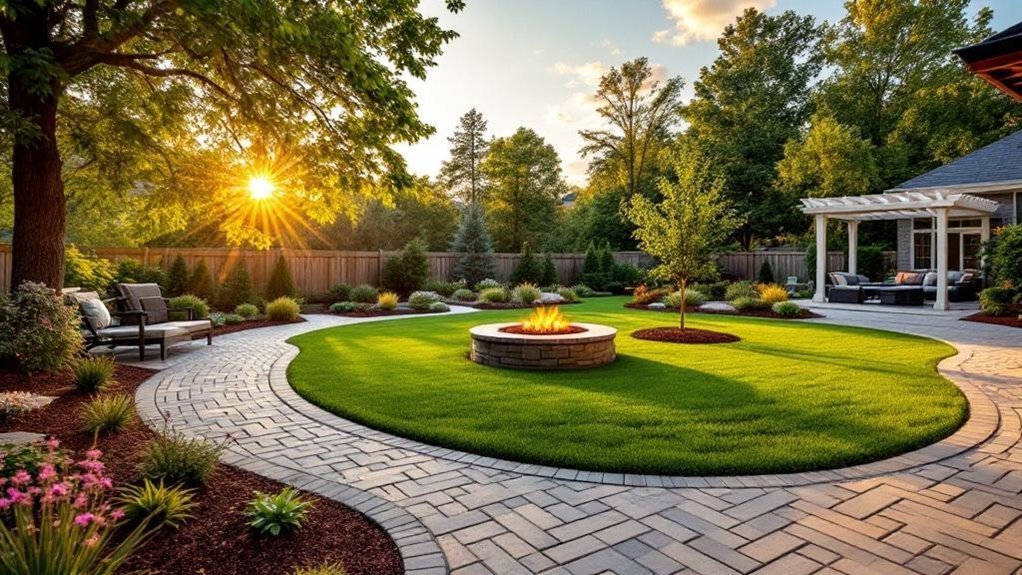
strategic landscaping enhances property value

Your outdoor design decisions directly influence market perception and resale valuations, with professionally designed exterior spaces generating documented returns between 100-200% of installation costs. Strategic outdoor investment impacts property appraisal through measured improvements that buyers recognize immediately.

High-Impact Value Drivers:

  1. Foundation Plantings – Structured evergreen and ornamental combinations that frame architectural features while requiring minimal maintenance
  2. Hardscape Elements – Professionally installed patios, walkways, and retaining walls using durable materials suited to Wildwood’s climate
  3. Mature Tree Placement – Strategically positioned shade trees that reduce energy costs and create established appearance
  4. Irrigation Infrastructure – Automated systems demonstrating long-term property stewardship and outdoor sustainability

These targeted improvements create quantifiable asset appreciation while serving future homeowners’ needs for functional, beautiful exterior environments.

Choosing the Right Landscape Design Partner in Your Area

Selecting a qualified terrain design professional requires evaluating credentials, portfolio consistency, and regional expertise specific to Wildwood’s soil conditions and microclimate zones. You’ll want to examine how designers integrate outdoor design styles that complement your property’s architecture while addressing drainage patterns and native plant requirements. Review their familiarity with local design trends, including sustainable hardscaping and water-efficient irrigation systems tailored to your community’s needs.

Ask potential partners about their approach to serving families and creating functional outdoor spaces. Request references from neighboring properties to verify their understanding of municipal codes and HOA guidelines. Assess their communication style and willingness to collaborate on designs that’ll improve your neighbors’ property values while creating gathering spaces that strengthen community connections.

Conclusion

You’ll transform your Wildwood property from ordinary to absolutely extraordinary with the right scenery design approach. Every element—from native plant selection to hardscape integration—must align with your site’s specific microclimates, soil composition, and drainage patterns. Strategic placement of focal points, properly zoned lighting systems, and climate-appropriate vegetation guarantee year-round functionality. Partner with designers who understand Wildwood’s unique environmental conditions, building codes, and architectural vernacular. Your outdoor investment demands precision, technical expertise, and site-specific solutions.
Filed Under: Uncategorized Tagged With: landscape design, outdoor spaces, Wildwood gardens

Paver Installation in St. Louis County: Materials, Design Ideas, and Cost Considerations

December 11, 2025 By Zac Terrill Leave a Comment

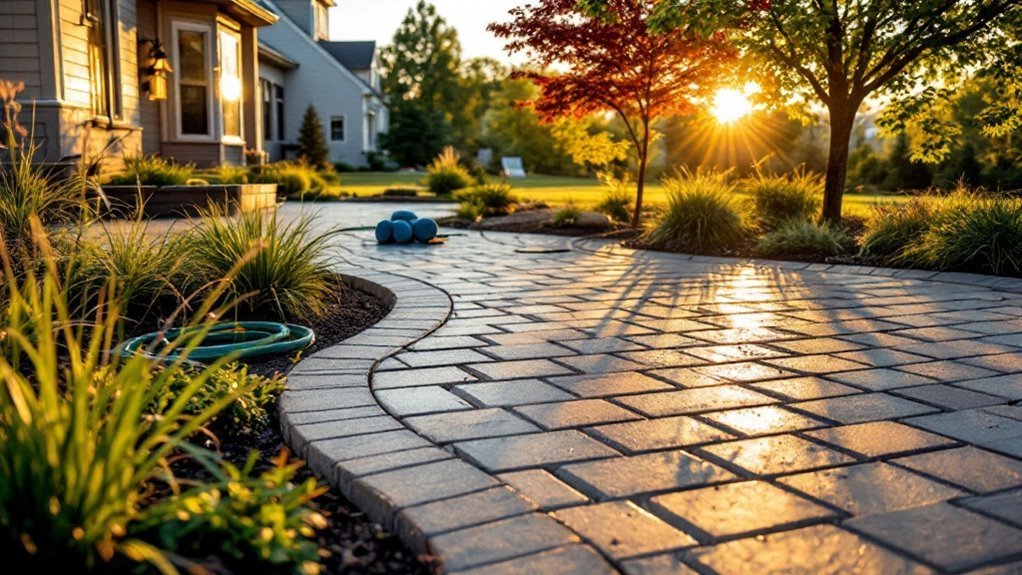
Paver installation in St. Louis County requires careful material selection and engineering to withstand clay soil conditions and freeze-thaw cycles. You’ll choose from concrete pavers ($3-8/sq ft), natural stone ($15-30/sq ft), or porcelain options, with total installed costs ranging $15-40/sq ft. Your project must address proper drainage through 2% minimum slopes, deeper excavation (10-12 inches), and geotextile fabric integration to prevent hydrostatic pressure damage. Popular patterns include herringbone for driveways and basketweave for patios, matching local architectural styles. The sections below cover contractor selection, maintenance protocols, and code-compliant installation techniques.

Key Takeaways

  • Material costs range from $3-8/sq ft for concrete pavers to $15-30/sq ft for natural stone, with total installation $15-40/sq ft.
  • Herringbone patterns suit driveways for strength, basketweave designs simplify patio installations, and running bond works well for walkways.
  • St. Louis County’s clay soil requires 10-12 inch excavation depth, geotextile fabric, and minimum 2% slope for proper drainage.
  • Maintenance includes weekly sweeping, joint sand replenishment every 2-3 years, and breathable sealer application every 3-5 years.
  • Verify contractor licensing, insurance, technical expertise in base preparation, recent client references, and written warranties before hiring.

Understanding Paver Material Options for St. Louis County’s Climate

weather resistant paver material options

St. Louis County’s freeze-thaw cycles demand pavers with exceptional weather resistance. You’ll need materials that withstand temperature fluctuations ranging from below zero to 100°F while maintaining structural integrity.

Concrete pavers offer versatility and material longevity when they meet ASTM C936 standards. They’re cost-effective for clients seeking durable solutions. Porcelain pavers provide superior freeze-thaw resistance with minimal water absorption—ideal for driveways and high-traffic areas.

Natural stone options like granite and bluestone deliver unmatched durability but require proper installation techniques. You’ll want 6-8 inches of compacted aggregate base to prevent settling.

Clay brick pavers resist weathering but need SW-grade rating for St. Louis’s climate conditions. Each material serves different project requirements, so you’ll match selections to your clients’ functional needs and aesthetic preferences while ensuring code compliance.

Cost Breakdown: What to Budget for Your Paver Project

Your paver installation budget encompasses three primary cost categories: materials, labor, and site preparation. Material cost analysis reveals concrete pavers ranging from $3-8 per square foot, while natural stone options exceed $15-30 per square foot. You’ll need to account for base aggregate, joint sand, and edge restraints in your calculations. Labor typically represents 50-60% of total project costs, covering excavation, grading, and installation. Site preparation demands particular attention—addressing drainage requirements, soil compaction standards, and base depth specifications directly impacts structural integrity. For paver project financing, expect $15-40 per square foot installed, depending on material selection and site complexity. Professional contractors provide detailed estimates that align with local building codes and guarantee your investment serves clients effectively.

Design Trends and Style Inspirations for Local Homes

paver patterns enhance curb appeal

Your paver pattern selection should align with St. Louis County’s predominant architectural styles—Colonial Revival, Craftsman, and mid-century ranch homes—to maximize curb appeal and property value. Herringbone and basketweave patterns complement traditional facades, while running bond and ashlar layouts improve contemporary designs. Coordinating your paver color palette with existing brick, stone, or siding materials guarantees compliance with local HOA guidelines and creates visual cohesion across your property.

Popular Paver Patterns

How do you transform an ordinary outdoor space into an architectural statement? Pattern selection directly impacts visual appeal and structural performance.

The herringbone pattern offers exceptional interlock strength, ideal for driveways requiring load distribution. You’ll find this 45-degree or 90-degree arrangement meets ADA compliance while serving high-traffic areas.

A basketweave design creates timeless charm for patios, alternating perpendicular paver pairs that simplify installation for community projects.

Running bond patterns—offset by half-lengths—provide straightforward layouts perfect for walkways serving elderly residents.

Circular layouts demand precise cutting but deliver stunning focal points for gathering spaces.

Random patterns accommodate mixed-size pavers, reducing waste while creating organic aesthetics.

Border accents define edges and connections, enhancing accessibility and safety for those you serve.

Regional Architecture Coordination

St. Louis County’s architectural heritage demands thoughtful paver coordination. You’ll need to align your installation with historic preservation guidelines and local regulations, particularly in designated districts. Match your pavers to your home’s architectural style for harmonious curb appeal.

Architectural StyleRecommended Paver Approach
Victorian/HistoricBrick pavers in traditional running bond, clay tones
Mid-Century ModernConcrete pavers with clean lines, geometric patterns
Colonial RevivalTumbled pavers mimicking aged stone, neutral palette

Before installation, verify compliance with municipal codes and homeowner association requirements. Historic districts often restrict material choices and color schemes. You’re serving your community by preserving its architectural character while enhancing your property’s functionality and beauty through carefully coordinated paver selection.

Preparing Your Property for Professional Paver Installation

Before professional crews arrive at your property, understanding the site preparation requirements will help guarantee your paver installation proceeds efficiently and meets structural specifications. Your site assessment should identify drainage patterns, soil conditions, and existing utilities that’ll impact the project scope.

Proper property clearing establishes the foundation for long-lasting results:

  • Remove vegetation, roots, and organic material from the installation area
  • Excavate to code-specified depths based on your application’s load requirements
  • Grade the subbase to promote positive drainage away from structures
  • Mark underground utilities and irrigation systems to prevent costly damage

You’ll want to coordinate access points for equipment and material delivery. Clear pathways allow contractors to serve your needs effectively while protecting surrounding landscaping and hardscaping elements throughout the installation process.

Drainage and Grading Considerations in St. Louis County

drainage and grading requirements

Your paver installation must address St. Louis County’s specific drainage challenges to meet code requirements and prevent structural failure. The region’s expansive clay soils demand precise grading with minimum 2% slope away from structures, while French drain integration becomes crucial in areas with poor percolation rates. You’ll need to account for both surface water management and subsurface drainage systems to guarantee your pavers remain stable through freeze-thaw cycles and heavy rainfall events.

Proper Slope Requirements

When installing pavers in St. Louis County, you’ll need to establish proper slope angles to protect your clients’ investment from water damage. The International Building Code requires a minimum 2% slope (1/4 inch per foot) for pedestrian surfaces, though 3% optimizes drainage solutions for our region’s weather patterns.

Consider these critical slope requirements:

  • Patios and walkways: Maintain 2-3% slope away from structures to prevent foundation issues
  • Driveways: Design 1-2% cross-slope with 2-3% longitudinal grade for vehicle stability
  • Pool decks: Implement 2% minimum slope directing water toward designated drainage points
  • Retaining walls: Account for backfill drainage when calculating adjacent paver slopes

You’ll want to verify grades with a builder’s level before base installation. St. Louis County’s clay-heavy soils demand precise slope calculations to guarantee long-term performance.

French Drain Integration

Owing to St. Louis County’s clay-heavy soils and seasonal precipitation patterns, you’ll need robust drainage solutions for long-lasting paver installations. French drains provide exceptional water management when integrated beneath or alongside your hardscape. You should position perforated pipes in gravel-filled trenches at the patio’s lowest point, directing runoff away from structures and preventing subsurface erosion.

Install the drain system before laying your base material, ensuring proper connectivity to existing stormwater infrastructure or daylight points. Your French drain should maintain a minimum 1% slope for adequate flow velocity. Wrap pipes with geotextile fabric to prevent sediment clogging while allowing water infiltration. This integration protects your paver investment by eliminating hydrostatic pressure that causes settling, frost heaving, and joint separation—critical considerations for serving clients who expect durable, properly engineered outdoor spaces.

Clay Soil Challenges

St. Louis County’s clay soil presents significant drainage issues that’ll directly impact your paver installation’s longevity. Clay’s dense composition restricts water permeability, creating hydrostatic pressure beneath pavers that causes shifting, settling, and eventual failure.

Address these challenges through proper base preparation:

  • Excavate deeper than standard specifications—typically 10-12 inches to accommodate improved drainage layers
  • Install geotextile fabric between subgrade and base to prevent clay migration into aggregate
  • Increase base depth with 6-8 inches of compacted aggregate for better load distribution
  • Grade slopes at minimum 2% away from structures to prevent water accumulation

You’ll need to compact clay subgrade to 95% density before adding base materials. This creates a stable foundation that resists moisture-induced expansion and contraction cycles common in clay soil conditions.

Maintenance Requirements to Protect Your Investment

paver maintenance for longevity

Although pavers rank among the most durable hardscaping materials available, their longevity in St. Louis County depends on consistent maintenance practices. You’ll need to implement routine cleaning tips like sweeping debris weekly and power washing annually to prevent organic staining and efflorescence buildup. Joint sand requires replenishment every 2-3 years to maintain structural integrity and prevent weed growth.

Paver sealing benefits include improved color retention, stain resistance, and protection against freeze-thaw damage—critical for St. Louis’s climate extremes. You should apply a breathable acrylic or polyurethane sealer every 3-5 years, ensuring surfaces are completely dry beforehand. Address sunken pavers immediately by removing affected units, adding base material, and reinstalling to prevent water pooling that accelerates deterioration and compromises client safety.

Choosing the Right Paver Installation Contractor

How do you differentiate between qualified paver contractors and those who’ll compromise your project’s structural integrity? Start by verifying contractor qualifications through proper licensing, insurance certificates, and bonded status. You’ll protect your clients’ investments by selecting professionals who understand St. Louis County’s soil conditions and drainage requirements.

Evaluate candidates using these criteria:

  • Portfolio verification: Request documented before-and-after photos with measurable project timelines
  • Technical expertise: Confirm knowledge of base preparation depth (6-8″ minimum) and proper slope calculations
  • Reference validation: Contact three recent clients about quality, adherence to schedules, and post-installation support
  • Written warranties: Guarantee extensive coverage for materials and workmanship (minimum 2 years)

Don’t compromise on contractor selection—structural failures cost more than premium installation.

Conclusion

Your paver installation represents more than hardscape—it’s the foundation upon which your property’s curb appeal is built. Like a well-engineered blueprint, every element from material selection to drainage engineering must align with St. Louis County’s unique climatic demands and municipal codes. You’ve investigated the technical specifications; now it’s time to transform that knowledge into concrete reality. Partner with qualified contractors who understand that precision in execution equals longevity in performance. Your investment deserves nothing less than structural poetry.

Filed Under: Uncategorized Tagged With: landscaping, Paver installation, St. Louis

Top 10 Native Plants for Eureka Gardens: Sustainable Landscaping in Missouri

December 4, 2025 By Zac Terrill Leave a Comment

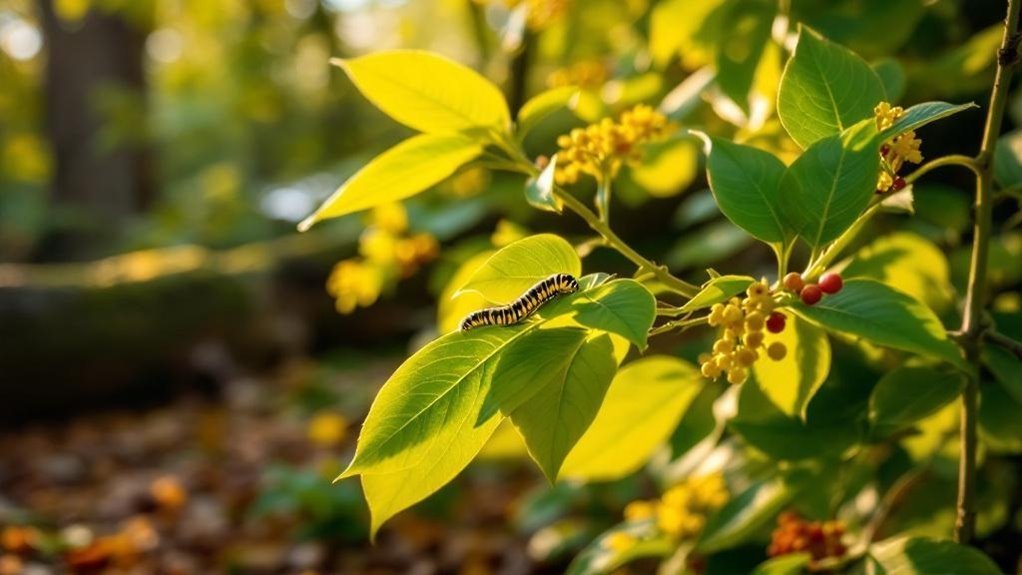
You’ll transform your Eureka garden into a resilient ecosystem by selecting native plants adapted to Missouri’s Ozark Border region. Purple Coneflower, Black-Eyed Susan, and Butterfly Milkweed attract specialized pollinators while establishing deep taproots that stabilize clay soils and reduce irrigation needs. Incorporate Little Bluestem and Switchgrass for erosion control, Wild Columbine for early-season nectar, and Spicebush for swallowtail butterflies. Aromatic Aster extends bloom periods through November. Each species contributes specific ecological functions that create self-sustaining environments requiring minimal maintenance once established.

Key Takeaways

  • Purple Coneflower and Black-Eyed Susan attract over 40 native bee species while providing drought tolerance and extended blooms.
  • Butterfly Milkweed serves as essential Monarch host plant with vibrant orange flowers and minimal irrigation needs once established.
  • Little Bluestem stabilizes soil with deep roots, reduces stormwater runoff, and provides year-round wildlife habitat and cover.
  • Eastern Redbud and Spicebush offer early-season nectar, nitrogen fixation, and critical support for native butterflies and birds.
  • Aromatic Aster provides crucial fall blooms for late-season pollinators and thrives in Missouri’s clay-based soils.

Purple Coneflower (Echinacea Purpurea)

echinacea supports pollinator ecosystems

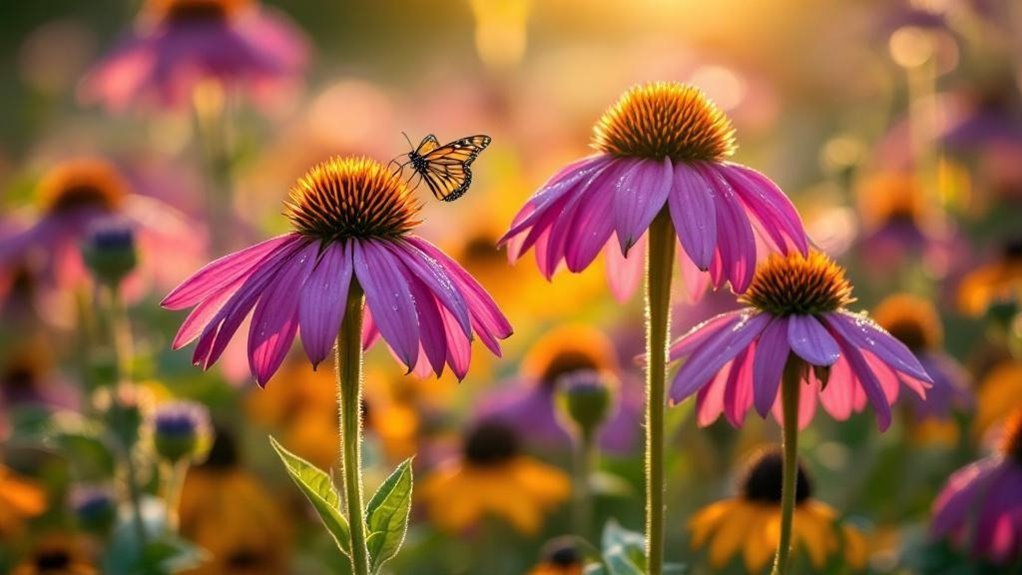
Purple Coneflower (*Echinacea purpurea*) thrives as a keystone pollinator species throughout Eureka’s native prairie remnants and restored meadow ecosystems. You’ll support critical pollinator populations by establishing this Missouri native, which attracts specialized native bees, butterflies, and goldfinches seeking its protein-rich seeds. Echinacea benefits extend beyond wildlife value—its deep taproot structure prevents soil erosion while accessing moisture during drought periods typical of eastern Missouri summers.

For successful Echinacea propagation, you can direct-sow seeds in fall or start cold-stratified seeds indoors eight weeks before spring planting. Space transplants 18-24 inches apart in full sun with well-drained soils. This perennial establishes robust root systems within two years, requiring minimal irrigation once mature—conserving water resources while providing reliable bloom periods from June through September for community pollinator gardens.

Black-Eyed Susan (Rudbeckia Hirta)

Black-eyed Susan (Rudbeckia hirta) thrives in Eureka’s temperate climate when you provide full sun exposure and well-drained soils with moderate moisture. You’ll support critical pollinator populations, as this species attracts native bees, butterflies, and beneficial insects while providing late-season seeds for goldfinches and other granivorous birds. Your maintenance requirements remain minimal once established, though you’ll need to monitor seedling recruitment and adjust deadheading practices based on whether you’re prioritizing extended bloom periods or wildlife food resources.

Growing Conditions and Requirements

Light exposure markedly influences biomass production and flowering intensity. Position plants in full sun locations receiving six to eight hours of direct solar radiation daily. Partial shade tolerance exists, particularly in southern exposures, though you’ll observe reduced floral abundance and stem elongation. Once established, drought tolerance emerges through deep taproot development, making supplemental irrigation unnecessary after the first growing season—a critical advantage for water-conscious community gardens serving Eureka’s conservation goals.

Wildlife and Pollinator Benefits

As nectar production peaks during late summer when alternative food sources dwindle, Black-Eyed Susan (Rudbeckia hirta) serves as a crucial nutritional reservoir for Eureka’s pollinator populations. You’ll support over 40 native bee species, including specialized oligolectic bees dependent on Rudbeckia pollen for larval development. Migrating monarch butterflies utilize these flowers as vital refueling stations during their southward journey through Missouri’s tallgrass prairie corridors.

The plant’s composite flower structure provides accessible landing platforms for both short-tongued and long-tongued pollinators, maximizing your garden’s functional diversity. American goldfinches consume the seed heads throughout winter, while caterpillars of the Silvery Checkerspot butterfly rely on foliage for host-plant survival. By establishing Black-Eyed Susans, you’re restoring native habitats and strengthening ecosystem health through trophic-level support that extends beyond primary pollination services.

Maintenance and Seasonal Care

Though Black-Eyed Susan exhibits exceptional drought tolerance once established, you’ll need to provide consistent moisture during its first growing season to promote robust taproot development extending 18-24 inches into Eureka’s clay-loam soils. After establishment, minimal intervention maximizes your garden’s ecosystem services:

  1. Spring emergence: Apply 2-inch compost layer as soil amendment to improve moisture retention in Missouri’s variable precipitation patterns
  2. Mid-summer: Deadhead spent blooms to extend flowering period through September, benefiting late-season pollinators
  3. Fall management: Delay seasonal pruning until late winter, allowing seed heads to provide vital finch sustenance during resource-scarce months
  4. Winter preparation: Leave standing stems intact—hollow stalks offer crucial overwintering habitat for native cavity-nesting bees

This maintenance approach supports biodiversity while reducing your labor investment.

Wild Columbine (Aquilegia Canadensis)

Wild Columbine (*Aquilegia canadensis*) thrives in the mesic to dry-mesic woodlands and rocky slopes characteristic of Eureka’s native ecosystems, occupying ecological niches from shade-dappled forest edges to limestone outcroppings. Understanding wild columbine habitat requirements allows you to position this perennial strategically where its nodding red-and-yellow flowers attract ruby-throated hummingbirds and native long-tongued bees during April through June bloom periods.

You’ll find wild columbine propagation succeeds through direct autumn seeding or careful root division of established plants. Seeds require cold stratification for germination, making fall sowing ideal. This self-seeding transitory establishes robust taproots that anchor plants in shallow, well-drained soils where few ornamentals persist. By incorporating Wild Columbine into restoration projects or residential environments, you’re providing critical early-season nectar resources while supporting pollinator networks vital to community ecological health.

Little Bluestem (Schizachyrium Scoparium)

native grassland habitat restoration

Little Bluestem (*Schizachyrium scoparium*) dominates Eureka’s tallgrass prairie remnants and upland savanna communities, where its warm-season growth pattern and drought tolerance make it fundamental to regional grassland architecture. You’ll maximize native grass benefits by establishing this bunchgrass on slopes and disturbed sites requiring soil erosion control. Its fibrous root system penetrates 6-8 feet deep, stabilizing substrates while creating wildlife habitat.

Ecological functions include:

  1. Providing larval host plants for skipper butterflies (*Hesperiidae*)
  2. Offering persistent winter cover for ground-nesting birds
  3. Establishing mycorrhizal networks that support companion forbs
  4. Reducing stormwater runoff through improved infiltration rates

You’ll observe bronze-copper autumn coloration persisting through winter, contributing structural interest while supporting overwintering invertebrates crucial to food webs serving native songbird populations.

Butterfly Milkweed (Asclepias Tuberosa)

Butterfly Milkweed (*Asclepias tuberosa*) produces clusters of vibrant orange flowers from June through August, attracting numerous pollinators to Eureka’s prairie ecosystems. This perennial serves as the obligate host plant for Monarch butterfly (*Danaus plexippus*) larvae, making it critical for the species’ declining Midwestern populations. Once established in well-drained soils, the plant’s deep taproot facilitates survival through extended drought periods typical of Missouri’s tallgrass prairie remnants.

Vibrant Orange Summer Blooms

Among North America’s most ecologically significant native perennials, Asclepias tuberosa thrives in Eureka’s well-drained soils and full-sun exposures from June through August. Its vibrant orange petals distinguish it from other summer bloom varieties, creating striking visual impact while serving critical ecological functions.

You’ll support specialized pollinators by establishing this drought-tolerant species:

  1. Monarch butterflies rely exclusively on Asclepias species for larval development
  2. Native bees access nectar through the plant’s distinctive umbel formations
  3. Hummingbirds occasionally visit these conspicuous blooms during migration periods
  4. Beneficial insects utilize the foliage for shelter and reproduction

This taproot species tolerates Missouri’s clay-loam substrates once established, requiring minimal supplemental irrigation. Plant 18-24 inches apart in prairie restoration projects or pollinator gardens to maximize habitat value while maintaining aesthetic appeal throughout the growing season.

Essential Monarch Butterfly Host

Asclepias tuberosa functions as the primary larval host plant for Danaus plexippus (monarch butterfly) populations throughout Eureka’s geographic region. You’ll support crucial monarch migration patterns by establishing this species in your environment, as caterpillars can’t survive without consuming milkweed foliage. Missouri’s position along the Central Flyway makes your garden a crucial refueling station for monarchs traveling between Mexican overwintering sites and Canadian breeding grounds.

This drought-tolerant perennial thrives in well-drained soils and full sun exposure typical of Eureka’s conditions. You’ll provide important host plants that directly combat declining monarch populations—a 90% decrease over two decades. Plant multiple specimens to accommodate heavy caterpillar feeding. Unlike common milkweed, butterfly milkweed won’t spread aggressively, allowing controlled placement within pollinator corridors you’re creating for community benefit.

Drought-Tolerant Prairie Native

Your garden’s native prairie ecosystems evolved under moisture-limited conditions, making butterfly milkweed exceptionally adapted to Eureka’s periodic drought cycles and low-precipitation seasons. This Asclepias species employs sophisticated drought resilience strategies through its deep taproot system, accessing subsurface water reserves unavailable to shallow-rooted competitors.

Prairie ecosystem benefits you’ll provide include:

  1. Xeric habitat creation supporting specialist pollinators during water-stressed periods
  2. Soil stabilization through extensive root networks preventing erosion on slopes
  3. Reduced municipal water consumption in community environments and residential plantings
  4. Improved biodiversity corridors connecting fragmented tallgrass prairie remnants

You’ll observe this milkweed thriving in full sun exposure with minimal supplemental irrigation once established, demonstrating remarkable physiological adaptations including reduced leaf surface area and CAM-like water conservation mechanisms during extreme heat events.

Eastern Redbud (Cercis Canadensis)

The Eastern Redbud (*Cercis canadensis*) serves as a critical early-season nectar source for native pollinators throughout the Ozark Highland and Mississippi Alluvial Plain ecoregions surrounding Eureka. You’ll support Mason bees, mining bees, and early-emerging butterflies when you establish this understory tree in your environment. Eastern redbud symbolism resonates deeply with community-oriented gardeners—its heart-shaped leaves represent compassion while its abundant blooms demonstrate generosity to wildlife.

For successful eastern redbud propagation, you’ll need to scarify seeds mechanically or cold-stratify them for 60-90 days. Plant specimens in well-drained, limestone-derived soils with partial shade. This tree tolerates Missouri’s clay soils exceptionally well while providing nitrogen fixation through its leguminous root system. You’re creating vital habitat when you incorporate this 20-30 foot native into woodland edges or naturalized areas.

Spicebush (Lindera Benzoin)

spicebush host plant benefits

Thriving in Missouri’s moist woodland understories, spicebush (*Lindera benzoin*) functions as the obligate host plant for spicebush swallowtail butterflies (*Papilio troilus*) while providing critical lipid-rich berries for migrating thrushes and vireos throughout the Eureka region. You’ll appreciate its aromatic qualities—crushed leaves and stems release a pleasant fragrance. For effective environment design in shaded areas, consider these cultivation parameters:

  1. Plant in mesic to hydric soils with pH 5.5-7.0
  2. Position in partial to full shade beneath canopy trees
  3. Maintain 6-12 feet spacing for mature specimens
  4. Mulch with leaf litter to replicate forest floor conditions

Its dioecious nature requires both male and female specimens for fruit production. You’re supporting vital ecosystem services by establishing spicebush colonies that sustain local pollinator populations and migratory bird species.

Wild Geranium (Geranium Maculatum)

Wild Geranium (*Geranium maculatum*) produces five-petaled pink to lavender flowers from April through June, providing critical nectar resources during the spring pollinator emergence period. This herbaceous perennial thrives in partial to full shade conditions, requiring mesic woodland soils with pH levels between 5.5 and 7.0 for ideal growth in Eureka’s temperate climate. Native bees, including *Andrena* and *Lasioglossum* species, demonstrate strong foraging preference for Wild Geranium’s pollen and nectar, establishing it as a foundational component in understory pollinator habitat restoration.

Pink Spring Blooms

Consider these ecological benefits when establishing *G. maculatum*:

  1. Supports native pollinators including early-season bees and syrphid flies
  2. Tolerates black walnut allelopathy in established forest communities
  3. Self-seeds moderately without becoming invasive
  4. Pairs with *Phlox divaricata* and *Mertensia virginica* for vibrant color combinations

You’ll observe palmately-lobed foliage persisting through summer before senescing. This geophyte requires minimal maintenance once established in appropriate mesic to dry-mesic conditions, serving woodland garden restoration efforts throughout the Meramec River watershed.

Shade Tolerance Requirements

Although *Geranium maculatum* demonstrates remarkable adaptability across light gradients, it performs at its best under dappled canopy conditions that mimic its native woodland habitat throughout the Ozark Border region. You’ll find this species thrives in partial to full shade environments, making it invaluable for challenging understory plantings where other shade loving species struggle. The plant tolerates morning sun exposure particularly well, but afternoon shade becomes crucial during Missouri’s intense summer months. You should note that light requirements directly correlate with soil moisture availability—plants receiving more sunlight demand consistently moist substrates to prevent stress and maintain vigorous growth. When you establish Wild Geranium beneath oak-hickory canopies or along north-facing slopes, you’re creating ideal conditions that support both the plant’s ecological requirements and your community’s native biodiversity goals.

Attracts Pollinators Naturally

This geranium supports native biodiversity through:

  1. Early-season nectar provision when alternative floral resources remain limited
  2. Pollen protein content averaging 18-22%, sustaining larval bee development
  3. Accessible flower morphology accommodating short-tongued Halictidae species
  4. Extended bloom duration spanning 6-8 weeks under ideal moisture conditions

You’re creating functional habitat corridors when you integrate wild geranium into woodland edges and partial shade zones. *G. maculatum* establishes self-sustaining colonies through rhizomatous spread, requiring minimal intervention while maximizing pollinator provisioning throughout spring phenological windows.

Switchgrass (Panicum Virgatum)

Panicum virgatum stands as a warm-season bunchgrass that dominates tallgrass prairie ecosystems throughout Eureka’s biogeographic region. You’ll find switchgrass benefits extend beyond ornamental value—this species provides critical wildlife habitat, erosion control, and carbon sequestration in degraded environments. Native switchgrass varieties like ‘Kanlow’ and ‘Cave-in-Rock’ exhibit distinct morphological adaptations suited to Missouri’s clay-loam soils and seasonal precipitation patterns. You’re establishing vertical structure that supports grassland-dependent songbirds while creating protective cover for small mammals. This C4 photosynthetic grass tolerates drought conditions once established, making it invaluable for restoration projects serving communities vulnerable to climate variability. Plant switchgrass in full sun where its deep fibrous root system—extending 6-10 feet—stabilizes soil and filters stormwater runoff.

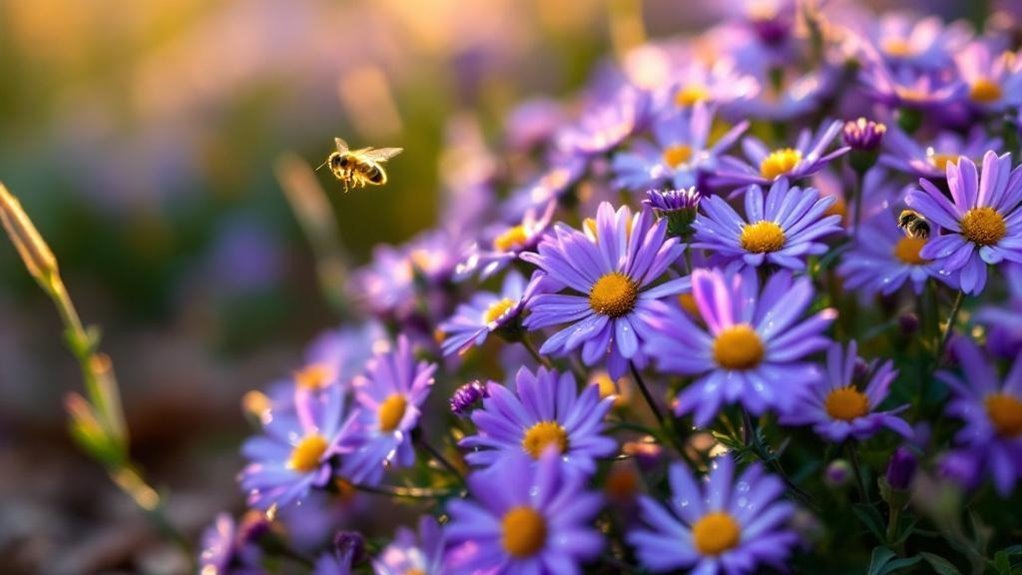
Aromatic Aster (Symphyotrichum Oblongifolium)

fall blooming pollinator powerhouse plant

When late-season pollinators face dwindling nectar sources across Eureka’s terrain, Symphyotrichum oblongifolium emerges as a critical fall-blooming resource that sustains monarch butterflies, native bees, and migrating insects through October frosts. This drought-tolerant perennial thrives in Missouri’s clay-based soils, producing vibrant purple ray flowers from September through November.

Planting tips for establishing aromatic aster colonies:

  1. Position specimens in full sun locations with well-draining substrates
  2. Space plants 18-24 inches apart to accommodate mature 2-3 foot spreads
  3. Implement spring division every three years to maintain vigor
  4. Reduce irrigation once root systems establish (typically 8-12 weeks)

The aromatic benefits extend beyond nectar provision—crushed foliage releases volatile compounds that deter herbivores while attracting specialized pollinators. You’ll support ecosystem resilience by incorporating this species into pollinator corridors and rain gardens.

Conclusion

You’ll cultivate a living tapestry of Missouri’s botanical heritage when you integrate these native species into your Eureka scenery. These selections aren’t merely ornamental—they’re foundational components of local ecological networks, supporting pollinator populations, stabilizing substrates through fibrous root systems, and maintaining regional biodiversity. By selecting regionally-adapted taxa, you’re reducing irrigation demands, eliminating chemical inputs, and creating resilient plant communities that’ll thrive within Missouri’s temperate continental climate while supporting endemic fauna throughout successive phenological stages.

Filed Under: Uncategorized Tagged With: native plants, pollinator garden, sustainable landscaping

Seasonal Lawn Care Guide for Wildwood, MO: From Spring Cleanup to Winter Prep

November 27, 2025 By Zac Terrill Leave a Comment

In Wildwood’s Zone 6a-6b climate, you’ll start with spring dethatching and pre-emergent herbicides when soil hits 50-55°F, followed by nitrogen application at 0.75-1.0 lbs per 1,000 sq ft. Summer demands raising mowing heights to 3.5-4 inches and deep watering 1.5 inches weekly. Fall’s your prime window for core aeration, overseeding at 6-8 lbs per 1,000 sq ft, and starter fertilizer application. Complete your cycle with mid-November winterizer and final mowing at 2.5 inches. Understanding these climate-specific timing protocols will transform your turf management approach throughout the year.

Key Takeaways

  • Spring cleanup includes debris removal, dethatching if needed, core aeration for compacted soil, and pre-emergent herbicide application in mid-March.
  • Summer maintenance requires raising mowing height to 3.5-4 inches, deep watering 1.5 inches weekly, and monitoring for grubs and chinch bugs.
  • Fall rejuvenation involves core aeration, overseeding with tall fescue, applying starter fertilizer, and consistent watering for 21 days post-seeding.
  • Winter preparation includes applying high-potassium winterizer by mid-November, final mowing at 2.5 inches, and clearing debris to prevent disease.
  • Wildwood’s humid continental climate requires adjusting practices for freeze-thaw cycles, summer fungal pressure, and clay-loam soil conditions.

Understanding Wildwood’s Climate and Its Impact on Your Lawn

wildwood lawn care strategies

Wildwood, Missouri operates within USDA Hardiness Zone 6a-6b, experiencing a humid continental climate characterized by significant temperature fluctuations and precipitation variability throughout the growing season. You’ll encounter winter lows reaching -10°F and summer highs exceeding 90°F, creating substantial stress periods for turfgrass systems. This climate variability demands strategic adaptation in your maintenance protocols.

Your lawn’s soil composition typically consists of clay-loam substrates with moderate drainage capacity, requiring amendments to optimize nutrient availability and root penetration. Spring freeze-thaw cycles can compromise turf density, while summer humidity intensifies fungal pressure. You must calibrate irrigation schedules, fertilization timing, and pest management interventions to accommodate these environmental challenges. Understanding these climatic parameters allows you to deliver superior lawn health outcomes for your clients throughout Wildwood’s demanding seasonal shifts.

Spring Lawn Care: Awakening Your Turf After Winter Dormancy

As winter dormancy breaks and soil temperatures stabilize above 50°F, you’ll initiate your spring renovation sequence with a thorough turf assessment to identify winter damage, compaction zones, and disease carryover. Your lawn awakening strategy begins with debris removal and selective dethatching where accumulation exceeds half-inch depth. You’ll apply pre-emergent herbicides when forsythia blooms, targeting crabgrass germination windows. Core aeration reduces compacted clay soils prevalent in Wildwood, enhancing oxygen exchange and nutrient infiltration. For ideal turf revitalization, you’ll implement a nitrogen-rich fertilizer application at 0.75-1.0 pounds per thousand square feet, supporting vigorous growth without encouraging disease susceptibility. Overseed thin areas with quality tall fescue or Kentucky bluegrass cultivars matching your existing stand. Address pH imbalances through lime applications based on soil test recommendations.

Pre-Emergent Herbicide Application and Weed Control Timing

timing is crucial for herbicides

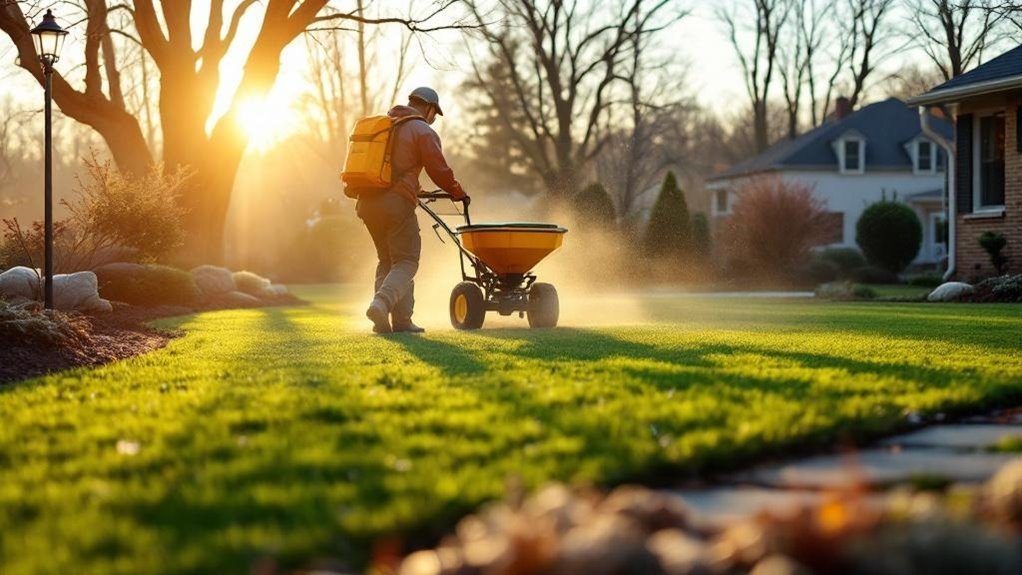
Successful pre-emergent herbicide application in Wildwood requires precise timing based on soil temperature thresholds, typically when ground temperatures reach 50-55°F for four consecutive days—generally mid-March through early April for crabgrass prevention. You’ll need to select products containing active ingredients like prodiamine, dithiopyr, or pendimethalin, matching the formulation to your target weed species and application equipment capabilities. Missing the ideal window by even two weeks can greatly reduce efficacy, as germinating weed seeds become resistant to pre-emergent barriers once radicle emergence begins.

Best Application Timing Windows

Timing pre-emergent herbicide applications correctly determines whether you’ll prevent weed germination or watch crabgrass and other annual weeds overtake your Wildwood lawn. Apply your first treatment when soil temperatures consistently reach 50-55°F, typically mid-March through early April. Monitor soil temperature at 2-inch depth for three consecutive days to confirm application timing.

Application PeriodTarget Weeds
Mid-March to Early AprilCrabgrass, goosegrass
Late May to Early JuneSummer annual broadleafs
Late August to SeptemberWinter annual weeds
October to NovemberPoa annua, henbit

Seasonal adjustments account for temperature fluctuations that affect germination patterns. Split applications provide extended control—apply 60% initially, then 40% eight weeks later for maximum efficacy throughout the growing season.

Effective Pre-Emergent Product Selection

Understanding when to apply pre-emergents means little without selecting products matched to Wildwood’s soil composition and target weed species. You’ll find different pre emergent types serve distinct purposes: prodiamine excels for crabgrass prevention in clay-heavy soils, while dithiopyr offers post-emergent control on newly germinated weeds. For clients with established fescue lawns, dimension (dithiopyr) provides flexibility during product application windows. Evaluate active ingredient longevity—products containing pendimethalin typically require reapplication every 8-10 weeks, whereas prodiamine formulations extend protection up to 5 months. Consider your clients’ lawn usage patterns when selecting granular versus liquid formulations. Granular applications work well for homeowners managing their own lawns, while liquid treatments guarantee uniform coverage across commercial properties. Always verify labeled application rates match Wildwood’s USDA Zone 6a requirements.

Summer Lawn Maintenance: Keeping Your Grass Healthy Through Heat and Drought

As temperatures climb above 85°F in Wildwood, your cool-season turf—primarily tall fescue and Kentucky bluegrass—enters a semi-dormant state that fundamentally changes your maintenance approach. You’ll need to raise mowing heights to 3.5-4 inches, allowing deeper root development and improved drought resilience. Reduce nitrogen applications to prevent heat stress and disease susceptibility. Instead, focus on maintaining adequate soil moisture through deep, infrequent irrigation—approximately 1-1.5 inches weekly, applied early morning to minimize evaporation and fungal pressure. Monitor for grub activity and chinch bugs, which intensify during summer months. You’re serving your clients best by accepting some dormancy as protective rather than problematic. Sharp mower blades prevent tissue tearing that compounds heat stress, keeping lawns healthier through challenging conditions.

Fall Lawn Rejuvenation: Aeration, Overseeding, and Fertilization

fall lawn renovation techniques

When nighttime temperatures consistently drop below 70°F in mid-September, Wildwood’s cool-season grasses enter their most vigorous growth phase—making fall your critical window for thorough lawn renovation.

Core Fall Renovation Sequence:

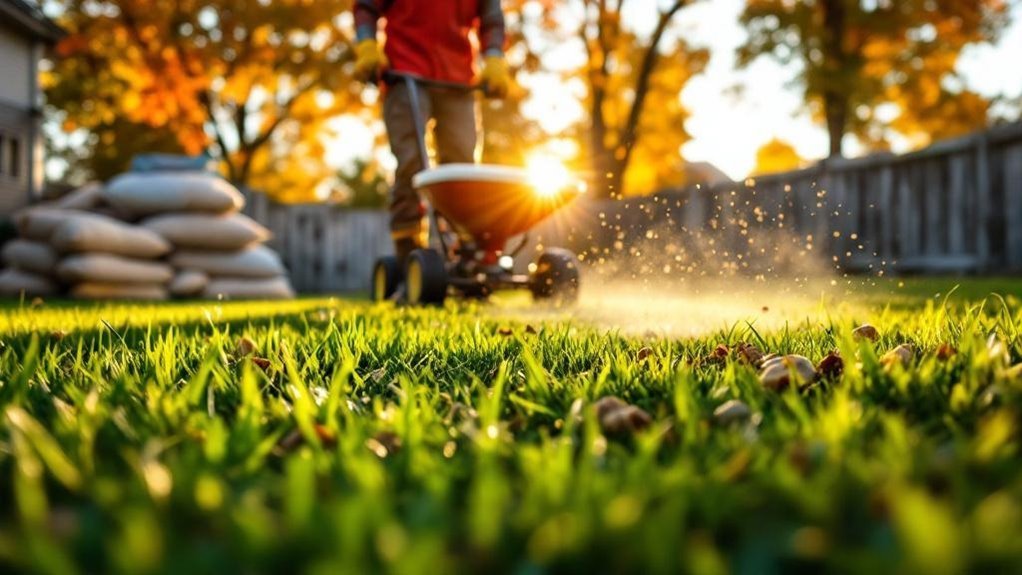
  • Aeration: Deploy core aerators to extract 2-3″ soil plugs at 3″ spacing, maximizing lawn aeration benefits through improved oxygen exchange and reduced compaction
  • Overseeding: Apply tall fescue or Kentucky bluegrass at 6-8 lbs per 1,000 sq ft using slit-seeding equipment for superior seed-to-soil contact
  • Fertilization: Implement starter fertilizer (18-24-12 NPK ratio) immediately post-seeding, followed by winterizer application in November
  • Maintenance: Maintain consistent soil moisture through daily 10-minute irrigation cycles for 21 days

These overseeding techniques establish dense turf stands that’ll serve your clients’ properties throughout winter dormancy.

Mowing Heights and Watering Schedules Throughout the Seasons

Maintaining proper mowing heights and irrigation schedules requires seasonal adjustments to accommodate Wildwood’s changing climate zone and varying turfgrass growth patterns. Cool-season grasses like tall fescue and Kentucky bluegrass demand different cutting heights during active growth periods versus summer dormancy, while water requirements fluctuate based on evapotranspiration rates and precipitation levels. You’ll need to modify both practices throughout spring, summer, fall, and winter to optimize turf health and stress tolerance in this region’s temperature extremes and humidity fluctuations.

Optimal Mowing Heights Seasonally

Since grass growth patterns shift dramatically with temperature fluctuations in Wildwood’s climate zone, you’ll need to adjust your mower deck height at least four times annually to maintain ideal turf health.

Proper mowing techniques require seasonal adjustments that align with your turf’s physiological needs:

  • Spring (3-3.5 inches): Raise blades as vigorous growth resumes, promoting deeper root development
  • Summer (3.5-4 inches): Maximum height protects crowns from heat stress and conserves soil moisture
  • Fall (2.5-3 inches): Gradual lowering prepares turf for dormancy while preventing disease harboring
  • Late Fall (2-2.5 inches): Final cut reduces snow mold risk without scalping

Never remove more than one-third of leaf blade length per session. Sharp mower blades prevent tissue tearing that invites pathogen entry and weakens your clients’ lawns.

Watering Frequency by Season

Just as mowing height adjustments optimize photosynthetic efficiency and root development, strategic irrigation scheduling directly impacts turf resilience and resource conservation throughout Wildwood’s distinct seasonal phases.

SeasonFrequencyApplication Rate
Spring1x weekly1-1.5 inches
Summer2-3x weekly1.5-2 inches
Fall1x weekly1-1.5 inches

Your seasonal watering protocols should prioritize deep, infrequent applications that encourage robust root systems. During summer heat stress, implement drought strategies including early-morning irrigation windows (4-8 AM) to minimize evapotranspiration losses. Monitor soil moisture at 4-6 inch depths, adjusting schedules based on precipitation events and established turf density. Cool-season grasses require reduced frequency during dormancy shifts, preventing disease proliferation while maintaining adequate hydration for client environments.

Adjusting for Wildwood Climate

Wildwood’s humid continental climate (Köppen Cfa classification) creates distinct physiological demands on turf systems that require synchronized adjustments to both mowing heights and irrigation protocols across four distinct growth phases.

You’ll optimize turf health by implementing these climate-specific practices:

  • Spring (March-May): Raise mowing height to 3-3.5″ as roots establish; irrigate 1″ weekly while monitoring soil testing results for pH adjustments
  • Summer (June-August): Maintain 3.5-4″ height to protect crowns from heat stress; deep-water 1.5″ weekly during drought periods
  • Fall (September-November): Lower gradually to 2.5-3″ while increasing watering to support recovery and prevent lawn diseases
  • Winter (December-February): Final mow at 2.5″; cease irrigation unless experiencing abnormal dry spells

These calibrated adjustments strengthen turf resilience while serving your community’s environment stewardship goals.

Winter Preparation: Protecting Your Lawn During Cold Months

As temperatures plummet below 32°F in Wildwood, your lawn enters a critical dormancy phase that requires strategic preparation to guarantee spring recovery. Apply a winterizer fertilizer with high potassium content by mid-November to strengthen root systems and boost cold tolerance. You’ll want to continue mowing at 2.5-3 inches until growth ceases, preventing matting under snow cover. Remove debris and fallen leaves that can harbor fungal pathogens and restrict lawn insulation. Aerate compacted areas before the ground freezes to improve oxygen exchange and drainage. Keep traffic minimal on frozen turf to prevent crown damage. Monitor snow cover depth—it provides natural insulation against freeze-thaw cycles. Address any drainage issues now to prevent ice accumulation that suffocates grass crowns throughout winter dormancy.

Common Lawn Problems in Wildwood and Seasonal Solutions

seasonal lawn care strategies

Because Wildwood’s clay-heavy soils and humid continental climate create distinct phytopathological challenges, you’ll encounter pest and disease patterns that shift predictably with seasonal conditions. Implementing proactive lawn diseases monitoring and targeted pest management strategies guarantees your clients maintain healthy turf year-round.

Seasonal Problem Matrix:

  • Spring: Brown patch and dollar spot emergence require fungicide applications when soil temperatures reach 60°F, while grub prevention begins with merit-based treatments.
  • Summer: Chinch bugs proliferate in heat-stressed areas; identify by yellowing patterns and apply bifenthrin-based insecticides.
  • Fall: Armyworm infestations peak during September; scout regularly and treat infestations exceeding threshold levels.
  • Winter: Vole damage prevention through proper mowing heights and snow mold mitigation via nitrogen management.

Document treatment protocols and maintain detailed service records for peak client satisfaction.

Conclusion

You’ve now got the ultimate arsenal to transform your Wildwood turf into an absolutely bulletproof, show-stopping masterpiece that’ll make your neighbors weep with envy! Master these IPM strategies, nail your nitrogen timing down to the minute, and execute precision core aeration like a seasoned turf professional. Your lawn won’t just survive Wildwood’s brutal climate swings—it’ll absolutely dominate every season. Commit to this regiment, and you’ll cultivate the most resilient, jaw-dropping turfgrass ecosystem in St. Charles County!

Filed Under: Uncategorized Tagged With: lawn care, seasonal tips, Wildwood MO

Why Ellisville Homeowners Choose Professional Landscaping Services Over DIY

October 30, 2025 By Zac Terrill Leave a Comment

You’ll find professional landscaping more cost-effective than DIY in Ellisville due to clay-heavy soils, unpredictable freeze-thaw cycles, and specialized equipment requirements create hidden expenses. Professionals possess terrain-specific expertise for soil amendments, drainage solutions, and cultivar selection that tolerates alkaline conditions. While quarter-acre properties demand 8-12 weekly maintenance hours, certified teams complete projects faster while avoiding costly remediation mistakes. Their ergonomic techniques prevent musculoskeletal injuries from handling 2,500-pound paver pallets and mature trees. Extensive warranty protection and evidence-based sustainable practices guarantee your outdoor space investment delivers long-term value and ecological resilience.

Key Takeaways

  • Professional landscapers avoid DIY hidden costs like specialized equipment purchases, material waste, and expensive mistakes requiring remediation.
  • Ellisville’s clay-heavy soils and freeze-thaw cycles demand expert knowledge in soil amendments, drainage solutions, and alkaline-tolerant plant selection.
  • Certified professionals provide site-specific assessments ensuring proper plant compatibility, strategic placement, and sustainable native species selections for Missouri’s climate.
  • Hiring professionals saves busy families 8-12 weekly maintenance hours while eliminating risks of musculoskeletal injuries from heavy lifting and equipment operation.
  • Comprehensive warranty protection spanning 1-5 years safeguards homeowners against material defects and workmanship failures with documented maintenance protocols.

The Hidden Costs of DIY Landscaping Projects

hidden costs of diy landscaping

While DIY gardening initially appears cost-effective, homeowners frequently underestimate the financial burden of equipment acquisition, material waste, and corrective interventions. You’ll encounter budget overruns when purchasing specialized tools you’ll rarely use again—aerators, sod cutters, and compactors represent significant capital expenditures. Material calculations often prove inaccurate, resulting in excess mulch, pavers, or insufficient quantities requiring additional delivery fees. Project delays compound costs when you’re juggling responsibilities while serving your family and community commitments. Inexperienced grading leads to drainage problems requiring professional remediation. Improperly installed hardscapes settle unevenly, demanding costly reconstruction. When you factor in your time’s value and potential mistakes, professional gardeners deliver superior outcomes while freeing you to focus on meaningful service to others.

Ellisville’s Unique Soil and Climate Challenges

Since Ellisville sits at the convergence of Missouri’s shifting climate zone, your terrain faces clay-heavy soils with pH levels ranging from 6.8 to 7.5 and unpredictable freeze-thaw cycles that challenge plant establishment. Professional horticulturists understand this soil composition requires strategic amendments—incorporating organic matter, adjusting drainage patterns, and selecting cultivars that tolerate alkaline conditions. Climate variability demands expertise in hardiness zone changes, as Ellisville experiences both Zone 6a and 6b characteristics. You’ll need specialists who can implement proper root protection systems, design moisture management solutions, and choose plant materials that withstand temperature fluctuations. When you’re committed to creating environments that serve your family and community long-term, partnering with professionals who master these technical challenges guarantees sustainable results that honor your investment.

Professional Expertise in Plant Selection and Placement

expert plant selection strategies

Since Ellisville’s microclimates create distinct growing conditions within individual properties, professionals conduct site-specific assessments that map sun exposure patterns, wind corridors, and moisture retention zones before recommending plant palettes. You’ll benefit from their understanding of plant compatibility—ensuring species share similar water, nutrient, and pH requirements while avoiding competitive root systems. Professionals strategically layer plantings by height, texture, and bloom sequences to maintain year-round visual interest and aesthetic balance. They’ll specify cultivars with proven hardiness ratings for Zone 6b conditions, selecting disease-resistant varieties that minimize maintenance demands. This expertise prevents costly mistakes like placing moisture-loving specimens in drainage swales or shade-preferring perennials in southern exposures. You’re ultimately investing in sustainable environments that serve your community through proper stewardship of resources.

Time Savings for Busy Professionals and Families

Professional grounds maintenance demands 8-12 hours weekly for a typical quarter-acre property when you account for mowing cycles, edge trimming, mulch replenishment, pruning schedules, and irrigation system adjustments. When you’re managing career responsibilities and family commitments, outsourcing outdoor upkeep isn’t luxury—it’s strategic resource allocation.

Professional services eliminate weekend yard work that competes with family involvement in community activities, youth sports, and volunteer initiatives. Your time management strategies improve considerably when you redirect those hours toward mentoring, coaching, or serving your neighbors. Licensed landscaping crews complete tasks in 90 minutes that consume your entire Saturday, applying specialized knowledge of turfgrass nutrition, seasonal pruning protocols, and integrated pest management. You’ll serve your household more effectively by focusing on relationships rather than repetitive maintenance tasks.

Access to Specialized Equipment and Materials

professional equipment and materials

You’ll gain immediate access to commercial-grade equipment that would cost thousands to purchase outright—aerators, sod cutters, stump grinders, and specialized spreaders that homeowner models simply can’t match in power or precision. Professional groundskeepers maintain established relationships with wholesale nurseries and material suppliers, securing higher-quality plants, premium soil amendments, and hardscaping materials at contractor pricing you can’t access as a retail customer. This equipment advantage combined with superior material sourcing translates directly into faster project completion times and longer-lasting results that justify the service investment.

Professional-Grade Tools Matter

High-end gardening equipment—commercial-grade mowers, aerators, soil compactors, and precision irrigation tools—delivers results that consumer-grade alternatives can’t match. You’ll notice the difference immediately when professionals deploy specialized gardening tools that handle challenging terrain and dense vegetation efficiently. Equipment maintenance costs alone make ownership impractical for occasional use.

Professional EquipmentHomeowner Alternative
Hydraulic sod cuttersManual edging tools
Commercial zero-turn mowersResidential push mowers
Truck-mounted sprayersHandheld spray bottles
Laser-guided grading systemsManual leveling methods

Professional gardeners maintain calibrated equipment that guarantees precision results for your property. Their investment in specialized machinery—from stump grinders to trenchers—means you’re accessing tools worth thousands without the storage requirements or depreciation concerns. This equipment efficiency translates directly into superior outcomes for your gardening projects.

Quality Material Sourcing Advantages

Beyond equipment superiority, established gardening contractors maintain wholesale relationships with specialty nurseries, hardscape suppliers, and soil amendment manufacturers that aren’t accessible to retail customers. You’ll benefit from premium-grade topsoil, professionally blended mulches, and disease-resistant cultivars that big-box retailers don’t stock. These sourcing benefits translate directly into longevity and performance for your gardening investment.

Professional material quality extends to hardscaping components—pavers, retaining wall systems, and aggregate materials—where contractors access commercial-grade products with superior load ratings and freeze-thaw durability. They’ll source pH-balanced soil amendments, mycorrhizal inoculants, and specialized fertilizers formulated for your region’s specific deficiencies. This procurement advantage means you’re getting materials engineered for peak plant establishment and structural integrity, not consumer-grade alternatives designed primarily for shelf appeal and price-point competitiveness.

Long-Term Property Value Enhancement

While aesthetic improvements deliver immediate curb appeal, strategic outdoor design investments compound annual property values by 15-20% through sustainable design implementation. Professional landscapers engineer drainage systems, erosion control, and native plantings that reduce maintenance costs while maximizing property aesthetics. You’re investing in infrastructure that serves future homeowners and strengthens neighborhood appeal.

Investment TimelineDIY DepreciationProfessional ROI
Year 1-3Material failure, replanting costsEstablished root systems, warranty protection
Year 4-7Erosion damage, drainage issuesMature canopy development, thermal efficiency
Year 8-10Outdoor design replacement requiredPeak valuation enhancement, ecosystem establishment

Your commitment to professional outdoor design creates generational value, transforming properties into community assets while providing environmental stewardship that benefits everyone.

Sustainable Design Practices for Missouri Landscapes

sustainable missouri landscape practices

Missouri’s continental climate—characterized by temperature swings exceeding 100°F annually, variable precipitation patterns, and USDA hardiness zones 5b through 7a—demands region-specific terrain architecture that withstands environmental stressors while conserving resources. Professional gardeners implement sustainable frameworks through strategic native plant selection, incorporating species like Missouri black-eyed Susan, purple coneflower, and serviceberry that require minimal irrigation once established. You’ll reduce maintenance costs while supporting local pollinators and wildlife corridors.

Experts integrate eco-friendly materials including permeable pavers, recycled composites, and locally sourced stone that minimize environmental impact. Rain gardens, bioswales, and xeriscaping techniques manage stormwater runoff effectively while reducing municipal strain. These evidence-based approaches create resilient environments that serve your property and community through reduced resource consumption, improved biodiversity, and long-term ecological health.

Physical Demands and Safety Considerations

You’ll face significant physical risks in landscaping operations, from musculoskeletal injuries during material handling to equipment-related accidents and environmental stressors. Understanding proper lifting mechanics, implementing lockout-tagout procedures for powered equipment, and establishing heat illness prevention protocols are non-negotiable aspects of your safety program. These hazards require systematic controls through engineering solutions, administrative policies, and personal protective equipment to maintain OSHA compliance and reduce workers’ compensation claims.

Heavy Lifting Injury Risks

Landscaping professionals face significant musculoskeletal injury risks when handling materials like pavers, natural stone, soil bags, and mature plants that routinely exceed 50 pounds. You’ll encounter constant strain on your lower back, shoulders, and knees without proper lifting techniques and equipment. Professional crews implement injury prevention protocols that DIY homeowners typically lack.

Material TypeAverage Weight
Paver pallets2,500-3,000 lbs
Natural stone slabs100-300 lbs each
Soil bags (bulk)40-80 lbs
Mature trees (balled)200-500 lbs

Professional teams utilize mechanical assists—skid steers, pallet jacks, and tree spades—reducing heavy lifting exposure. They’ve mastered ergonomic techniques, wear supportive equipment, and rotate physically demanding tasks. You’re protecting your long-term health by delegating these hazardous activities to trained specialists.

Equipment Operation Hazards

Operating power equipment like walk-behind trenchers, plate compactors, and stump grinders exposes you to vibration-related injuries, noise-induced hearing loss, and laceration risks that require specialized training to mitigate. Without proper operator training, you’re vulnerable to kickback incidents, blade contact injuries, and repetitive strain disorders that can sideline you from serving your clients effectively.

Professional groundskeepers maintain current certifications in equipment safety protocols, understanding load capacities, maintenance schedules, and emergency shutdown procedures. They’ve invested hundreds of hours mastering each tool’s operational parameters and recognizing warning signs of equipment failure. This expertise protects not only themselves but also your property and family. When you hire trained professionals, you’re ensuring that complex tasks are executed with the precision and safety consciousness that homeowners simply can’t replicate through occasional DIY attempts.

Heat Exhaustion Prevention

When ambient temperatures exceed 85°F and humidity climbs above 60%, your risk of heat-related illness increases exponentially during extended outdoor work sessions. Professional horticulturists implement thorough heat awareness protocols that protect both crew members and property outcomes.

Warning SignProfessional Response
Dizziness, nauseaImmediate work cessation
Excessive sweatingHydration station deployment
Muscle crampingElectrolyte replacement
Confusion, weaknessEmergency medical protocols

Effective hydration strategies require consuming 16-32 ounces of water hourly during peak heat conditions. Licensed gardening teams rotate personnel through shaded rest intervals, monitor core temperature indicators, and schedule heat-intensive tasks during cooler morning hours. You’ll avoid the dangerous combination of physical exertion and thermal stress that sends thousands to emergency rooms annually.

Warranty Protection and Ongoing Maintenance Support

Beyond the initial installation, extensive warranty coverage safeguards your investment against material defects, workmanship failures, and plant mortality during the establishment period. Professional landscapers typically offer tiered protection plans spanning 1-5 years, addressing irrigation components, hardscape materials, and vegetation health. You’ll benefit from documented maintenance protocols that preserve warranty validity while ensuring optimal outdoor environment performance.

Structured maintenance plans provide your clients with seasonal pruning, fertilization schedules, integrated pest management, and system diagnostics. These programs prevent minor issues from escalating into costly repairs while maintaining property values. Licensed contractors document all service interventions, creating thorough care histories that support long-term landscape health. This proactive approach demonstrates your commitment to sustainable stewardship rather than transactional service delivery.

Conclusion

You might think professional landscaping’s upfront investment outweighs DIY savings, but consider the lifecycle costs. When you factor in equipment rentals, material waste, soil amendments for Ellisville’s clay-heavy terrain, and potential installation failures, you’re often spending more without professional results. Licensed contractors leverage bulk purchasing power, proper grading techniques, and zone-specific plant selection that’ll reduce your long-term maintenance costs by 30-40%. You’re not just buying labor—you’re investing in engineered solutions that protect your property value.

Filed Under: Uncategorized Tagged With: clay soils, DIY projects, landscaping services

  • 1
  • 2
  • Next Page »

Contact Us

St. Louis Landscaping Company Call us for a free quote 636.405.2443

Follow Us

  • Facebook
  • LinkedIn
  • Twitter

Authorized Belgard Dealer

Client Log In | Terms & Services | Privacy Policy

Copyright © 2017 Terrill Landscape Contracting. All Rights Reserved.