• Services
    • Landscape Maintenance
    • Landscape Design and Installation
    • Hardscapes
    • Fire Feature
    • Water Features
    • Natural Playgrounds
    • Landscape Lighting
    • Synthetic Turf
  • About Us
    • Testimonials
  • Latest News
  • Contact Us

Paver Installation in St. Louis County: Materials, Design Ideas, and Cost Considerations

December 11, 2025 By Zac Terrill Leave a Comment

Paver installation in St. Louis County requires careful material selection and engineering to withstand clay soil conditions and freeze-thaw cycles. You’ll choose from concrete pavers ($3-8/sq ft), natural stone ($15-30/sq ft), or porcelain options, with total installed costs ranging $15-40/sq ft. Your project must address proper drainage through 2% minimum slopes, deeper excavation (10-12 inches), and geotextile fabric integration to prevent hydrostatic pressure damage. Popular patterns include herringbone for driveways and basketweave for patios, matching local architectural styles. The sections below cover contractor selection, maintenance protocols, and code-compliant installation techniques.

Key Takeaways

  • Material costs range from $3-8/sq ft for concrete pavers to $15-30/sq ft for natural stone, with total installation $15-40/sq ft.
  • Herringbone patterns suit driveways for strength, basketweave designs simplify patio installations, and running bond works well for walkways.
  • St. Louis County’s clay soil requires 10-12 inch excavation depth, geotextile fabric, and minimum 2% slope for proper drainage.
  • Maintenance includes weekly sweeping, joint sand replenishment every 2-3 years, and breathable sealer application every 3-5 years.
  • Verify contractor licensing, insurance, technical expertise in base preparation, recent client references, and written warranties before hiring.

Understanding Paver Material Options for St. Louis County’s Climate
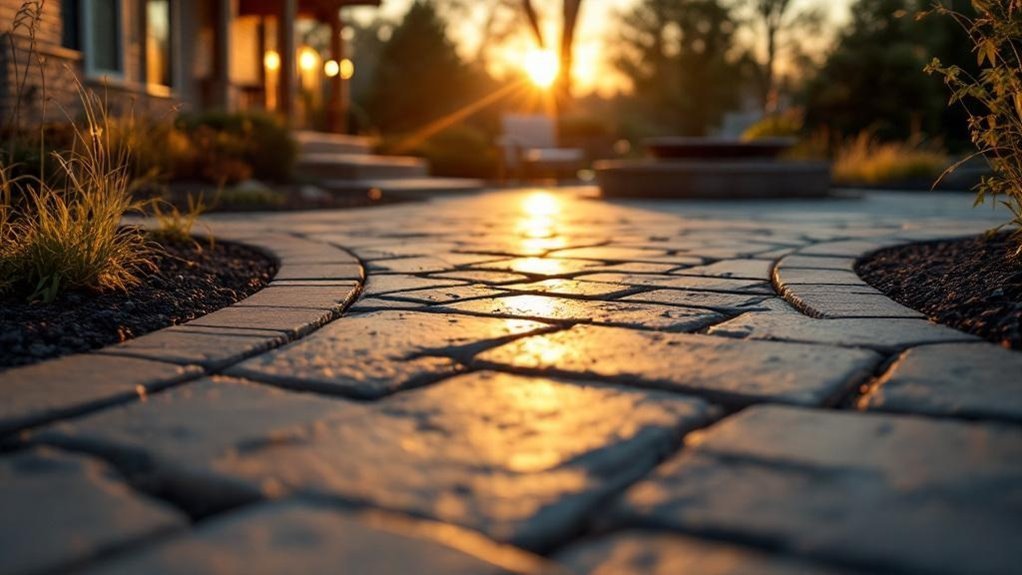
weather resistant paver material options

St. Louis County’s freeze-thaw cycles demand pavers with exceptional weather resistance. You’ll need materials that withstand temperature fluctuations ranging from below zero to 100°F while maintaining structural integrity.

Concrete pavers offer versatility and material longevity when they meet ASTM C936 standards. They’re cost-effective for clients seeking durable solutions. Porcelain pavers provide superior freeze-thaw resistance with minimal water absorption—ideal for driveways and high-traffic areas.

Natural stone options like granite and bluestone deliver unmatched durability but require proper installation techniques. You’ll want 6-8 inches of compacted aggregate base to prevent settling.

Clay brick pavers resist weathering but need SW-grade rating for St. Louis’s climate conditions. Each material serves different project requirements, so you’ll match selections to your clients’ functional needs and aesthetic preferences while ensuring code compliance.

Cost Breakdown: What to Budget for Your Paver Project

Your paver installation budget encompasses three primary cost categories: materials, labor, and site preparation. Material cost analysis reveals concrete pavers ranging from $3-8 per square foot, while natural stone options exceed $15-30 per square foot. You’ll need to account for base aggregate, joint sand, and edge restraints in your calculations. Labor typically represents 50-60% of total project costs, covering excavation, grading, and installation. Site preparation demands particular attention—addressing drainage requirements, soil compaction standards, and base depth specifications directly impacts structural integrity. For paver project financing, expect $15-40 per square foot installed, depending on material selection and site complexity. Professional contractors provide detailed estimates that align with local building codes and guarantee your investment serves clients effectively.

Design Trends and Style Inspirations for Local Homes
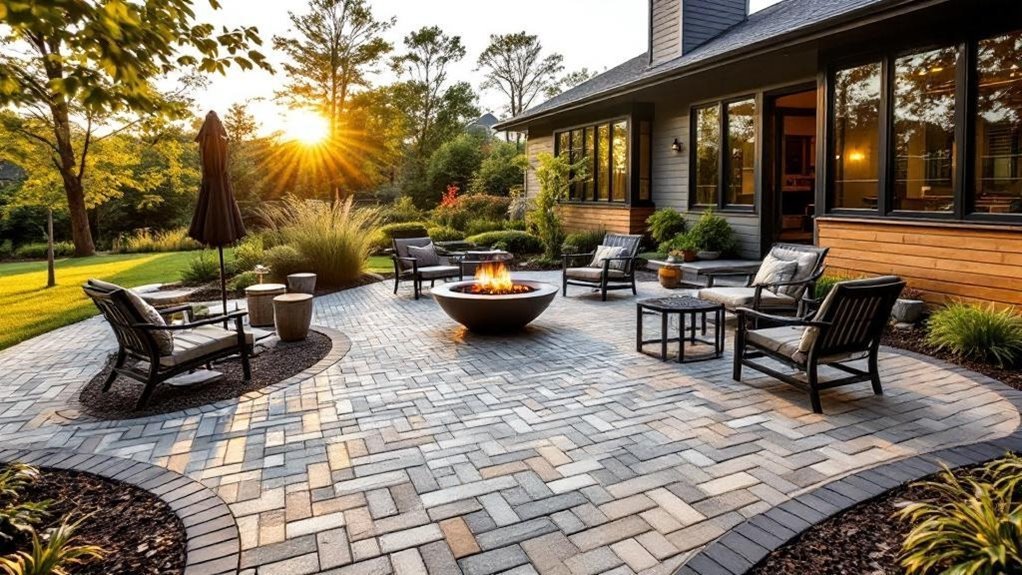
paver patterns enhance curb appeal

Your paver pattern selection should align with St. Louis County’s predominant architectural styles—Colonial Revival, Craftsman, and mid-century ranch homes—to maximize curb appeal and property value. Herringbone and basketweave patterns complement traditional facades, while running bond and ashlar layouts improve contemporary designs. Coordinating your paver color palette with existing brick, stone, or siding materials guarantees compliance with local HOA guidelines and creates visual cohesion across your property.

Popular Paver Patterns

How do you transform an ordinary outdoor space into an architectural statement? Pattern selection directly impacts visual appeal and structural performance.

The herringbone pattern offers exceptional interlock strength, ideal for driveways requiring load distribution. You’ll find this 45-degree or 90-degree arrangement meets ADA compliance while serving high-traffic areas.

A basketweave design creates timeless charm for patios, alternating perpendicular paver pairs that simplify installation for community projects.

Running bond patterns—offset by half-lengths—provide straightforward layouts perfect for walkways serving elderly residents.

Circular layouts demand precise cutting but deliver stunning focal points for gathering spaces.

Random patterns accommodate mixed-size pavers, reducing waste while creating organic aesthetics.

Border accents define edges and connections, enhancing accessibility and safety for those you serve.

Regional Architecture Coordination

St. Louis County’s architectural heritage demands thoughtful paver coordination. You’ll need to align your installation with historic preservation guidelines and local regulations, particularly in designated districts. Match your pavers to your home’s architectural style for harmonious curb appeal.

Architectural StyleRecommended Paver Approach
Victorian/HistoricBrick pavers in traditional running bond, clay tones
Mid-Century ModernConcrete pavers with clean lines, geometric patterns
Colonial RevivalTumbled pavers mimicking aged stone, neutral palette

Before installation, verify compliance with municipal codes and homeowner association requirements. Historic districts often restrict material choices and color schemes. You’re serving your community by preserving its architectural character while enhancing your property’s functionality and beauty through carefully coordinated paver selection.

Preparing Your Property for Professional Paver Installation

Before professional crews arrive at your property, understanding the site preparation requirements will help guarantee your paver installation proceeds efficiently and meets structural specifications. Your site assessment should identify drainage patterns, soil conditions, and existing utilities that’ll impact the project scope.

Proper property clearing establishes the foundation for long-lasting results:

  • Remove vegetation, roots, and organic material from the installation area
  • Excavate to code-specified depths based on your application’s load requirements
  • Grade the subbase to promote positive drainage away from structures
  • Mark underground utilities and irrigation systems to prevent costly damage

You’ll want to coordinate access points for equipment and material delivery. Clear pathways allow contractors to serve your needs effectively while protecting surrounding landscaping and hardscaping elements throughout the installation process.

Drainage and Grading Considerations in St. Louis County
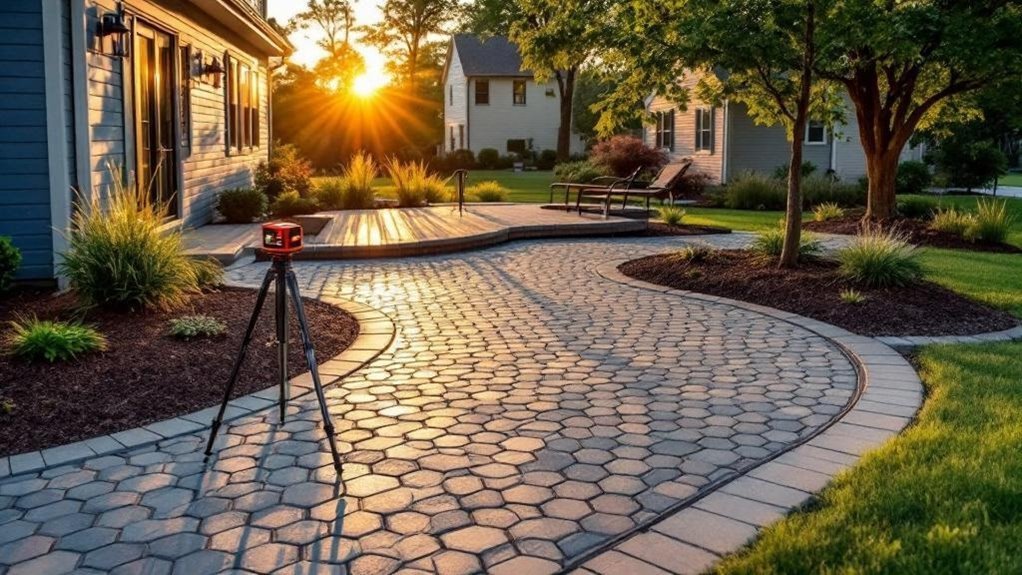
drainage and grading requirements

Your paver installation must address St. Louis County’s specific drainage challenges to meet code requirements and prevent structural failure. The region’s expansive clay soils demand precise grading with minimum 2% slope away from structures, while French drain integration becomes crucial in areas with poor percolation rates. You’ll need to account for both surface water management and subsurface drainage systems to guarantee your pavers remain stable through freeze-thaw cycles and heavy rainfall events.

Proper Slope Requirements

When installing pavers in St. Louis County, you’ll need to establish proper slope angles to protect your clients’ investment from water damage. The International Building Code requires a minimum 2% slope (1/4 inch per foot) for pedestrian surfaces, though 3% optimizes drainage solutions for our region’s weather patterns.

Consider these critical slope requirements:

  • Patios and walkways: Maintain 2-3% slope away from structures to prevent foundation issues
  • Driveways: Design 1-2% cross-slope with 2-3% longitudinal grade for vehicle stability
  • Pool decks: Implement 2% minimum slope directing water toward designated drainage points
  • Retaining walls: Account for backfill drainage when calculating adjacent paver slopes

You’ll want to verify grades with a builder’s level before base installation. St. Louis County’s clay-heavy soils demand precise slope calculations to guarantee long-term performance.

French Drain Integration

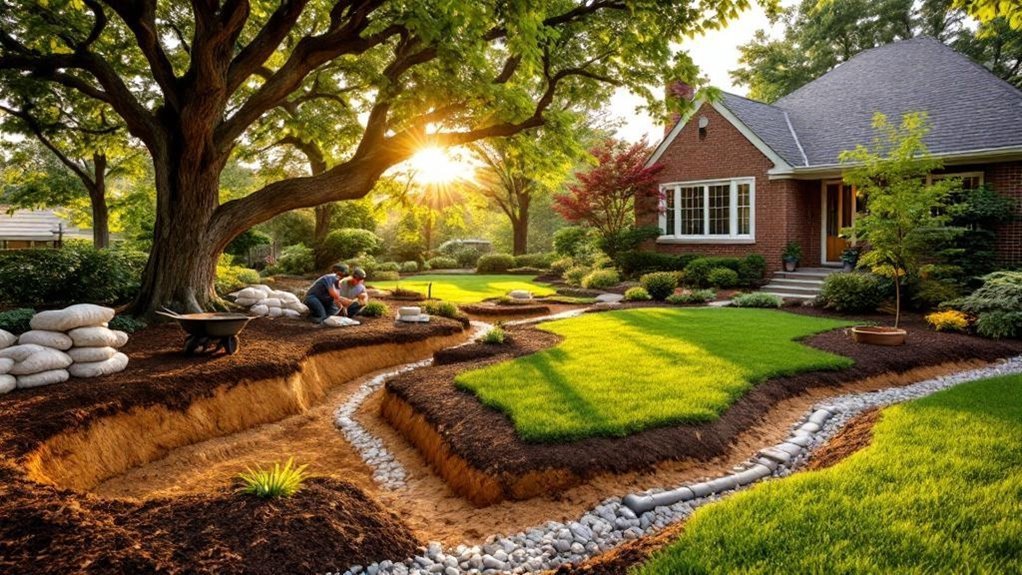
Owing to St. Louis County’s clay-heavy soils and seasonal precipitation patterns, you’ll need robust drainage solutions for long-lasting paver installations. French drains provide exceptional water management when integrated beneath or alongside your hardscape. You should position perforated pipes in gravel-filled trenches at the patio’s lowest point, directing runoff away from structures and preventing subsurface erosion.

Install the drain system before laying your base material, ensuring proper connectivity to existing stormwater infrastructure or daylight points. Your French drain should maintain a minimum 1% slope for adequate flow velocity. Wrap pipes with geotextile fabric to prevent sediment clogging while allowing water infiltration. This integration protects your paver investment by eliminating hydrostatic pressure that causes settling, frost heaving, and joint separation—critical considerations for serving clients who expect durable, properly engineered outdoor spaces.

Clay Soil Challenges

St. Louis County’s clay soil presents significant drainage issues that’ll directly impact your paver installation’s longevity. Clay’s dense composition restricts water permeability, creating hydrostatic pressure beneath pavers that causes shifting, settling, and eventual failure.

Address these challenges through proper base preparation:

  • Excavate deeper than standard specifications—typically 10-12 inches to accommodate improved drainage layers
  • Install geotextile fabric between subgrade and base to prevent clay migration into aggregate
  • Increase base depth with 6-8 inches of compacted aggregate for better load distribution
  • Grade slopes at minimum 2% away from structures to prevent water accumulation

You’ll need to compact clay subgrade to 95% density before adding base materials. This creates a stable foundation that resists moisture-induced expansion and contraction cycles common in clay soil conditions.

Maintenance Requirements to Protect Your Investment
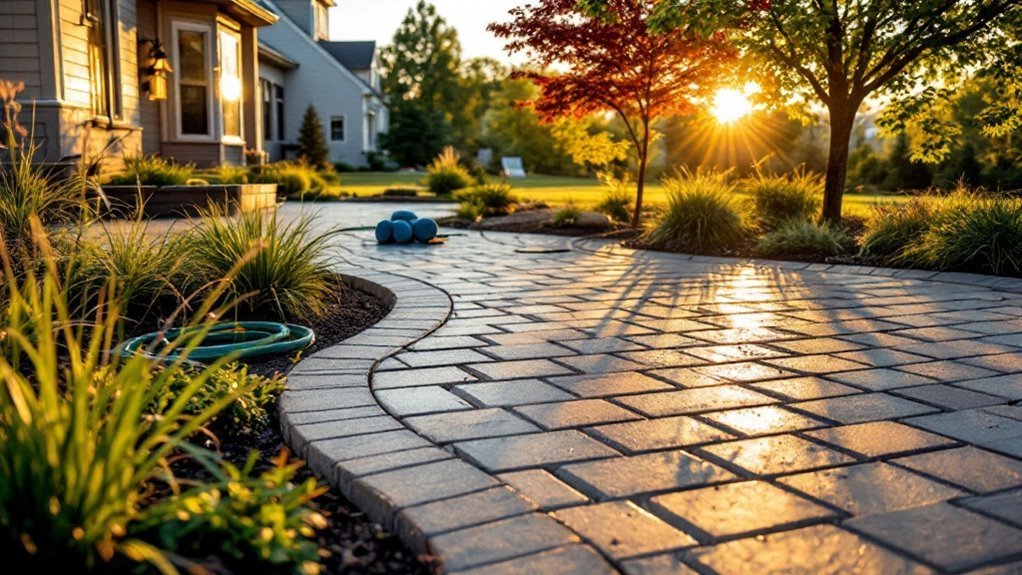
paver maintenance for longevity

Although pavers rank among the most durable hardscaping materials available, their longevity in St. Louis County depends on consistent maintenance practices. You’ll need to implement routine cleaning tips like sweeping debris weekly and power washing annually to prevent organic staining and efflorescence buildup. Joint sand requires replenishment every 2-3 years to maintain structural integrity and prevent weed growth.

Paver sealing benefits include improved color retention, stain resistance, and protection against freeze-thaw damage—critical for St. Louis’s climate extremes. You should apply a breathable acrylic or polyurethane sealer every 3-5 years, ensuring surfaces are completely dry beforehand. Address sunken pavers immediately by removing affected units, adding base material, and reinstalling to prevent water pooling that accelerates deterioration and compromises client safety.

Choosing the Right Paver Installation Contractor

How do you differentiate between qualified paver contractors and those who’ll compromise your project’s structural integrity? Start by verifying contractor qualifications through proper licensing, insurance certificates, and bonded status. You’ll protect your clients’ investments by selecting professionals who understand St. Louis County’s soil conditions and drainage requirements.

Evaluate candidates using these criteria:

  • Portfolio verification: Request documented before-and-after photos with measurable project timelines
  • Technical expertise: Confirm knowledge of base preparation depth (6-8″ minimum) and proper slope calculations
  • Reference validation: Contact three recent clients about quality, adherence to schedules, and post-installation support
  • Written warranties: Guarantee extensive coverage for materials and workmanship (minimum 2 years)

Don’t compromise on contractor selection—structural failures cost more than premium installation.

Conclusion

Your paver installation represents more than hardscape—it’s the foundation upon which your property’s curb appeal is built. Like a well-engineered blueprint, every element from material selection to drainage engineering must align with St. Louis County’s unique climatic demands and municipal codes. You’ve investigated the technical specifications; now it’s time to transform that knowledge into concrete reality. Partner with qualified contractors who understand that precision in execution equals longevity in performance. Your investment deserves nothing less than structural poetry.
Filed Under: Uncategorized Tagged With: landscaping, Paver installation, St. Louis

The Complete Guide to Landscape Maintenance in St. Louis: Year-Round Care Tips From Local Experts

October 23, 2025 By Zac Terrill Leave a Comment

You’ll need to adapt your terrain maintenance to St. Louis’s Zone 6b climate by selecting cool-season grasses like tall fescue and Kentucky bluegrass that thrive in clay soil. Start spring protocols when soil reaches 50-55°F with core aeration and pre-emergent applications, shift to deep watering twice weekly during summer heat, and apply winterizer fertilizer in fall before temperatures drop below 32°F. Your success depends on amending clay soil with compost at a 2:1 ratio while monitoring for Japanese beetles and fungal diseases throughout the growing season.

Key Takeaways

  • Select cool-season grasses like tall fescue and Kentucky bluegrass suited for St. Louis’s Zone 6b climate and clay soil conditions.
  • Apply pre-emergent herbicides and core aeration in early spring when soil temperatures reach 50-55°F for optimal lawn health.
  • Water deeply twice weekly during summer heat and mulch plantings with 3-4 inches of hardwood to retain moisture.
  • Aerate compacted turf and apply winterizer fertilizer in fall when temperatures drop below 70°F to strengthen root systems.
  • Maintain mowing heights between 2.5-4 inches seasonally to improve drought tolerance and prevent disease in cool-season grasses.

Understanding St. Louis’s Zone 6b Climate and Soil Conditions

st louis climate and soil

Since St. Louis sits in USDA Zone 6b, you’ll need to understand its unique environmental challenges to serve your clients effectively. The region experiences temperature fluctuations from -5°F to 0°F in winter, demanding climate adaptation strategies for plant selection and protection protocols.

Your soil management requires attention to the area’s mainly clay composition, which retains moisture but restricts drainage and root penetration. You’ll want to implement strategic soil amendments—incorporating compost, aged manure, and sand—to improve structure and fertility. Test pH levels regularly, as local soils typically range from 6.0 to 7.0.

Consider the region’s 40-inch annual rainfall pattern, with peak precipitation in spring. You’ll need drainage solutions and erosion control measures. Understanding these conditions guarantees you’re designing resilient environments that thrive year-round.

Spring Landscape Maintenance: March Through May

Spring maintenance in St. Louis begins when soil temperatures consistently reach 50-55°F, typically in mid-March, signaling ideal conditions for core aeration and pre-emergent applications. You’ll need to coordinate fertilization schedules with local lawn care ordinances, particularly St. Louis County’s fertilizer restrictions near waterways and storm drains. Pruning dormant trees before budbreak and applying 2-3 inches of mulch around plantings creates the foundation for seasonal growth while addressing both functional drainage requirements and aesthetic design continuity.

Lawn Fertilization and Aeration

As temperatures stabilize above 55°F and soil conditions permit workability, your St. Louis lawn requires strategic nutrient management. Apply a slow-release nitrogen fertilizer (0.75-1.0 lb N/1000 sq ft) when grass reaches 3 inches, typically mid-April. You’ll support ideal lawn health by timing applications with active growth phases rather than calendar dates.

Core aeration becomes critical in spring for compacted clay soils prevalent throughout the region. Remove plugs 2-3 inches deep at 3-inch intervals when soil moisture reaches field capacity—firm but not saturated. This process improves root development, water infiltration, and nutrient uptake efficiency.

For properties serving high-traffic applications, overseed immediately post-aeration with quality turf-type tall fescue blends. Proper nutrient timing synchronized with aeration maximizes establishment rates while minimizing environmental runoff concerns under Missouri’s stormwater regulations.

Pruning and Mulching Tasks

While dormant-season pruning windows close in March, spring maintenance focuses on selective cuts for flowering shrubs and structural corrections that protect property values. You’ll apply proper pruning techniques after spring-blooming plants finish flowering—removing spent blooms on azaleas, lilacs, and forsythias prevents energy waste while maintaining scenery aesthetics for clients and visitors.

Strategic mulching benefits extend beyond appearance. You’ll apply 2-3 inches of organic mulch around trees and beds, leaving proper spacing at trunks to prevent moisture-related diseases. This practice suppresses weeds, regulates soil temperature, and conserves water—reducing maintenance costs while demonstrating environmental stewardship. Document mulch depths and coverage areas to maintain consistency across properties, ensuring your scenery investments deliver long-term returns for those you serve.

Summer Care Strategies for Hot and Humid Months

summer plant care strategies

St. Louis summers demand strategic interventions to protect your greenery investment. You’ll need to adjust irrigation schedules to compensate for 90°F+ temperatures and 70% humidity levels—deep watering twice weekly outperforms daily shallow applications. Install shade gardening solutions in southern exposures where turf struggles; hostas and ferns thrive under these conditions while reducing maintenance requirements.

Transition vulnerable plantings to heat tolerant plants like coneflowers, salvia, and ornamental grasses that meet municipal water conservation guidelines. Apply 3-4 inches of hardwood mulch to regulate soil temperatures and retain moisture, keeping material 2 inches from plant crowns to prevent fungal issues. Monitor for Japanese beetles and bagworms during peak activity periods. You’re supporting community aesthetics while practicing environmental stewardship through these targeted summer protocols.

Fall Preparation and Seasonal Transition Tasks

When temperatures drop below 70°F in mid-September, you’ll initiate critical fall protocols that determine spring performance across your St. Louis environment. Execute thorough fall clean up by removing diseased foliage, thatch accumulation, and debris that harbors overwintering pathogens. Aerate compacted turf zones while soil temperatures remain above 50°F, enabling root development before dormancy. You’ll implement bulb planting between late September and mid-November, positioning tulips, daffodils, and crocuses at depths three times their diameter in well-draining amended soil. Apply winterizer fertilizer with 24-0-10 NPK ratios to strengthen root systems. Prune storm-damaged branches and apply dormant oil treatments to suppress scale insects. Mulch perennial beds with three-inch hardwood layers, protecting crown structures while preventing frost heaving that compromises client properties throughout winter months.

Winter Protection and Dormant Season Management

winter plant protection measures

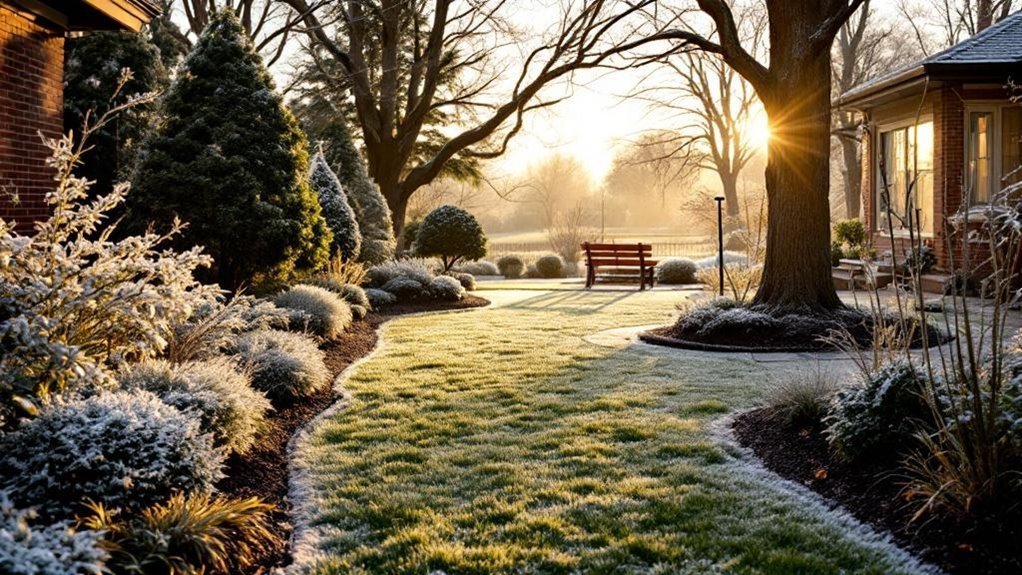
Your winter management protocols begin once temperatures consistently remain below 32°F, typically from late December through February in the St. Louis region. Implement plant protection measures by applying 2-4 inches of organic mulch around tree bases and shrub rootballs, maintaining a 3-inch clearance from trunks to prevent moisture-related disease. Wrap vulnerable specimens—particularly young ornamentals and broadleaf evergreens—with burlap windbreaks on north and west exposures where cold weather damage occurs most frequently. Monitor irrigation systems for freeze damage and maintain proper drainage to prevent ice accumulation near foundations. Apply anti-desiccant sprays to evergreens before sustained freezing temperatures arrive. Document winter injury for spring remediation planning. Prune only damaged limbs; reserve structural pruning for late winter when disease transmission risks decrease considerably.

Native Plants and Adapted Species That Thrive in St. Louis

Since St. Louis falls within USDA Hardiness Zone 6b, you’ll achieve superior terrain performance by selecting regionally appropriate species. Native plants require minimal intervention while supporting local ecosystems through pollinator gardens that benefit butterflies, bees, and hummingbirds.

Consider these drought resistant natives for your maintenance program:

  1. Purple Coneflower (Echinacea purpurea) – Survives dry periods, attracts pollinators, requires deadheading for extended bloom
  2. Little Bluestem (Schizachyrium scoparium) – Ornamental grass providing year-round structure with minimal water needs
  3. Missouri Evening Primrose (Oenothera macrocarpa) – Ground cover tolerating clay soils and summer heat
  4. Aromatic Aster (Symphyotrichum oblongifolium) – Late-season nectar source requiring fall division every three years

These selections reduce irrigation demands, fertilizer applications, and pest management interventions while creating environments that serve community ecological health.

Lawn Care Best Practices for Missouri Grasses

seasonal lawn care practices

St. Louis’s shift zone climate requires you to select cool-season grasses like tall fescue or Kentucky bluegrass that withstand both summer heat and winter freezes. You’ll need to adjust mowing heights seasonally—maintaining 3-4 inches during summer stress periods and lowering to 2.5-3 inches in spring and fall for ideal photosynthesis and root development. Your fertilization schedule must align with Missouri’s Extension recommendations, applying nitrogen in September and November for cool-season varieties while timing irrigation to deliver 1-1.5 inches weekly during active growth periods.

Ideal Grass Types

Cool-season grasses dominate Missouri’s terrain due to the region’s shifting climate zone, where temperatures vary considerably between seasons. You’ll achieve ideal results by selecting varieties that withstand St. Louis’s humid summers and cold winters.

Primary cool-season grasses for residential environments:

  1. Tall Fescue – drought-tolerant with deep root systems requiring minimal supplemental irrigation
  2. Kentucky Bluegrass – self-repairing through rhizomes, ideal for high-traffic areas
  3. Perennial Ryegrass – rapid germination for quick establishment and overseeding applications
  4. Fine Fescue – shade-tolerant option for challenging areas under tree canopies

While warm-season grasses like zoysia perform adequately in southern Missouri, they’ll brown earlier in St. Louis’s climate. Your selection should prioritize disease resistance, particularly for brown patch and dollar spot prevalent in this region’s humidity.

Seasonal Mowing Heights

Proper mowing height directly influences your lawn’s drought tolerance, disease resistance, and overall vigor throughout Missouri’s distinct growing seasons. To serve your community’s environment effectively, implement these evidence-based mowing techniques:

SeasonCool-Season GrassesWarm-Season Grasses
Spring2.5-3.5 inches1.5-2 inches
Summer3-4 inches2-2.5 inches
Fall2.5-3.5 inches2-2.5 inches
Winter2-3 inchesDormant

Taller summer heights promote deeper root development and shade soil, reducing water requirements for clients. Never remove more than one-third of blade length per cutting. For seasonal grasses requiring ideal health, adjust cutting frequency based on growth rates—typically every 5-7 days during peak seasons. These precise measurements align with University of Missouri Extension guidelines, ensuring professional-grade results.

Fertilization and Watering Schedules

Beyond establishing ideal mowing practices, nutrient management and irrigation protocols form the foundation of sustainable turf health in Missouri’s variable climate. You’ll serve your clients best by implementing evidence-based approaches that maximize resource efficiency while maintaining regulatory compliance.

Optimal Application Framework:

  1. Spring fertilization (April): Apply slow-release nitrogen formulations at 0.75-1.0 lb per 1,000 sq ft using granular fertilizer types
  2. Fall fertilization (September-October): Deliver balanced NPK ratios to strengthen root systems before dormancy
  3. Deep watering methods: Irrigate 1-1.5 inches weekly during active growth, preferably dawn applications
  4. Moisture monitoring: Install rain sensors and conduct soil assessments to prevent overwatering and nutrient leaching

This strategic combination of fertilizer types and watering methods protects watershed quality while delivering superior environment performance.

Managing Common Regional Pests and Plant Diseases

pest and disease management

St. Louis’s humid continental climate creates ideal conditions for specific terrain threats you’ll need to address proactively. Effective pest identification starts with recognizing Japanese beetles, bagworms, and emerald ash borers—three destructive species prevalent in our region. You’ll want to monitor plants weekly during peak seasons, examining leaf undersides and branch junctions where pests typically congregate.

Disease prevention requires understanding fungal pathogens like powdery mildew and cedar-apple rust, which thrive in our humidity. You’ll achieve better results by implementing proper air circulation through strategic pruning, avoiding overhead watering after morning hours, and applying preventive fungicides according to Missouri Extension guidelines. When selecting treatments, you’ll need to follow EPA-approved protocols and maintain application records. Your clients depend on you to protect their environments while ensuring environmental stewardship and regulatory compliance.

Irrigation and Watering Guidelines for Inconsistent Rainfall

Owing to St. Louis’s unpredictable rainfall patterns, you’ll need strategic irrigation planning to maintain healthy environments for your clients. Drip irrigation systems deliver water directly to root zones, minimizing waste while maximizing moisture retention in your soil.

Implement these evidence-based practices:

  1. Install rain sensors on automatic systems to comply with water conservation ordinances
  2. Water deeply but infrequently—targeting 1-1.5 inches weekly including rainfall
  3. Schedule irrigation for early morning (4-8 AM) to reduce evaporation losses
  4. Apply 2-3 inches of organic mulch around plantings to improve moisture retention

Monitor soil moisture at 4-6 inch depths using tensiometers or moisture meters. Clay-heavy soils common in St. Louis require adjusted watering frequencies to prevent runoff and root diseases.

Working With Clay Soil: Amendment and Drainage Solutions

clay soil amendment strategies

St. Louis’s heavy clay soils present significant challenges for terrain establishment, requiring strategic amendment protocols to achieve proper drainage and root penetration. You’ll need to incorporate organic matter at a ratio of 2:1 native soil to compost, working amendments to a depth of 12-18 inches to break up compacted clay layers and improve soil structure. For areas with persistent drainage issues, install French drains or curtain drains that redirect water away from planting beds while maintaining compliance with local stormwater management ordinances.

Amending Clay for Plants

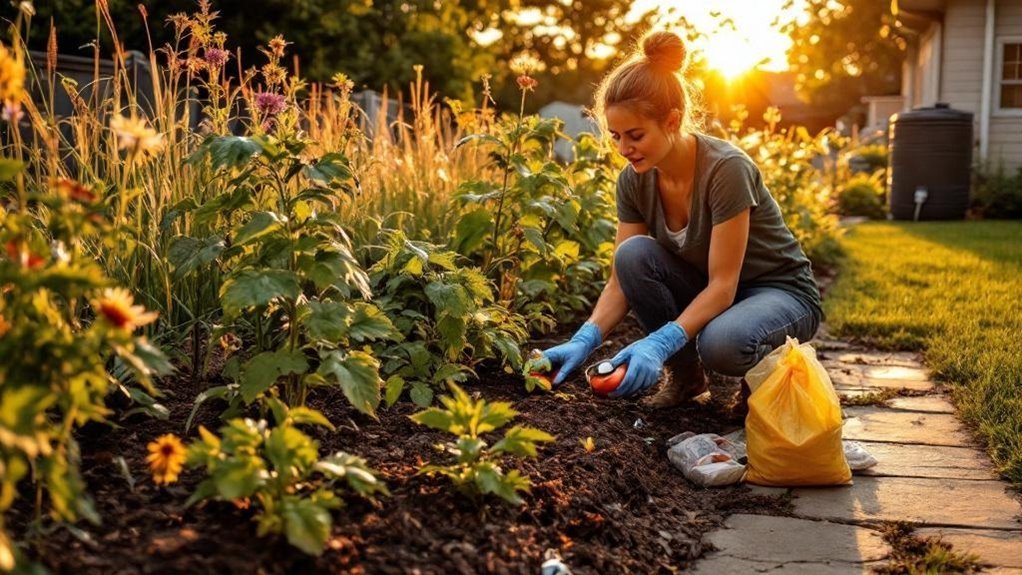
Clay soil amendment requires strategic incorporation of organic matter and mineral additives to transform St. Louis’s challenging native soil into a plant-supporting medium. You’ll need to apply clay amendments systematically to achieve ideal growing conditions for your clients’ gardens.

Effective soil conditioners include:

  1. Compost (3-4 inches): Increases porosity and microbial activity while maintaining Missouri Department of Natural Resources guidelines for organic content
  2. Gypsum (40 lbs per 1,000 sq ft): Improves structure without altering pH, crucial for hardscape-adjacent plantings
  3. Expanded shale (2-3 inches): Provides permanent drainage improvement in rain garden installations
  4. Composted pine bark: Offers long-term aeration benefits for ornamental beds

You’ll achieve best results by tilling amendments 8-12 inches deep, ensuring proper integration for sustainable plant establishment.

Improving Drainage Systems

When drainage problems persist in spite of soil amendments, you’ll need to install engineered systems that redirect water away from planting areas and hardscape features. French drains, channel drains, and dry wells serve as effective drainage solutions for St. Louis properties with challenging clay conditions. You’ll want to evaluate terrain grading first—slopes should direct water at minimum 2% grade away from structures. For severe pooling issues, consider installing perforated pipe systems surrounded by gravel and geotextile fabric. These intercept subsurface water before it saturates plant roots. Your clients will benefit from proper drainage that prevents foundation damage, erosion, and plant loss. Always verify local codes before excavation, as St. Louis County requires permits for significant grading modifications and stormwater management installations.

Conclusion

Your scenery stands as a living blueprint—each season’s maintenance task represents a line in the specifications, every soil amendment a calculated adjustment to grade. You’ve engineered resilience through Zone 6b’s cycles, where dormant turf becomes your winter foundation and summer irrigation systems function as critical infrastructure. Clay soil amendments aren’t merely improvements; they’re structural corrections ensuring long-term viability. Execute these protocols consistently, and you’ll construct a sustainable ecosystem that performs beyond aesthetic requirements.

Filed Under: Uncategorized Tagged With: landscape maintenance, seasonal care, St. Louis

Contact Us

St. Louis Landscaping Company Call us for a free quote 636.405.2443

Follow Us

  • Facebook
  • LinkedIn
  • Twitter

Authorized Belgard Dealer

Client Log In | Terms & Services | Privacy Policy

Copyright © 2017 Terrill Landscape Contracting. All Rights Reserved.