Paver installation in St. Louis County requires careful material selection and engineering to withstand clay soil conditions and freeze-thaw cycles. You’ll choose from concrete pavers ($3-8/sq ft), natural stone ($15-30/sq ft), or porcelain options, with total installed costs ranging $15-40/sq ft. Your project must address proper drainage through 2% minimum slopes, deeper excavation (10-12 inches), and geotextile fabric integration to prevent hydrostatic pressure damage. Popular patterns include herringbone for driveways and basketweave for patios, matching local architectural styles. The sections below cover contractor selection, maintenance protocols, and code-compliant installation techniques.
Key Takeaways
- Material costs range from $3-8/sq ft for concrete pavers to $15-30/sq ft for natural stone, with total installation $15-40/sq ft.
- Herringbone patterns suit driveways for strength, basketweave designs simplify patio installations, and running bond works well for walkways.
- St. Louis County’s clay soil requires 10-12 inch excavation depth, geotextile fabric, and minimum 2% slope for proper drainage.
- Maintenance includes weekly sweeping, joint sand replenishment every 2-3 years, and breathable sealer application every 3-5 years.
- Verify contractor licensing, insurance, technical expertise in base preparation, recent client references, and written warranties before hiring.
Understanding Paver Material Options for St. Louis County’s Climate
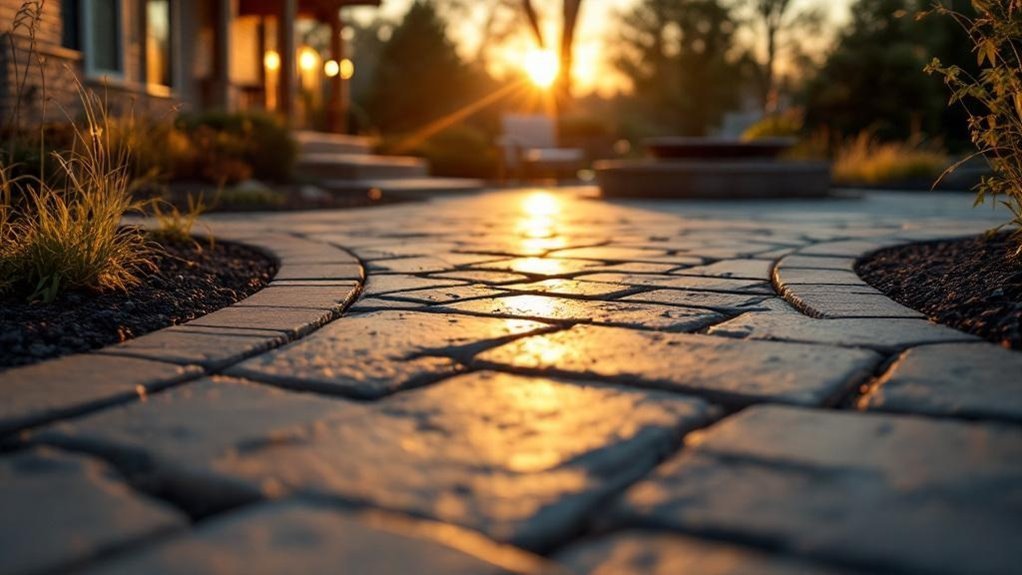
St. Louis County’s freeze-thaw cycles demand pavers with exceptional weather resistance. You’ll need materials that withstand temperature fluctuations ranging from below zero to 100°F while maintaining structural integrity.
Concrete pavers offer versatility and material longevity when they meet ASTM C936 standards. They’re cost-effective for clients seeking durable solutions. Porcelain pavers provide superior freeze-thaw resistance with minimal water absorption—ideal for driveways and high-traffic areas.
Natural stone options like granite and bluestone deliver unmatched durability but require proper installation techniques. You’ll want 6-8 inches of compacted aggregate base to prevent settling.
Clay brick pavers resist weathering but need SW-grade rating for St. Louis’s climate conditions. Each material serves different project requirements, so you’ll match selections to your clients’ functional needs and aesthetic preferences while ensuring code compliance.
Cost Breakdown: What to Budget for Your Paver Project
Your paver installation budget encompasses three primary cost categories: materials, labor, and site preparation. Material cost analysis reveals concrete pavers ranging from $3-8 per square foot, while natural stone options exceed $15-30 per square foot. You’ll need to account for base aggregate, joint sand, and edge restraints in your calculations. Labor typically represents 50-60% of total project costs, covering excavation, grading, and installation. Site preparation demands particular attention—addressing drainage requirements, soil compaction standards, and base depth specifications directly impacts structural integrity. For paver project financing, expect $15-40 per square foot installed, depending on material selection and site complexity. Professional contractors provide detailed estimates that align with local building codes and guarantee your investment serves clients effectively.
Design Trends and Style Inspirations for Local Homes
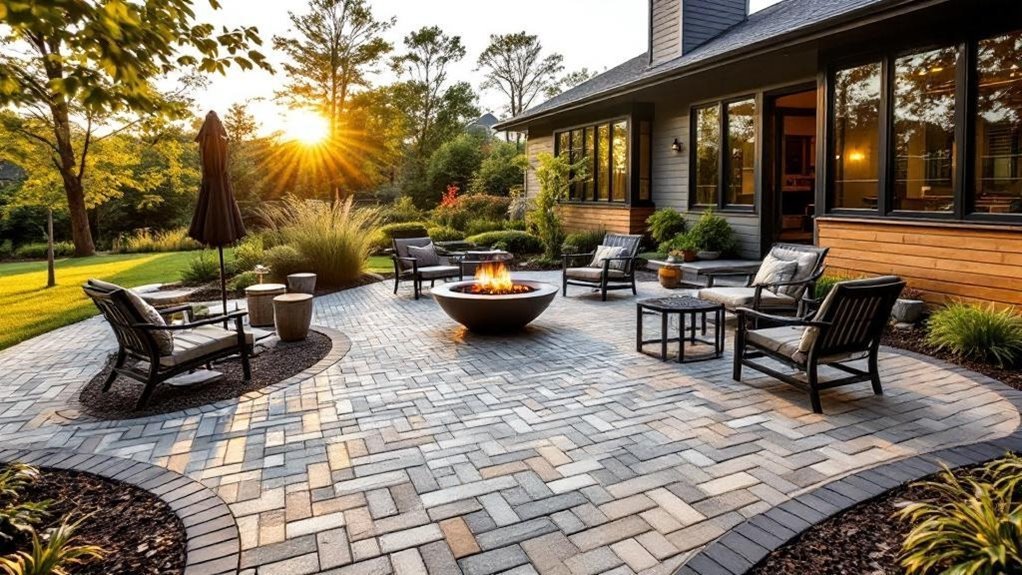
Your paver pattern selection should align with St. Louis County’s predominant architectural styles—Colonial Revival, Craftsman, and mid-century ranch homes—to maximize curb appeal and property value. Herringbone and basketweave patterns complement traditional facades, while running bond and ashlar layouts improve contemporary designs. Coordinating your paver color palette with existing brick, stone, or siding materials guarantees compliance with local HOA guidelines and creates visual cohesion across your property.
Popular Paver Patterns
How do you transform an ordinary outdoor space into an architectural statement? Pattern selection directly impacts visual appeal and structural performance.
The herringbone pattern offers exceptional interlock strength, ideal for driveways requiring load distribution. You’ll find this 45-degree or 90-degree arrangement meets ADA compliance while serving high-traffic areas.
A basketweave design creates timeless charm for patios, alternating perpendicular paver pairs that simplify installation for community projects.
Running bond patterns—offset by half-lengths—provide straightforward layouts perfect for walkways serving elderly residents.
Circular layouts demand precise cutting but deliver stunning focal points for gathering spaces.
Random patterns accommodate mixed-size pavers, reducing waste while creating organic aesthetics.
Border accents define edges and connections, enhancing accessibility and safety for those you serve.
Regional Architecture Coordination
St. Louis County’s architectural heritage demands thoughtful paver coordination. You’ll need to align your installation with historic preservation guidelines and local regulations, particularly in designated districts. Match your pavers to your home’s architectural style for harmonious curb appeal.
| Architectural Style | Recommended Paver Approach |
|---|---|
| Victorian/Historic | Brick pavers in traditional running bond, clay tones |
| Mid-Century Modern | Concrete pavers with clean lines, geometric patterns |
| Colonial Revival | Tumbled pavers mimicking aged stone, neutral palette |
Before installation, verify compliance with municipal codes and homeowner association requirements. Historic districts often restrict material choices and color schemes. You’re serving your community by preserving its architectural character while enhancing your property’s functionality and beauty through carefully coordinated paver selection.
Preparing Your Property for Professional Paver Installation
Before professional crews arrive at your property, understanding the site preparation requirements will help guarantee your paver installation proceeds efficiently and meets structural specifications. Your site assessment should identify drainage patterns, soil conditions, and existing utilities that’ll impact the project scope.
Proper property clearing establishes the foundation for long-lasting results:
- Remove vegetation, roots, and organic material from the installation area
- Excavate to code-specified depths based on your application’s load requirements
- Grade the subbase to promote positive drainage away from structures
- Mark underground utilities and irrigation systems to prevent costly damage
You’ll want to coordinate access points for equipment and material delivery. Clear pathways allow contractors to serve your needs effectively while protecting surrounding landscaping and hardscaping elements throughout the installation process.
Drainage and Grading Considerations in St. Louis County
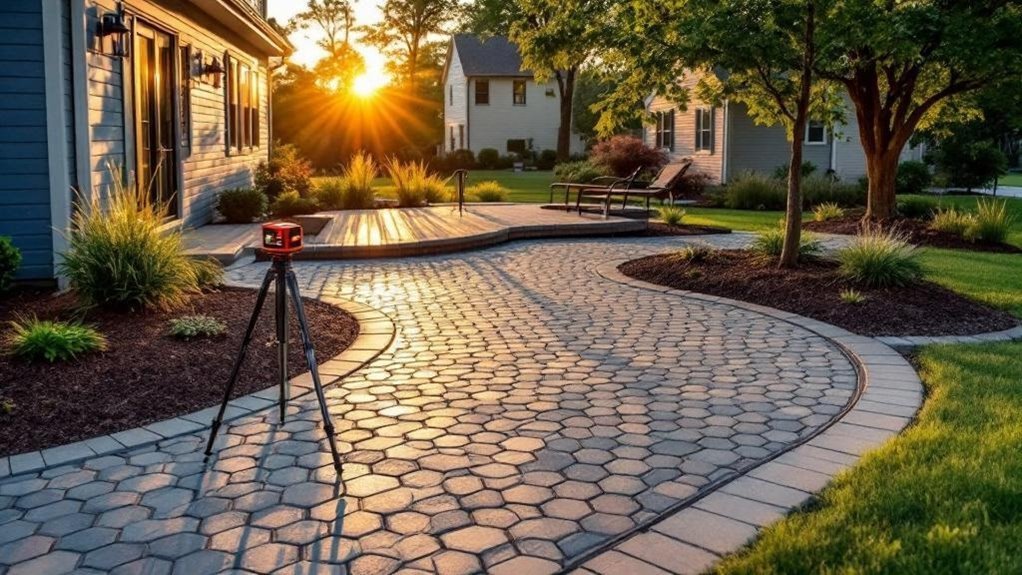
Your paver installation must address St. Louis County’s specific drainage challenges to meet code requirements and prevent structural failure. The region’s expansive clay soils demand precise grading with minimum 2% slope away from structures, while French drain integration becomes crucial in areas with poor percolation rates. You’ll need to account for both surface water management and subsurface drainage systems to guarantee your pavers remain stable through freeze-thaw cycles and heavy rainfall events.
Proper Slope Requirements
When installing pavers in St. Louis County, you’ll need to establish proper slope angles to protect your clients’ investment from water damage. The International Building Code requires a minimum 2% slope (1/4 inch per foot) for pedestrian surfaces, though 3% optimizes drainage solutions for our region’s weather patterns.
Consider these critical slope requirements:
- Patios and walkways: Maintain 2-3% slope away from structures to prevent foundation issues
- Driveways: Design 1-2% cross-slope with 2-3% longitudinal grade for vehicle stability
- Pool decks: Implement 2% minimum slope directing water toward designated drainage points
- Retaining walls: Account for backfill drainage when calculating adjacent paver slopes
You’ll want to verify grades with a builder’s level before base installation. St. Louis County’s clay-heavy soils demand precise slope calculations to guarantee long-term performance.
French Drain Integration
Owing to St. Louis County’s clay-heavy soils and seasonal precipitation patterns, you’ll need robust drainage solutions for long-lasting paver installations. French drains provide exceptional water management when integrated beneath or alongside your hardscape. You should position perforated pipes in gravel-filled trenches at the patio’s lowest point, directing runoff away from structures and preventing subsurface erosion.
Install the drain system before laying your base material, ensuring proper connectivity to existing stormwater infrastructure or daylight points. Your French drain should maintain a minimum 1% slope for adequate flow velocity. Wrap pipes with geotextile fabric to prevent sediment clogging while allowing water infiltration. This integration protects your paver investment by eliminating hydrostatic pressure that causes settling, frost heaving, and joint separation—critical considerations for serving clients who expect durable, properly engineered outdoor spaces.
Clay Soil Challenges
St. Louis County’s clay soil presents significant drainage issues that’ll directly impact your paver installation’s longevity. Clay’s dense composition restricts water permeability, creating hydrostatic pressure beneath pavers that causes shifting, settling, and eventual failure.
Address these challenges through proper base preparation:
- Excavate deeper than standard specifications—typically 10-12 inches to accommodate improved drainage layers
- Install geotextile fabric between subgrade and base to prevent clay migration into aggregate
- Increase base depth with 6-8 inches of compacted aggregate for better load distribution
- Grade slopes at minimum 2% away from structures to prevent water accumulation
You’ll need to compact clay subgrade to 95% density before adding base materials. This creates a stable foundation that resists moisture-induced expansion and contraction cycles common in clay soil conditions.
Maintenance Requirements to Protect Your Investment
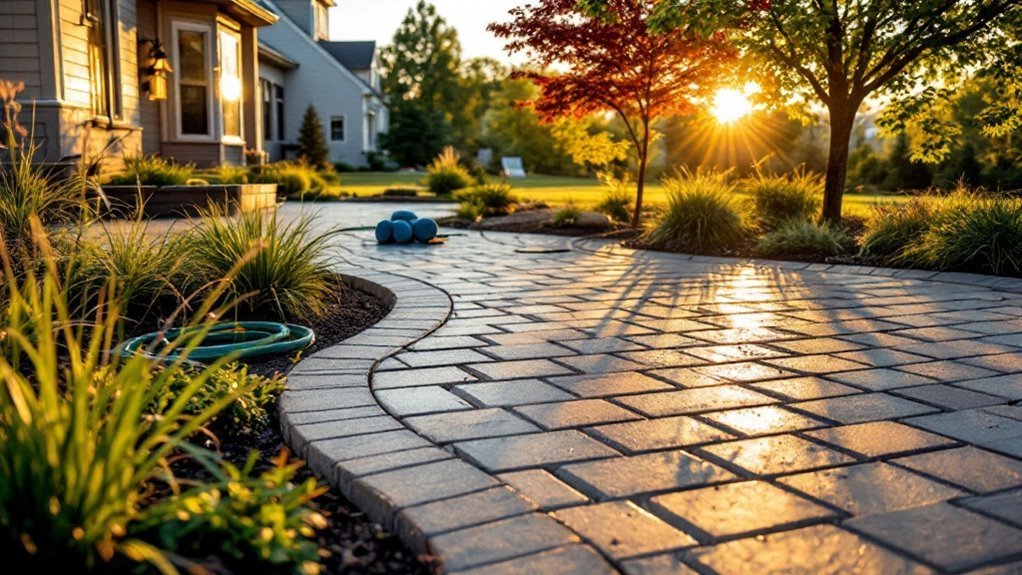
Although pavers rank among the most durable hardscaping materials available, their longevity in St. Louis County depends on consistent maintenance practices. You’ll need to implement routine cleaning tips like sweeping debris weekly and power washing annually to prevent organic staining and efflorescence buildup. Joint sand requires replenishment every 2-3 years to maintain structural integrity and prevent weed growth.
Paver sealing benefits include improved color retention, stain resistance, and protection against freeze-thaw damage—critical for St. Louis’s climate extremes. You should apply a breathable acrylic or polyurethane sealer every 3-5 years, ensuring surfaces are completely dry beforehand. Address sunken pavers immediately by removing affected units, adding base material, and reinstalling to prevent water pooling that accelerates deterioration and compromises client safety.
Choosing the Right Paver Installation Contractor
How do you differentiate between qualified paver contractors and those who’ll compromise your project’s structural integrity? Start by verifying contractor qualifications through proper licensing, insurance certificates, and bonded status. You’ll protect your clients’ investments by selecting professionals who understand St. Louis County’s soil conditions and drainage requirements.
Evaluate candidates using these criteria:
- Portfolio verification: Request documented before-and-after photos with measurable project timelines
- Technical expertise: Confirm knowledge of base preparation depth (6-8″ minimum) and proper slope calculations
- Reference validation: Contact three recent clients about quality, adherence to schedules, and post-installation support
- Written warranties: Guarantee extensive coverage for materials and workmanship (minimum 2 years)
Don’t compromise on contractor selection—structural failures cost more than premium installation.
Conclusion
Your paver installation represents more than hardscape—it’s the foundation upon which your property’s curb appeal is built. Like a well-engineered blueprint, every element from material selection to drainage engineering must align with St. Louis County’s unique climatic demands and municipal codes. You’ve investigated the technical specifications; now it’s time to transform that knowledge into concrete reality. Partner with qualified contractors who understand that precision in execution equals longevity in performance. Your investment deserves nothing less than structural poetry.
