In Wildwood’s Zone 6a-6b climate, you’ll start with spring dethatching and pre-emergent herbicides when soil hits 50-55°F, followed by nitrogen application at 0.75-1.0 lbs per 1,000 sq ft. Summer demands raising mowing heights to 3.5-4 inches and deep watering 1.5 inches weekly. Fall’s your prime window for core aeration, overseeding at 6-8 lbs per 1,000 sq ft, and starter fertilizer application. Complete your cycle with mid-November winterizer and final mowing at 2.5 inches. Understanding these climate-specific timing protocols will transform your turf management approach throughout the year.
Key Takeaways
- Spring cleanup includes debris removal, dethatching if needed, core aeration for compacted soil, and pre-emergent herbicide application in mid-March.
- Summer maintenance requires raising mowing height to 3.5-4 inches, deep watering 1.5 inches weekly, and monitoring for grubs and chinch bugs.
- Fall rejuvenation involves core aeration, overseeding with tall fescue, applying starter fertilizer, and consistent watering for 21 days post-seeding.
- Winter preparation includes applying high-potassium winterizer by mid-November, final mowing at 2.5 inches, and clearing debris to prevent disease.
- Wildwood’s humid continental climate requires adjusting practices for freeze-thaw cycles, summer fungal pressure, and clay-loam soil conditions.
Understanding Wildwood’s Climate and Its Impact on Your Lawn
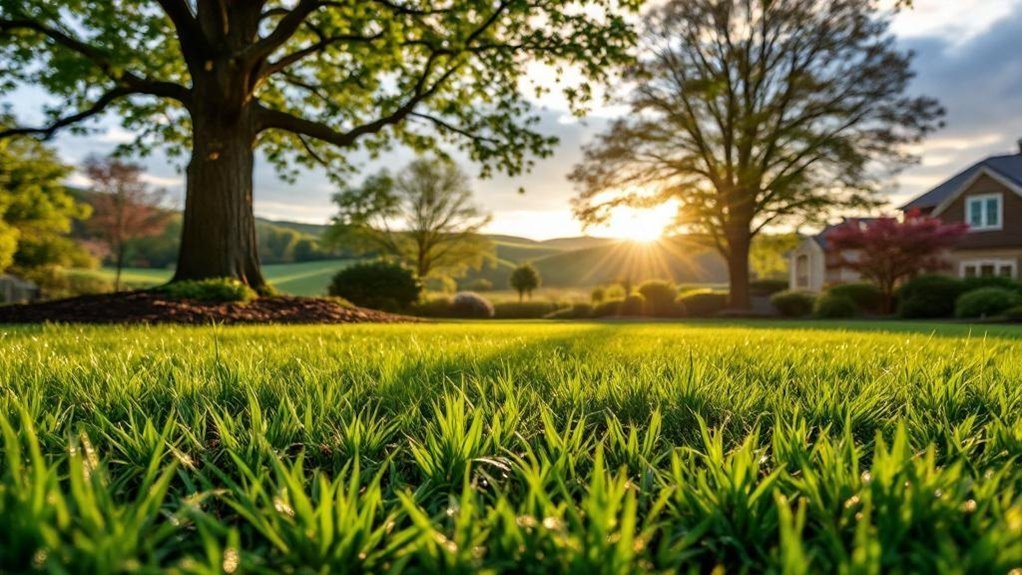
Wildwood, Missouri operates within USDA Hardiness Zone 6a-6b, experiencing a humid continental climate characterized by significant temperature fluctuations and precipitation variability throughout the growing season. You’ll encounter winter lows reaching -10°F and summer highs exceeding 90°F, creating substantial stress periods for turfgrass systems. This climate variability demands strategic adaptation in your maintenance protocols.
Your lawn’s soil composition typically consists of clay-loam substrates with moderate drainage capacity, requiring amendments to optimize nutrient availability and root penetration. Spring freeze-thaw cycles can compromise turf density, while summer humidity intensifies fungal pressure. You must calibrate irrigation schedules, fertilization timing, and pest management interventions to accommodate these environmental challenges. Understanding these climatic parameters allows you to deliver superior lawn health outcomes for your clients throughout Wildwood’s demanding seasonal shifts.
Spring Lawn Care: Awakening Your Turf After Winter Dormancy
As winter dormancy breaks and soil temperatures stabilize above 50°F, you’ll initiate your spring renovation sequence with a thorough turf assessment to identify winter damage, compaction zones, and disease carryover. Your lawn awakening strategy begins with debris removal and selective dethatching where accumulation exceeds half-inch depth. You’ll apply pre-emergent herbicides when forsythia blooms, targeting crabgrass germination windows. Core aeration reduces compacted clay soils prevalent in Wildwood, enhancing oxygen exchange and nutrient infiltration. For ideal turf revitalization, you’ll implement a nitrogen-rich fertilizer application at 0.75-1.0 pounds per thousand square feet, supporting vigorous growth without encouraging disease susceptibility. Overseed thin areas with quality tall fescue or Kentucky bluegrass cultivars matching your existing stand. Address pH imbalances through lime applications based on soil test recommendations.
Pre-Emergent Herbicide Application and Weed Control Timing
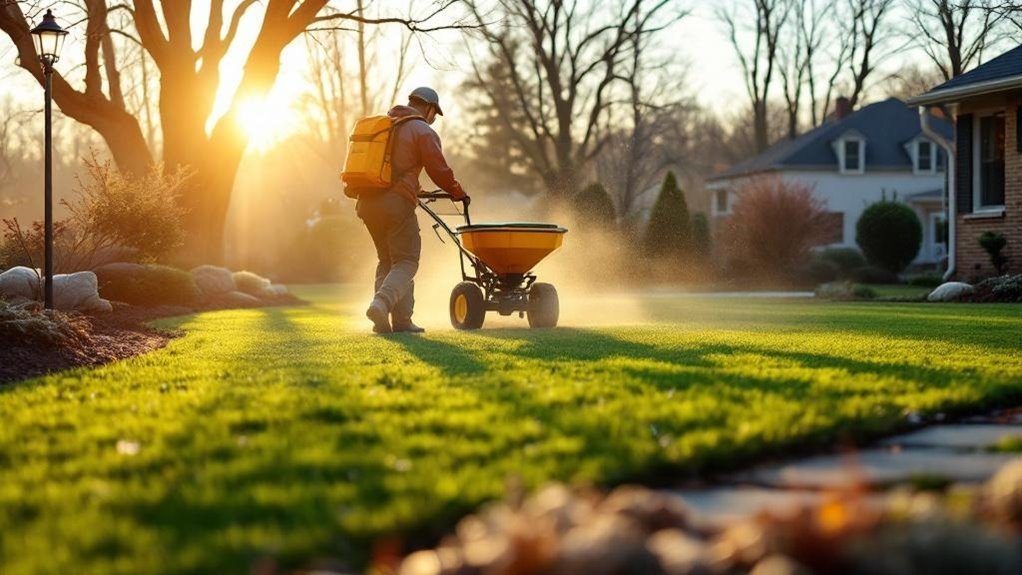
Successful pre-emergent herbicide application in Wildwood requires precise timing based on soil temperature thresholds, typically when ground temperatures reach 50-55°F for four consecutive days—generally mid-March through early April for crabgrass prevention. You’ll need to select products containing active ingredients like prodiamine, dithiopyr, or pendimethalin, matching the formulation to your target weed species and application equipment capabilities. Missing the ideal window by even two weeks can greatly reduce efficacy, as germinating weed seeds become resistant to pre-emergent barriers once radicle emergence begins.
Best Application Timing Windows
Timing pre-emergent herbicide applications correctly determines whether you’ll prevent weed germination or watch crabgrass and other annual weeds overtake your Wildwood lawn. Apply your first treatment when soil temperatures consistently reach 50-55°F, typically mid-March through early April. Monitor soil temperature at 2-inch depth for three consecutive days to confirm application timing.
| Application Period | Target Weeds |
|---|---|
| Mid-March to Early April | Crabgrass, goosegrass |
| Late May to Early June | Summer annual broadleafs |
| Late August to September | Winter annual weeds |
| October to November | Poa annua, henbit |
Seasonal adjustments account for temperature fluctuations that affect germination patterns. Split applications provide extended control—apply 60% initially, then 40% eight weeks later for maximum efficacy throughout the growing season.
Effective Pre-Emergent Product Selection
Understanding when to apply pre-emergents means little without selecting products matched to Wildwood’s soil composition and target weed species. You’ll find different pre emergent types serve distinct purposes: prodiamine excels for crabgrass prevention in clay-heavy soils, while dithiopyr offers post-emergent control on newly germinated weeds. For clients with established fescue lawns, dimension (dithiopyr) provides flexibility during product application windows. Evaluate active ingredient longevity—products containing pendimethalin typically require reapplication every 8-10 weeks, whereas prodiamine formulations extend protection up to 5 months. Consider your clients’ lawn usage patterns when selecting granular versus liquid formulations. Granular applications work well for homeowners managing their own lawns, while liquid treatments guarantee uniform coverage across commercial properties. Always verify labeled application rates match Wildwood’s USDA Zone 6a requirements.
Summer Lawn Maintenance: Keeping Your Grass Healthy Through Heat and Drought
As temperatures climb above 85°F in Wildwood, your cool-season turf—primarily tall fescue and Kentucky bluegrass—enters a semi-dormant state that fundamentally changes your maintenance approach. You’ll need to raise mowing heights to 3.5-4 inches, allowing deeper root development and improved drought resilience. Reduce nitrogen applications to prevent heat stress and disease susceptibility. Instead, focus on maintaining adequate soil moisture through deep, infrequent irrigation—approximately 1-1.5 inches weekly, applied early morning to minimize evaporation and fungal pressure. Monitor for grub activity and chinch bugs, which intensify during summer months. You’re serving your clients best by accepting some dormancy as protective rather than problematic. Sharp mower blades prevent tissue tearing that compounds heat stress, keeping lawns healthier through challenging conditions.
Fall Lawn Rejuvenation: Aeration, Overseeding, and Fertilization
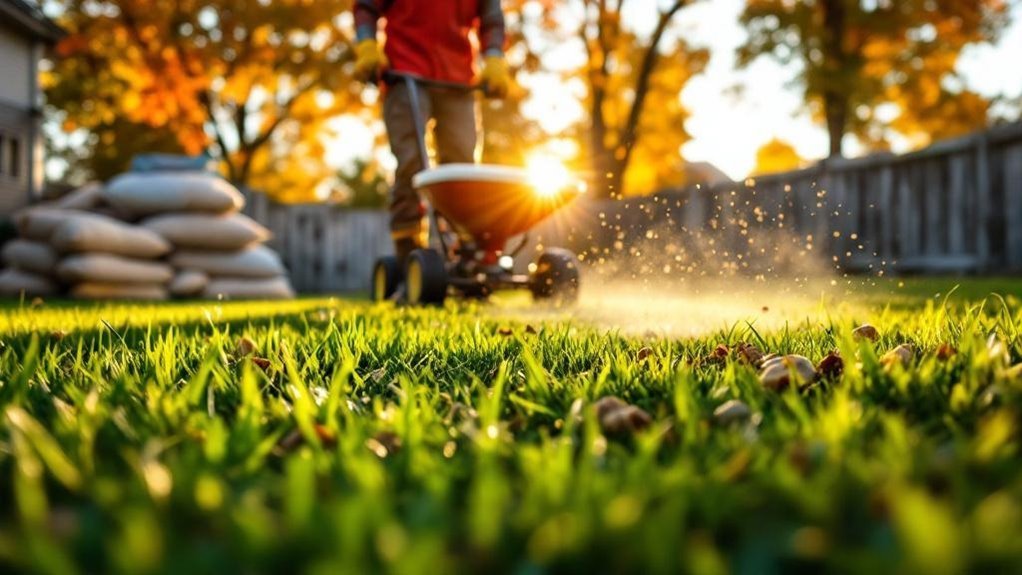
When nighttime temperatures consistently drop below 70°F in mid-September, Wildwood’s cool-season grasses enter their most vigorous growth phase—making fall your critical window for thorough lawn renovation.
Core Fall Renovation Sequence:
- Aeration: Deploy core aerators to extract 2-3″ soil plugs at 3″ spacing, maximizing lawn aeration benefits through improved oxygen exchange and reduced compaction
- Overseeding: Apply tall fescue or Kentucky bluegrass at 6-8 lbs per 1,000 sq ft using slit-seeding equipment for superior seed-to-soil contact
- Fertilization: Implement starter fertilizer (18-24-12 NPK ratio) immediately post-seeding, followed by winterizer application in November
- Maintenance: Maintain consistent soil moisture through daily 10-minute irrigation cycles for 21 days
These overseeding techniques establish dense turf stands that’ll serve your clients’ properties throughout winter dormancy.
Mowing Heights and Watering Schedules Throughout the Seasons
Maintaining proper mowing heights and irrigation schedules requires seasonal adjustments to accommodate Wildwood’s changing climate zone and varying turfgrass growth patterns. Cool-season grasses like tall fescue and Kentucky bluegrass demand different cutting heights during active growth periods versus summer dormancy, while water requirements fluctuate based on evapotranspiration rates and precipitation levels. You’ll need to modify both practices throughout spring, summer, fall, and winter to optimize turf health and stress tolerance in this region’s temperature extremes and humidity fluctuations.
Optimal Mowing Heights Seasonally
Since grass growth patterns shift dramatically with temperature fluctuations in Wildwood’s climate zone, you’ll need to adjust your mower deck height at least four times annually to maintain ideal turf health.
Proper mowing techniques require seasonal adjustments that align with your turf’s physiological needs:
- Spring (3-3.5 inches): Raise blades as vigorous growth resumes, promoting deeper root development
- Summer (3.5-4 inches): Maximum height protects crowns from heat stress and conserves soil moisture
- Fall (2.5-3 inches): Gradual lowering prepares turf for dormancy while preventing disease harboring
- Late Fall (2-2.5 inches): Final cut reduces snow mold risk without scalping
Never remove more than one-third of leaf blade length per session. Sharp mower blades prevent tissue tearing that invites pathogen entry and weakens your clients’ lawns.
Watering Frequency by Season
Just as mowing height adjustments optimize photosynthetic efficiency and root development, strategic irrigation scheduling directly impacts turf resilience and resource conservation throughout Wildwood’s distinct seasonal phases.
| Season | Frequency | Application Rate |
|---|---|---|
| Spring | 1x weekly | 1-1.5 inches |
| Summer | 2-3x weekly | 1.5-2 inches |
| Fall | 1x weekly | 1-1.5 inches |
Your seasonal watering protocols should prioritize deep, infrequent applications that encourage robust root systems. During summer heat stress, implement drought strategies including early-morning irrigation windows (4-8 AM) to minimize evapotranspiration losses. Monitor soil moisture at 4-6 inch depths, adjusting schedules based on precipitation events and established turf density. Cool-season grasses require reduced frequency during dormancy shifts, preventing disease proliferation while maintaining adequate hydration for client environments.
Adjusting for Wildwood Climate
Wildwood’s humid continental climate (Köppen Cfa classification) creates distinct physiological demands on turf systems that require synchronized adjustments to both mowing heights and irrigation protocols across four distinct growth phases.
You’ll optimize turf health by implementing these climate-specific practices:
- Spring (March-May): Raise mowing height to 3-3.5″ as roots establish; irrigate 1″ weekly while monitoring soil testing results for pH adjustments
- Summer (June-August): Maintain 3.5-4″ height to protect crowns from heat stress; deep-water 1.5″ weekly during drought periods
- Fall (September-November): Lower gradually to 2.5-3″ while increasing watering to support recovery and prevent lawn diseases
- Winter (December-February): Final mow at 2.5″; cease irrigation unless experiencing abnormal dry spells
These calibrated adjustments strengthen turf resilience while serving your community’s environment stewardship goals.
Winter Preparation: Protecting Your Lawn During Cold Months
As temperatures plummet below 32°F in Wildwood, your lawn enters a critical dormancy phase that requires strategic preparation to guarantee spring recovery. Apply a winterizer fertilizer with high potassium content by mid-November to strengthen root systems and boost cold tolerance. You’ll want to continue mowing at 2.5-3 inches until growth ceases, preventing matting under snow cover. Remove debris and fallen leaves that can harbor fungal pathogens and restrict lawn insulation. Aerate compacted areas before the ground freezes to improve oxygen exchange and drainage. Keep traffic minimal on frozen turf to prevent crown damage. Monitor snow cover depth—it provides natural insulation against freeze-thaw cycles. Address any drainage issues now to prevent ice accumulation that suffocates grass crowns throughout winter dormancy.
Common Lawn Problems in Wildwood and Seasonal Solutions
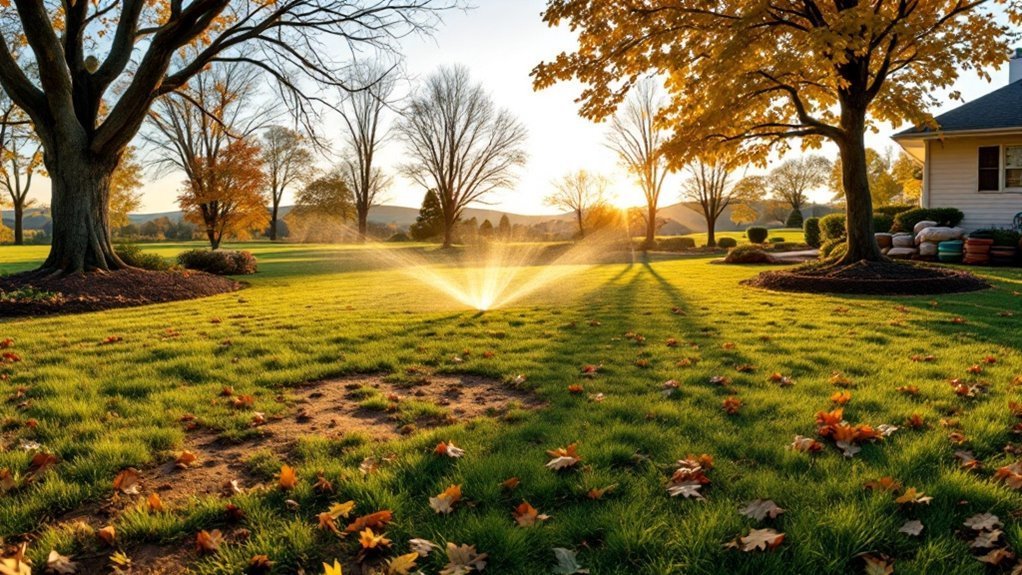
Because Wildwood’s clay-heavy soils and humid continental climate create distinct phytopathological challenges, you’ll encounter pest and disease patterns that shift predictably with seasonal conditions. Implementing proactive lawn diseases monitoring and targeted pest management strategies guarantees your clients maintain healthy turf year-round.
Seasonal Problem Matrix:
- Spring: Brown patch and dollar spot emergence require fungicide applications when soil temperatures reach 60°F, while grub prevention begins with merit-based treatments.
- Summer: Chinch bugs proliferate in heat-stressed areas; identify by yellowing patterns and apply bifenthrin-based insecticides.
- Fall: Armyworm infestations peak during September; scout regularly and treat infestations exceeding threshold levels.
- Winter: Vole damage prevention through proper mowing heights and snow mold mitigation via nitrogen management.
Document treatment protocols and maintain detailed service records for peak client satisfaction.
Conclusion
You’ve now got the ultimate arsenal to transform your Wildwood turf into an absolutely bulletproof, show-stopping masterpiece that’ll make your neighbors weep with envy! Master these IPM strategies, nail your nitrogen timing down to the minute, and execute precision core aeration like a seasoned turf professional. Your lawn won’t just survive Wildwood’s brutal climate swings—it’ll absolutely dominate every season. Commit to this regiment, and you’ll cultivate the most resilient, jaw-dropping turfgrass ecosystem in St. Charles County!
