
Professional terrain design transforms your Wildwood backyard by addressing Zone 6b climate requirements and Missouri’s challenging clay soils through strategic plant selection and hardscaping solutions. You’ll benefit from native species like Eastern Redbud and River Birch that reduce maintenance while preventing erosion, combined with permeable hardscaping materials that manage stormwater effectively. Expert designers assess your site’s topography, drainage patterns, and microclimates to create functional outdoor living spaces that increase property value and extend seasonal usability. Below, you’ll identify specific strategies for evaluating your space’s potential and selecting region-appropriate design elements.
Key Takeaways
- Professional designers address Missouri’s clay soils, Zone 6b requirements, and drainage challenges specific to Wildwood’s environmental conditions.
- Native plants like Eastern Redbud, Purple Coneflower, and River Birch reduce maintenance while supporting local pollinators year-round.
- Hardscaping elements including permeable patios, natural stone pathways, and fire features extend outdoor usability across seasons.
- Strategic lighting design enhances safety, creates gathering zones, and transforms backyard functionality beyond daylight hours.
- Qualified professionals bring regional expertise, portfolio consistency, and understanding of local codes to ensure lasting property value.
Why Professional Landscape Design Matters for Wildwood Homeowners
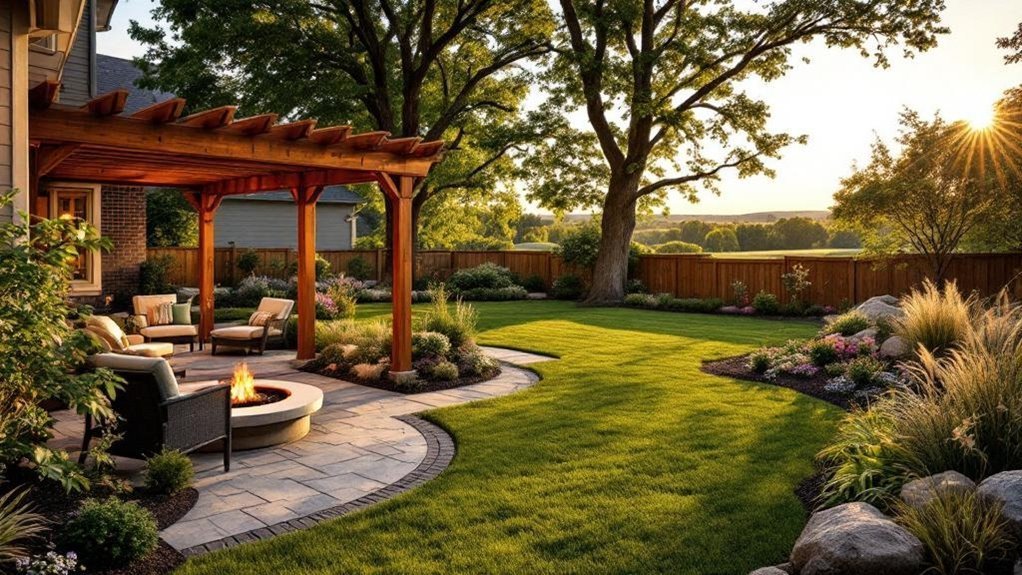
While many Wildwood homeowners attempt DIY gardening to save money, they often overlook the complex interplay between Missouri’s clay-heavy soils, Zone 6b planting requirements, and the region’s humidity patterns that directly impact plant selection and hardscape longevity. Professional designers bring expertise in current gardening trends that maximize your property’s functionality while enhancing your neighbors’ enjoyment of the community aesthetic. The design benefits extend beyond visual appeal—you’ll receive drainage solutions that prevent water pooling, native plant selections that reduce maintenance demands, and outdoor living spaces that genuinely serve your family’s needs. Professional assessment identifies soil amendments, ideal sun exposure zones, and structural considerations that DIY approaches typically miss, ensuring your investment creates lasting value for those who’ll enjoy your property.
Understanding Your Outdoor Space’s Potential
Before you’ll create an effective design plan for your Wildwood property, you need to systematically evaluate what’s already there. Walk your yard with a critical eye, documenting drainage patterns, sun exposure throughout the day, and existing vegetation health. Start by mapping out the areas that aren’t functioning—whether that’s pooling water near your foundation, dead zones where grass won’t grow, or awkward shifts between hardscape elements.
Assess Your Current Landscape
Every successful terrain design begins with a thorough site analysis that documents existing conditions, spatial relationships, and environmental factors. You’ll need to evaluate your property’s topography, drainage patterns, and microclimates to create functional outdoor spaces that serve your community effectively. Test soil quality to determine pH levels, composition, and amendments required for ideal plant health. Map sunlight exposure throughout the day, identifying full-sun, partial-shade, and full-shade zones that’ll guide your plant selection. Document existing vegetation, hardscapes, and utility locations. Measure sight lines, access points, and property boundaries to establish design parameters. This systematic assessment allows you to develop sustainable environments that address specific site challenges while maximizing your outdoor space’s capacity to welcome and nurture those you serve.
Identify Problem Areas First
Once you’ve documented your site’s existing conditions, turn your attention to spaces that fail to function properly or detract from your scenery’s performance. Systematically catalog challenges that prevent your environment from serving its intended purpose.
Critical deficiencies to address:
- Drainage issues – Standing water, erosion patterns, and runoff pathways that compromise plant health and create unusable areas
- Soil quality – Compacted earth, nutrient deficiencies, or pH imbalances limiting vegetation success
- Access limitations – Circulation bottlenecks preventing efficient movement through outdoor spaces
- Visual barriers – Obstructions blocking desirable views or creating unwelcome focal points
Document each problem’s location, severity, and impact on your environment’s functionality. This analysis establishes your design priorities and guarantees solutions address genuine needs rather than cosmetic preferences.
Native Plants That Thrive in the Wildwood Climate
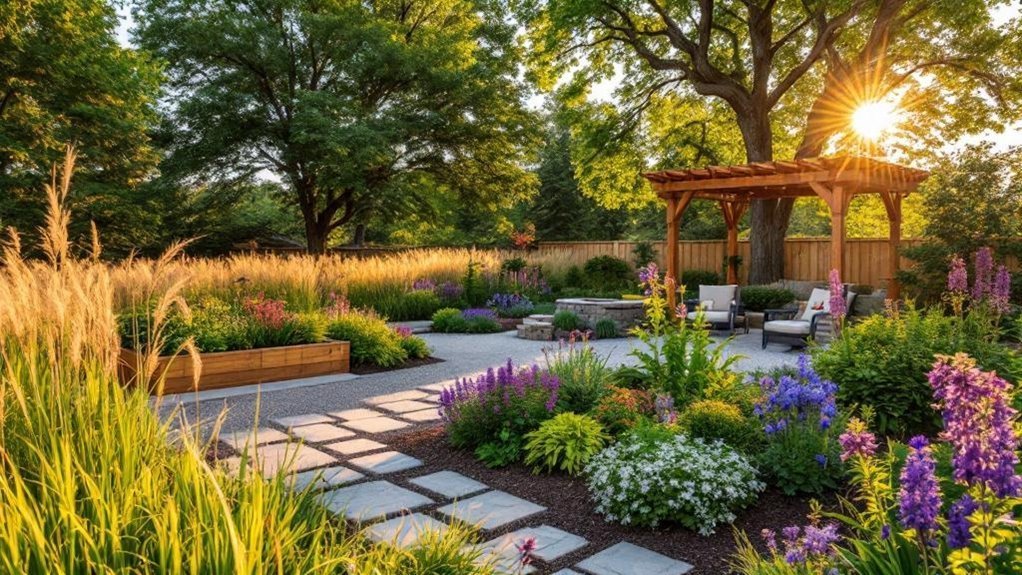
Wildwood’s humid subtropical climate—characterized by hot summers, mild winters, and 45-50 inches of annual rainfall—creates ideal conditions for native species that have adapted to these precise environmental parameters over millennia. You’ll find Eastern Redbud, Flowering Dogwood, and Southern Magnolia provide structural framework while requiring minimal irrigation once established. Switchgrass, Little Bluestem, and Purple Coneflower offer textural contrast in perennial beds. Native plant benefits extend beyond aesthetic appeal: these species support local pollinators, reduce maintenance costs, and eliminate fertilizer dependency. For sustainable landscaping that serves your community’s ecological health, specify River Birch for wet zones, American Holly for evergreen screening, and Black-Eyed Susan for naturalized areas. These selections establish robust root systems that prevent erosion and filter stormwater runoff effectively.
Hardscaping Elements to Elevate Your Backyard
While native plantings establish your terrain’s biological infrastructure, permanent architectural features define spatial organization and functional zones throughout your property. Strategic hardscaping transforms underutilized areas into purposeful gathering spaces that serve family and guests year-round.
Consider these foundational elements:
- Permeable patio materials like flagstone or porous pavers that manage stormwater while creating entertainment zones
- Outdoor pathways constructed from decomposed granite or natural stone that guide movement and protect planted beds
- Retaining walls that address grade changes while adding dimensional interest and seating opportunities
- Fire features positioned to anchor social areas and extend seasonal usability
Each hardscape component must integrate with Wildwood’s topography and drainage patterns. Proper installation guarantees longevity and minimizes maintenance demands, allowing you to focus on hospitality rather than repairs.
Creating Functional Outdoor Living Spaces
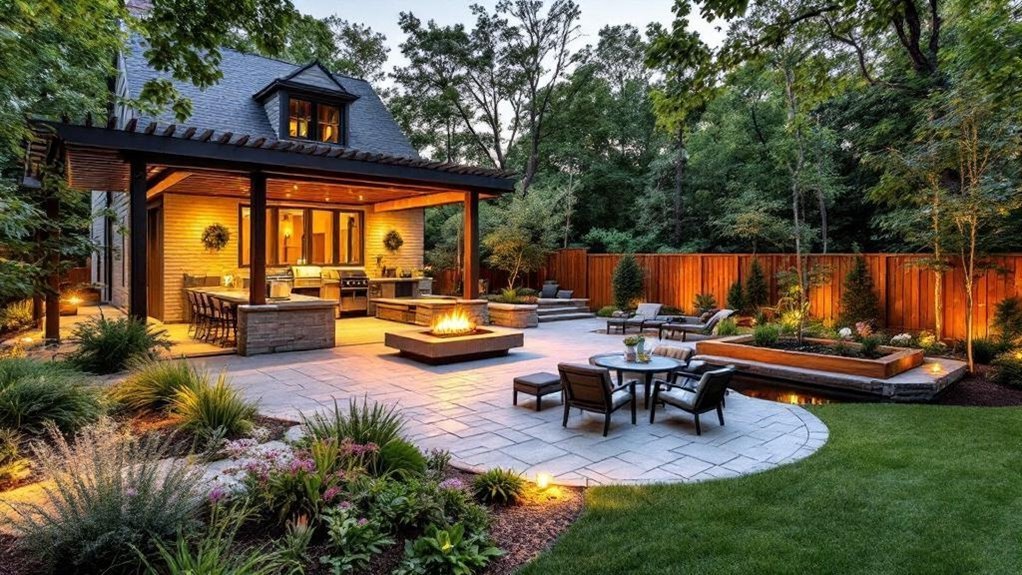
Your outdoor living space requires the same functional planning as interior rooms, with each element serving a specific purpose within your site’s constraints. Consider how your kitchen prep zones, seating configurations, and fire features will interact with existing grade changes, sun exposure patterns, and sight lines from your home. Strategic placement of ambient and task lighting extends usability while reinforcing the spatial hierarchy you’ve established through hardscaping.
Outdoor Kitchen Design Options
How can you transform your backyard into an extension of your indoor living space while maximizing both functionality and aesthetic appeal? Strategic outdoor kitchen design creates gathering spaces where you can serve family and friends comfortably.
Essential elements include:
- Optimal grill placement – Position 10-12 feet from your home’s structure, guaranteeing proper ventilation while maintaining conversation flow with guests
- Durable countertop materials – Select granite, concrete, or porcelain surfaces that withstand Wildwood’s climate variations and heavy use
- Work triangle efficiency – Arrange cooking, prep, and cleaning zones within 4-9 feet of each other for seamless meal preparation
- Utility integration – Install dedicated gas lines, electrical outlets, and water connections to support full-service functionality
These design considerations guarantee your outdoor kitchen serves guests effectively year-round.
Comfortable Seating Area Solutions
Since outdoor seating anchors your backyard’s social functionality, selecting weather-resistant furniture with proper spatial planning determines how effectively you’ll use the space throughout Wildwood’s seasons. Different seating styles serve distinct purposes—conversation clusters require 8-10 feet diameter clearance, while linear benches maximize capacity for gatherings you’ll host. Choose outdoor textiles engineered with UV-resistant, mildew-proof fibers that withstand Missouri’s humidity cycles. Position primary seating 12-15 feet from cooking zones to balance interaction with safety. Incorporate built-in elements like stone bench walls or wooden planter boxes with integrated seating to optimize limited footprints. Layer removable cushions for comfort while maintaining core furniture year-round. Strategic placement near shade structures or fire features extends usability across temperature variations, ensuring your guests remain comfortable during extended outdoor experiences.
Fire Features and Lighting
Fire features transform your backyard into a year-round destination while establishing a natural gathering point that extends usability beyond Wildwood’s temperate months. Strategic fire pit designs integrate seamlessly with your outdoor environment, from built-in stone configurations to freestanding copper bowls that complement existing hardscapes.
Ambient lighting enhances functionality while creating welcoming atmospheres for guests:
- Path lighting guarantees safe navigation between entertainment zones
- Uplighting accentuates specimen trees and architectural elements
- String lights define overhead spaces without permanent structures
- Low-voltage LED systems reduce energy consumption while providing consistent illumination
Layered lighting approaches combine these elements at varying heights, creating depth and visual interest. Well-designed fire features paired with thoughtful illumination extend your hosting capabilities throughout evening hours, transforming outdoor spaces into comfortable retreats.
Designing for Year-Round Beauty and Enjoyment
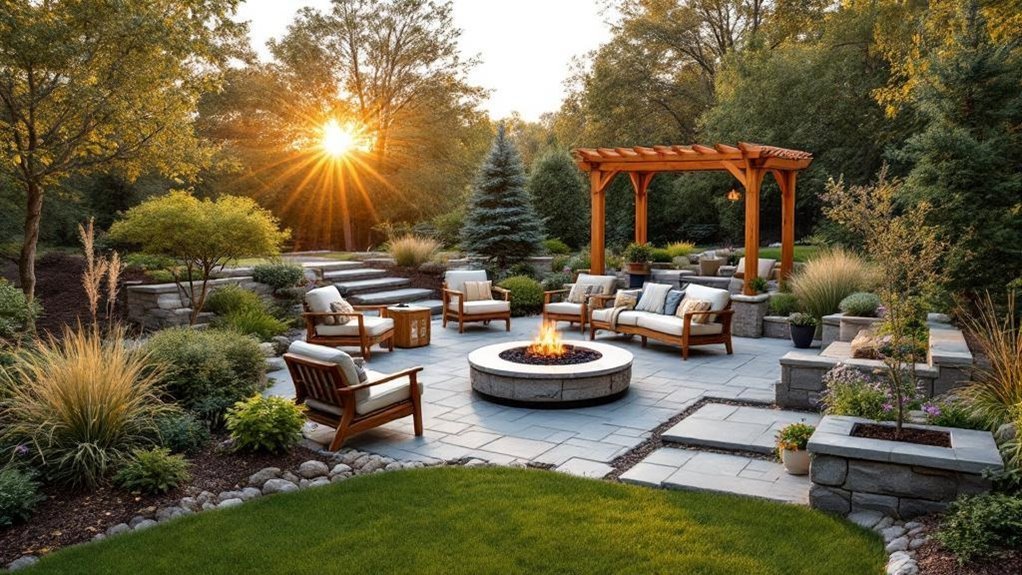
While seasonal planting showcases peak beauty for brief periods, strategic plant selection and hardscape placement allow your surroundings to maintain visual interest across all four seasons. You’ll create lasting impact through thoughtful combinations of evergreens, ornamental grasses, and structural elements that provide form during dormant months.
| Season | Visual Elements | Maintenance Strategies |
|---|---|---|
| Spring | Flowering bulbs, emerging perennials | Mulch refresh, pruning |
| Summer | Blooming annuals, lush foliage | Irrigation monitoring, deadheading |
| Fall | Colorful deciduous trees, ornamental grasses | Leaf management, winterization prep |
| Winter | Evergreen structure, decorative bark | Snow removal, hardscape protection |
Your environment becomes a continuous gift to those who gather there, offering beauty and comfort throughout the year while minimizing intensive upkeep demands.
Water Features and Focal Points That Make a Statement
Water features transform your backyard into a sensory experience through strategic placement and material selection. When you integrate natural stone fountains, ponds, or waterfalls, you’ll need to contemplate site topography, soil drainage patterns, and proximity to electrical sources for pumps and lighting systems. Properly designed accent lighting enhances these elements from daytime attractions to dramatic nighttime focal points that define your outdoor space’s character and spatial hierarchy.
Natural Stone Fountain Options
Since natural stone fountains anchor outdoor areas with geological permanence and sculptural presence, selecting the right option requires evaluating your site’s scale, architectural context, and hydraulic requirements. You’ll need to match natural stone textures with your existing hardscape while considering fountain maintenance accessibility.
Professional installation guarantees proper foundation support and circulation systems that’ll serve your outdoor entertaining needs for decades:
- Tiered basin fountains work best in formal gardens, creating cascading water sounds that mask neighborhood noise
- Boulder formations integrate seamlessly into naturalistic environments while requiring minimal structural preparation
- Column fountains provide vertical interest in compact spaces without overwhelming smaller yards
- Wall-mounted options maximize space efficiency while delivering the sensory benefits guests appreciate
Consider seasonal winterization requirements during your selection process.
Pond and Waterfall Integration
When properly designed, pond and waterfall systems transform residential settings into dynamic ecosystems that balance aesthetic impact with hydrological function. You’ll achieve superior pond aesthetics through strategic placement that considers sun exposure, surrounding vegetation, and sight lines from primary gathering spaces. Your installation should incorporate graduated depth zones, natural filtration systems, and appropriate liner materials that support both aquatic life and structural integrity.
Effective waterfall maintenance begins with accessible pump placement and removable filter components. You’ll want to design with serviceable features that allow you to perform routine cleaning without disrupting the overall composition. Consider incorporating automated systems for water level monitoring and seasonal adjustments. This thoughtful approach guarantees your clients enjoy lasting beauty while minimizing their long-term maintenance commitments and environmental impact.
Lighting for Dramatic Effect
Strategic illumination transforms water features from daytime attractions into nocturnal focal points that define your scenery’s spatial hierarchy. You’ll create compelling outdoor ambiance through these creative illumination techniques:
- Submersible uplighting positions LED fixtures beneath waterfalls and fountain jets, casting dramatic silhouettes against surrounding vegetation.
- Moonlighting mounts downward-facing fixtures in trees, mimicking natural lunar glow across pond surfaces.
- Path-integrated accent lights guide guests while highlighting sculptural elements and specimen plantings.
- Color temperature layering combines warm (2700K) and cool (4000K) sources to establish depth perception.
You’re establishing safe navigation pathways while showcasing your investment in premium hardscaping. Strategic fixture placement eliminates harsh shadows, instead producing graduated luminosity that welcomes visitors throughout evening hours. This technical approach guarantees your environment serves gathering needs after sunset.
Lighting Solutions to Extend Your Outdoor Hours
How you illuminate your backyard fundamentally alters its usability beyond daylight hours and establishes the spatial hierarchy of your outdoor arrangement. Strategic pathway illumination guarantees safe navigation while reinforcing circulation patterns you’ve designed for guest movement and accessibility. Install low-voltage LED fixtures at grade changes, steps, and walkway edges to prevent accidents while serving visitors effectively.
Ambient lighting creates welcoming zones where people gather, extending your capacity to host evening activities. Layer multiple light sources at varying heights—wall sconces, post lights, and recessed fixtures—to eliminate harsh shadows and establish comfortable illumination levels. Integrate dimmer controls to adjust intensity based on specific functions, from intimate gatherings to larger community events. Your lighting infrastructure directly impacts how effectively your environment serves others during extended hours.
Maximizing Property Value Through Strategic Landscaping
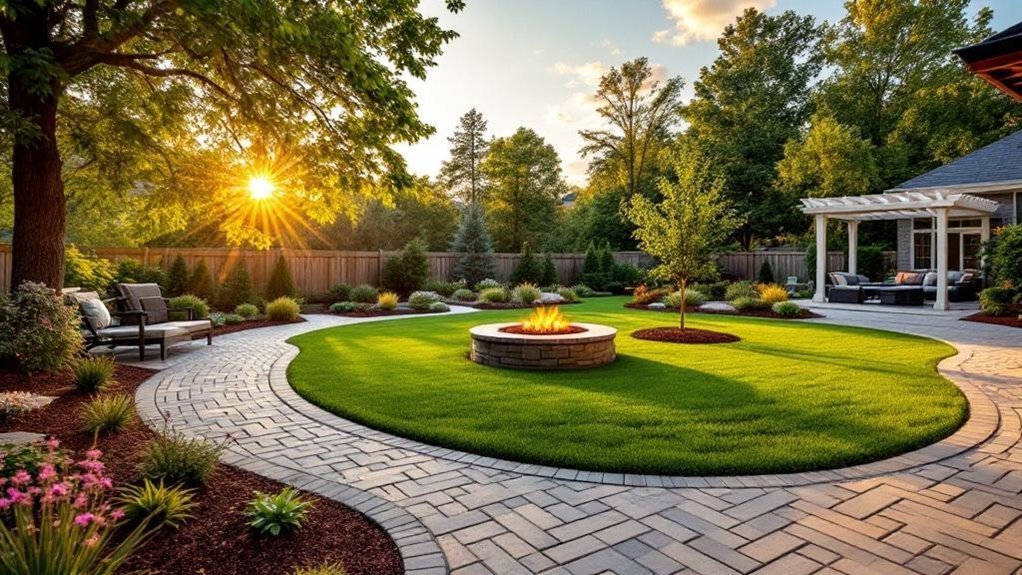
Your outdoor design decisions directly influence market perception and resale valuations, with professionally designed exterior spaces generating documented returns between 100-200% of installation costs. Strategic outdoor investment impacts property appraisal through measured improvements that buyers recognize immediately.
High-Impact Value Drivers:
- Foundation Plantings – Structured evergreen and ornamental combinations that frame architectural features while requiring minimal maintenance
- Hardscape Elements – Professionally installed patios, walkways, and retaining walls using durable materials suited to Wildwood’s climate
- Mature Tree Placement – Strategically positioned shade trees that reduce energy costs and create established appearance
- Irrigation Infrastructure – Automated systems demonstrating long-term property stewardship and outdoor sustainability
These targeted improvements create quantifiable asset appreciation while serving future homeowners’ needs for functional, beautiful exterior environments.
Choosing the Right Landscape Design Partner in Your Area
Selecting a qualified terrain design professional requires evaluating credentials, portfolio consistency, and regional expertise specific to Wildwood’s soil conditions and microclimate zones. You’ll want to examine how designers integrate outdoor design styles that complement your property’s architecture while addressing drainage patterns and native plant requirements. Review their familiarity with local design trends, including sustainable hardscaping and water-efficient irrigation systems tailored to your community’s needs.
Ask potential partners about their approach to serving families and creating functional outdoor spaces. Request references from neighboring properties to verify their understanding of municipal codes and HOA guidelines. Assess their communication style and willingness to collaborate on designs that’ll improve your neighbors’ property values while creating gathering spaces that strengthen community connections.
Conclusion
You’ll transform your Wildwood property from ordinary to absolutely extraordinary with the right scenery design approach. Every element—from native plant selection to hardscape integration—must align with your site’s specific microclimates, soil composition, and drainage patterns. Strategic placement of focal points, properly zoned lighting systems, and climate-appropriate vegetation guarantee year-round functionality. Partner with designers who understand Wildwood’s unique environmental conditions, building codes, and architectural vernacular. Your outdoor investment demands precision, technical expertise, and site-specific solutions.

Leave a Reply