• Services
    • Landscape Maintenance
    • Landscape Design and Installation
    • Hardscapes
    • Fire Feature
    • Water Features
    • Natural Playgrounds
    • Landscape Lighting
    • Synthetic Turf
  • About Us
    • Testimonials
  • Latest News
  • Contact Us

Commercial Landscape Solutions for St. Louis Metro Businesses: Boost Your Curb Appeal

November 13, 2025 By Zac Terrill Leave a Comment

Professional commercial gardening transforms your St. Louis metro property into a powerful business asset. You’ll benefit from strategic design that improves curb appeal, native plantings that reduce maintenance costs, and seasonal care programs ensuring year-round visual impact. Quality gardening services directly influence client perception, tenant retention, and property values while demonstrating your commitment to operational excellence. The right gardening partner brings certified expertise, commercial-grade equipment, and sustainable practices tailored to metro area conditions. This guide investigates proven strategies to maximize your gardening investment’s return.

Key Takeaways

  • Professional landscaping creates powerful first impressions that influence client engagement and reflect your business’s operational excellence.
  • Strategic native plantings reduce maintenance costs while demonstrating environmental stewardship and enhancing St. Louis property values.
  • Year-round seasonal maintenance ensures consistent curb appeal through spring renewal, summer care, fall cleanups, and winter preparations.
  • Choose partners with commercial-grade equipment, proper certifications, verifiable references, and expertise in native Missouri plants.
  • Strategic landscape investments deliver measurable ROI through reduced HVAC costs, increased tenant retention, and superior competitive positioning.

Why Professional Landscaping Matters for St. Louis Commercial Properties
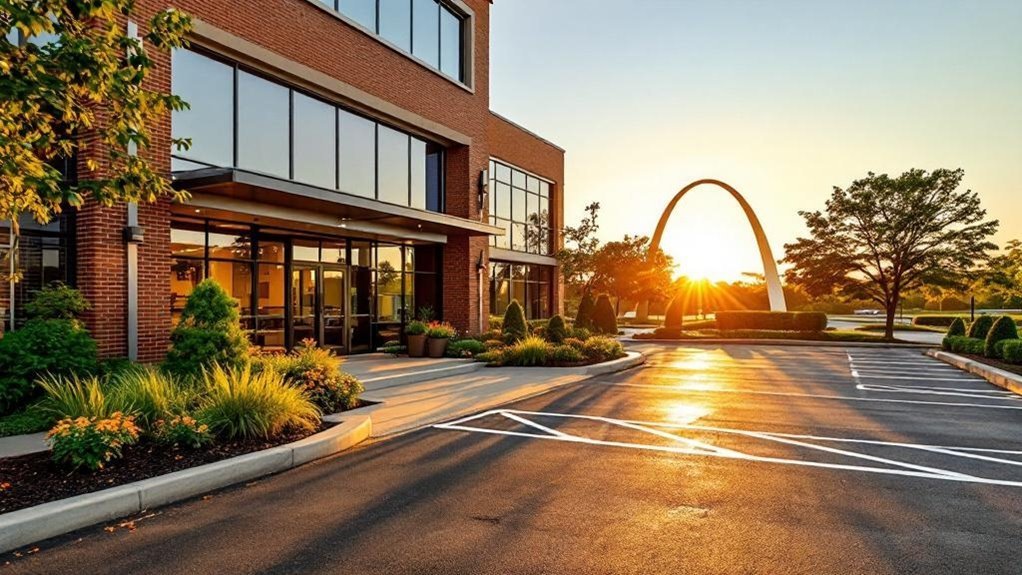
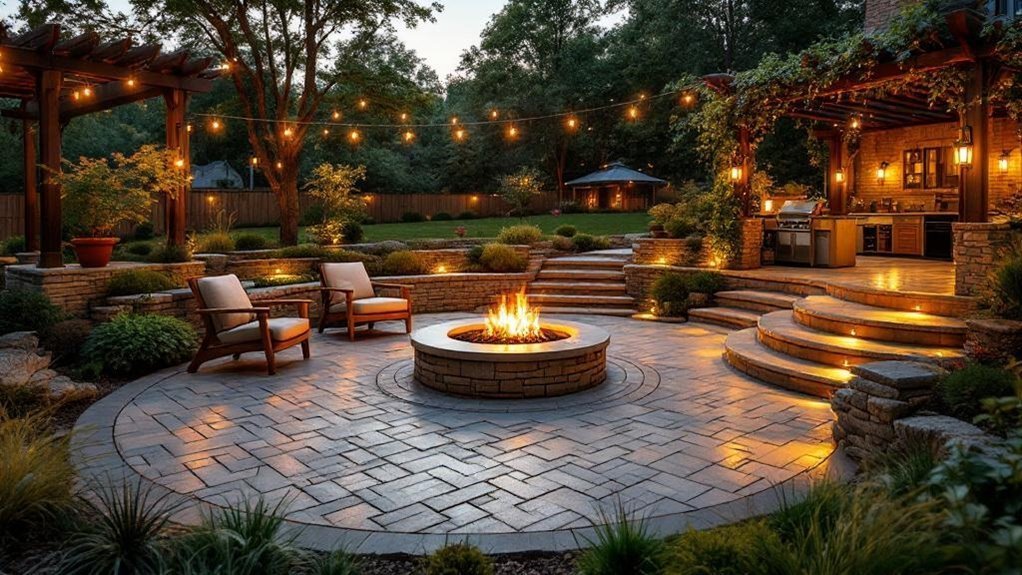
enhancing commercial property appeal

Professional landscaping directly impacts your bottom line in St. Louis, where first impressions determine client engagement. Well-maintained grounds signal operational excellence and attention to detail—qualities your customers value when selecting service providers.

Strategic commercial aesthetics improve property value while creating welcoming environments for employees and visitors. Native plantings adapted to Missouri’s climate reduce maintenance costs and demonstrate environmental stewardship. Properly designed hardscapes manage stormwater runoff and improve accessibility.

Your outdoor space serves as a silent ambassador, communicating brand values before prospects enter your building. Seasonal color rotations maintain visual interest year-round, while professional maintenance guarantees consistent presentation. Investment in quality landscaping yields measurable returns through increased tenant retention, higher lease rates, and improved community reputation—critical factors in competitive commercial markets.

Essential Landscape Services for Metro Area Businesses

Understanding the value of professional landscaping leads naturally to identifying which services deliver ideal results for your commercial property. Extensive landscape design forms the foundation, creating functional outdoor spaces that welcome clients while reflecting your brand identity. Regular maintenance guarantees consistent curb appeal through seasonal pruning, fertilization, and irrigation management. Implementing sustainability practices reduces water consumption and operational costs while demonstrating environmental stewardship to your community. Strategic hardscaping—walkways, retaining walls, and outdoor seating areas—enhances property functionality and accessibility. Seasonal color installations maintain visual interest year-round, while integrated pest management protects your investment without harmful chemicals. Professional lighting design extends usability into evening hours and highlights architectural features. These coordinated services transform your property into an asset that serves employees, customers, and the broader community effectively.

Seasonal Maintenance Strategies for Year-Round Appeal
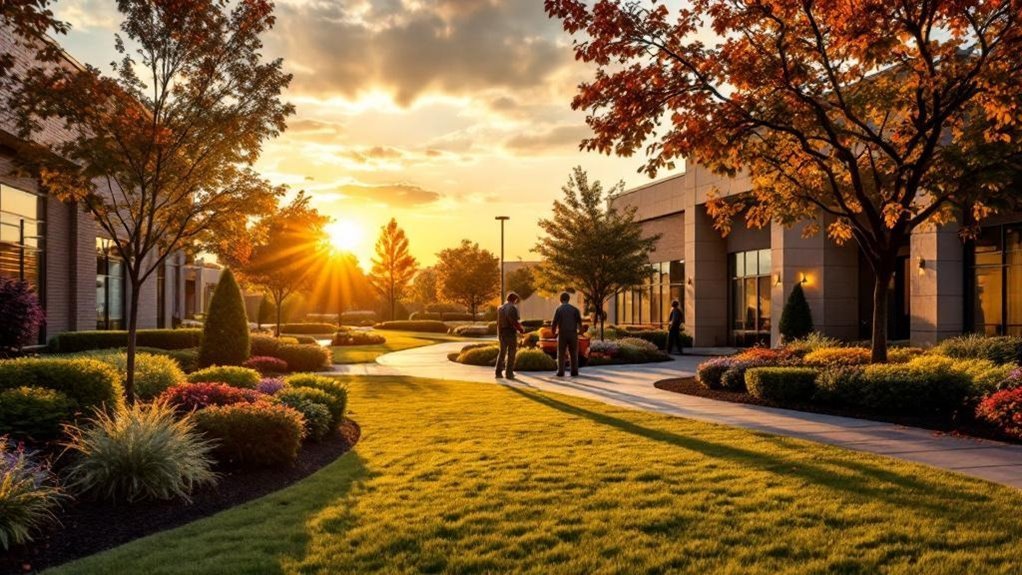
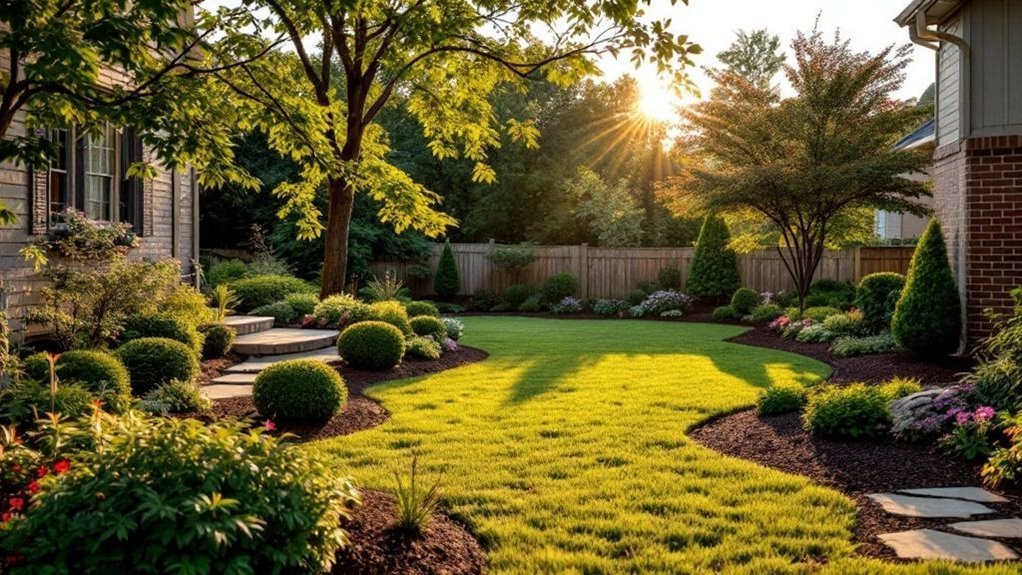
seasonal property maintenance strategies

While your property’s fundamental design establishes its character, strategic seasonal maintenance preserves and boosts that investment throughout the year’s climatic shifts. Your grounds serve clients and visitors daily—protecting this asset requires calibrated interventions aligned with Metro conditions.

Effective year-round maintenance includes:

  • Spring renewal: Soil amendment, mulch replenishment, and pruning to support vigorous growth
  • Summer vitality: Irrigation optimization and targeted pest management for sustained health
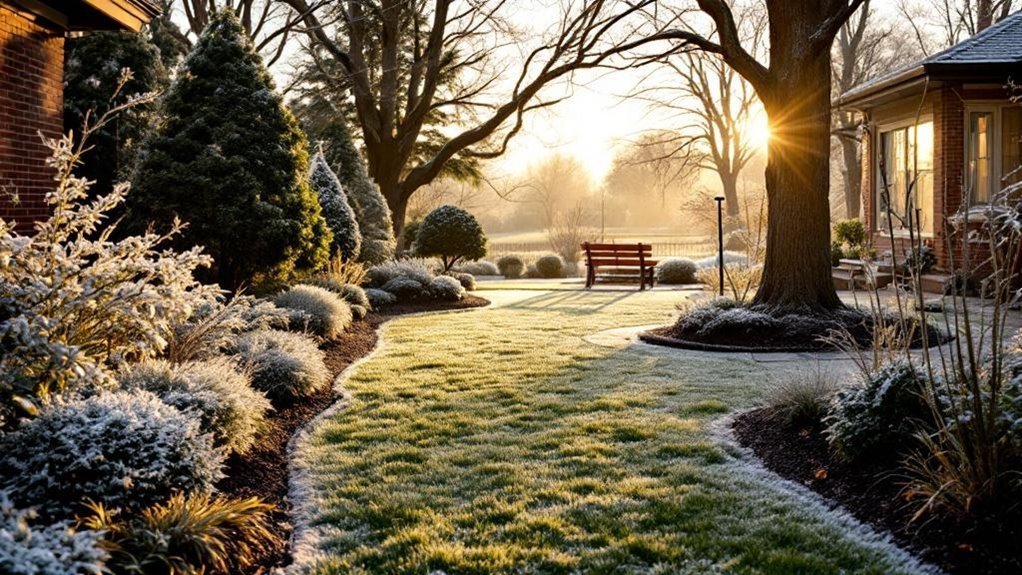
  • Fall seasonal cleanups: Leaf management, perennial cutbacks, and bed preparation for dormancy
  • Winter preparations: Root zone protection, ice management planning, and structural pruning

Each season presents distinct opportunities to improve your property’s professional presentation. You’ll maximize plant health, minimize emergency repairs, and guarantee your environment consistently reflects your commitment to excellence in serving your community.

Selecting the Right Commercial Landscaping Partner in St. Louis

Implementing these seasonal protocols effectively depends on partnering with a landscaping firm that understands both horticultural science and commercial property dynamics. Your vendor evaluation process should prioritize contractors who demonstrate expertise in current landscaping trends while maintaining proven maintenance systems.

Evaluation CriteriaWhat to Look For
CertificationsLicensed professionals, pesticide applicators, irrigation specialists
EquipmentCommercial-grade machinery, backup systems, technology integration
ReferencesSimilar-sized properties, multi-year contracts, verifiable results
Response Time24-hour emergency service, dedicated account management
SustainabilityWater conservation practices, native plant expertise, eco-friendly solutions

You’ll need a partner who can scale services as your property needs evolve, ensuring consistent quality that reflects your commitment to excellence.

Maximizing ROI Through Strategic Landscape Investment
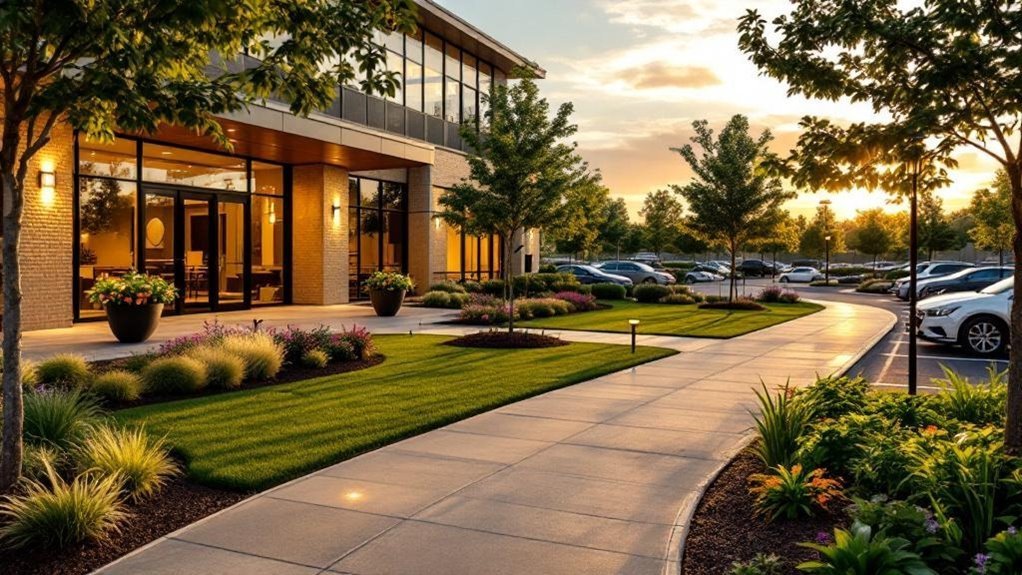
strategic landscape investment returns

Strategic terrain investment delivers measurable financial returns that extend far beyond aesthetic improvements. You’ll uncover that thoughtful scenery budgeting directly impacts property valuation while creating environments where clients, employees, and visitors thrive.

Consider these proven ROI drivers:

  • Energy efficiency gains through strategic tree placement reduce HVAC costs by 15-25% annually
  • Tenant retention increases when professionally maintained grounds demonstrate your commitment to quality
  • Insurance premium reductions result from proper drainage systems and erosion control measures
  • Competitive positioning strengthens as superior curb appeal attracts premium tenants and customers

Your investment transforms operational expenses into strategic assets. Smart scenery budgeting allocates resources toward drought-resistant plantings, automated irrigation systems, and low-maintenance hardscapes that minimize long-term costs while maximizing property valuation and stakeholder satisfaction.

Conclusion

You’ve now got the blueprint for transforming your St. Louis commercial property into a professional showcase. Picture pristine hedgerows framing your entrance, seasonal blooms punctuating walkways, and meticulously edged turf creating clean sight lines. Your outdoor setting investment translates directly to increased property values and client retention. Partner with specialists who understand metro-specific challenges—clay soils, humidity cycles, and municipal codes. Execute your strategic plan systematically, and you’ll watch your outdoor spaces deliver measurable returns quarter after quarter.
Filed Under: Another Blog Category Tagged With: commercial landscaping, curb appeal, St. Louis businesses

Creating Beautiful Outdoor Living Spaces in Wildwood: Patios, Fire Pits, and Hardscapes

November 6, 2025 By Zac Terrill Leave a Comment

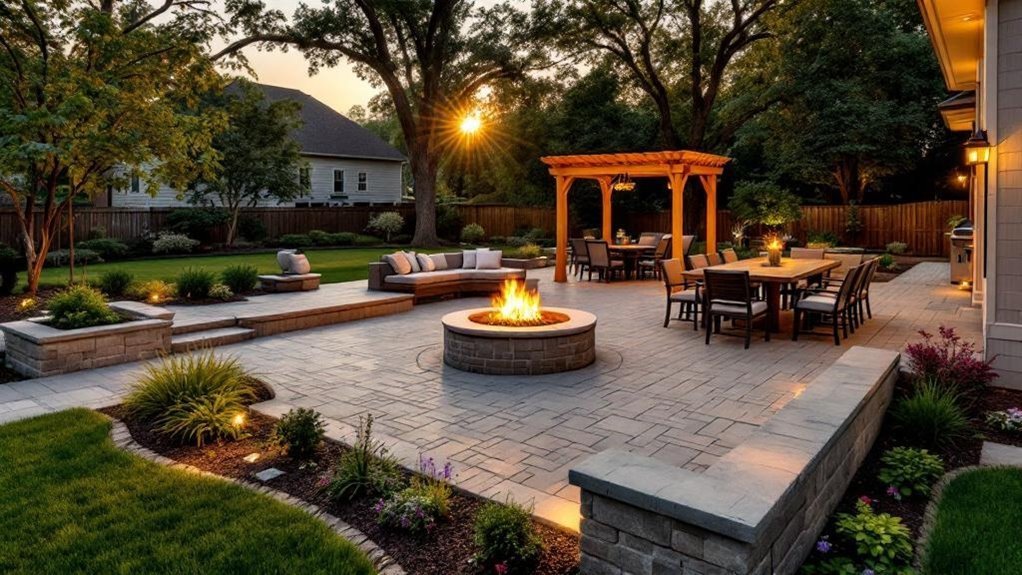
Creating beautiful outdoor living spaces in Wildwood demands careful attention to coastal conditions—you’ll need to account for Atlantic winds, sandy soil, and salt exposure when selecting hardscape materials. Permeable pavers and sealed natural stone work best for patios, while proper drainage systems prevent water pooling. Strategic placement of fire pits, whether wood-burning or gas, requires considering existing utilities and local regulations. Budget $25,000-$150,000 with 8-12 week timelines for complete installations. Native plantings like switchgrass and Eastern redbud complement hardscapes while reducing maintenance. The following sections break down each critical component to guarantee your project’s long-term success.

Key Takeaways

  • Design outdoor spaces considering Wildwood’s coastal microclimate, prioritizing drainage systems and strategic zoning for dining, lounging, and cooking areas.
  • Choose salt-resistant materials like permeable pavers and sealed natural stone to withstand moisture infiltration and prevent erosion.
  • Select fire pit type based on preference: wood-burning for ambiance or gas for convenience and low maintenance.
  • Incorporate native plants like switchgrass and cardinal flower to create low-maintenance landscapes that support local pollinators and prevent erosion.
  • Allocate 40% of budget to hardscape materials and plan 8-12 week timeline, scheduling construction between May and October.

Planning Your Wildwood Outdoor Living Space: Design Considerations and Layout Tips

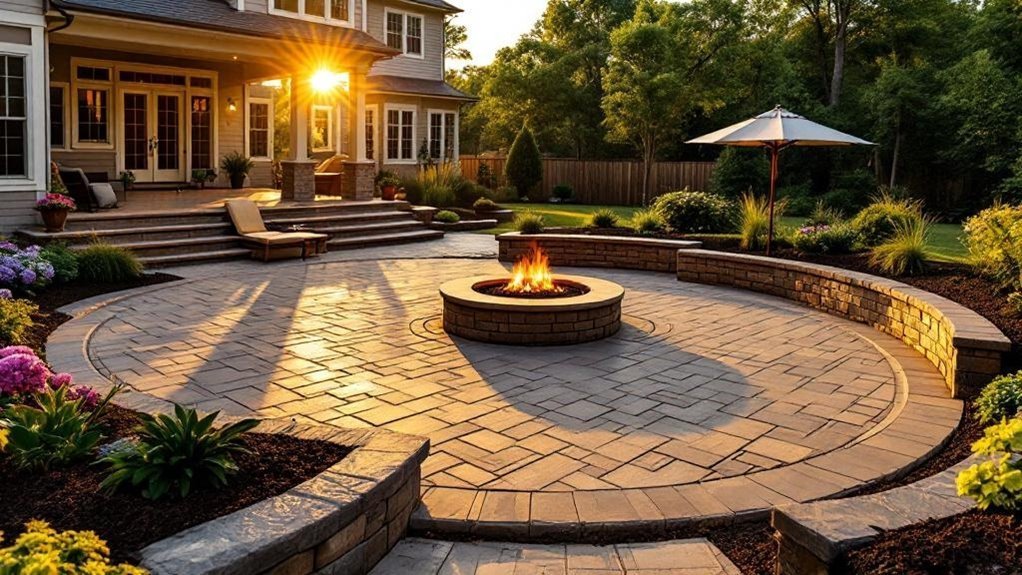
outdoor space design considerations

When designing an outdoor living space in Wildwood, you’ll need to account for the city’s coastal microclimate, sandy soil composition, and strict setback requirements that govern structures within the island municipality. Your design must prioritize space utilization through strategic zoning—define distinct areas for dining, lounging, and cooking while maintaining clear pathways. Consider furniture arrangement that accommodates guests comfortably without overcrowding limited square footage. Wind direction from the Atlantic necessitates strategic placement of windbreaks and anchored elements. Install proper drainage systems to prevent pooling on impervious surfaces. Your layout should incorporate native, salt-tolerant plantings that won’t require excessive maintenance. Document all measurements and verify compliance with local ordinances before construction begins, ensuring your outdoor space serves family and guests effectively.

Choosing the Right Patio Materials for Wildwood’s Climate and Terrain

Your layout plans require durable foundation materials that withstand Wildwood’s unique environmental stressors—salt spray, moisture infiltration, freeze-thaw cycles, and unstable substrate conditions. Permeable pavers excel in sandy terrain, allowing drainage while preventing erosion that compromises structural integrity. Natural stone offers exceptional patio durability with material aesthetics that complement coastal architecture, though proper sealing protects against salt damage. Concrete pavers with higher PSI ratings resist cracking during temperature fluctuations while providing design versatility for community gathering spaces. Avoid wood composites in high-moisture zones where degradation accelerates. Consider textured surfaces for slip resistance around pool areas and fire pit zones where your guests’ safety remains paramount. Select lighter colors to reduce heat absorption, creating comfortable surfaces for barefoot traffic during summer gatherings.

Fire Pit Options: From Rustic Wood-Burning to Modern Gas Features

fire pit selection options

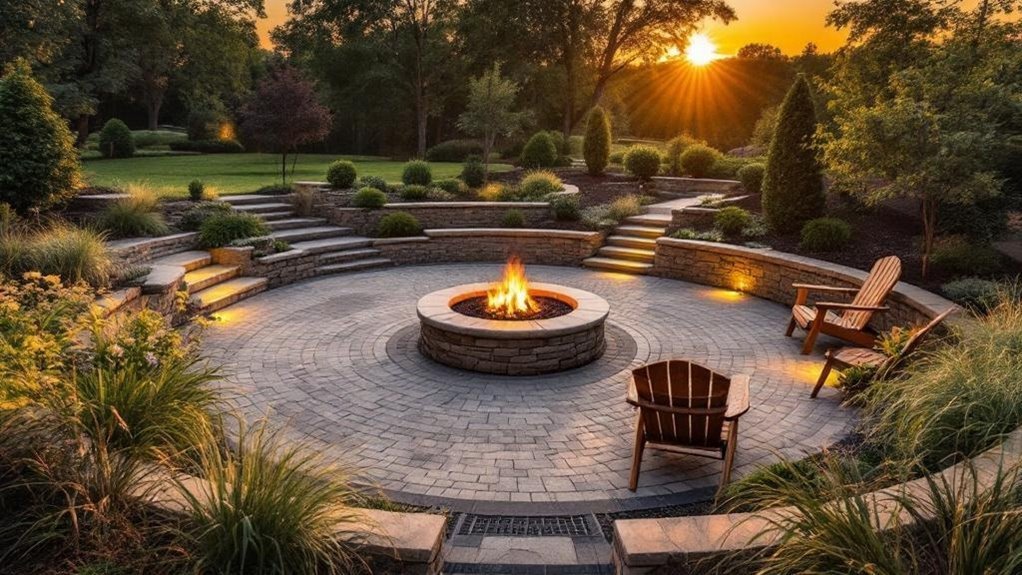
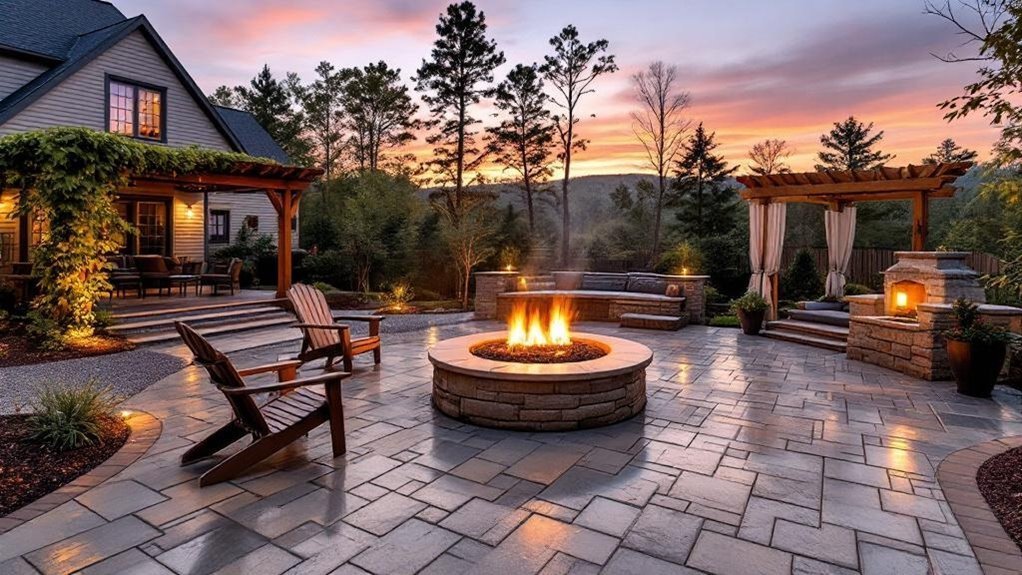
Your fire pit selection directly impacts both the functionality and aesthetic of your Wildwood outdoor living space. Wood-burning pits deliver authentic crackling ambiance and radiant heat distribution, while gas-powered alternatives offer instant ignition, adjustable flame control, and minimal maintenance requirements. The choice between these systems depends on your site’s existing utilities, local regulations, and whether you prioritize traditional atmosphere or contemporary convenience.

Wood-Burning Fire Pit Benefits

Wood-burning fire pits deliver authentic crackling flames and aromatic smoke that define traditional outdoor gatherings in Wildwood’s coastal climate. Understanding wood burning advantages helps you create inviting spaces for family and guests year-round.

Key benefits include:

  1. Cost-effectiveness: No gas lines or propane tanks required, reducing installation expenses and ongoing fuel costs
  2. Ambient experience: Natural wood smoke and ember patterns create sensory-rich environments that improve evening gatherings
  3. Heat output: Higher BTU production than gas alternatives, crucial for Wildwood’s ocean breezes
  4. Cooking versatility: Direct flame access allows grilling and s’more preparation

Fire pit maintenance requires ash removal and seasonal chimney cleaning, but these straightforward tasks guarantee peak performance. You’ll provide guests with memorable outdoor experiences while maintaining Wildwood’s rustic coastal aesthetic.

Gas Fire Pit Advantages

Gas fire pits offer on-demand ignition and precise flame control that complement Wildwood’s contemporary outdoor design trends. You’ll appreciate the immediate warmth without smoke, ash, or flying embers—critical fire pit safety considerations for your guests. These systems deliver exceptional gas efficiency, reducing operational costs while maintaining consistent BTU output throughout your gathering.

Installation flexibility allows integration with existing natural gas lines or propane tanks, accommodating various patio configurations. You can specify flame height and heat intensity with simple valve adjustments, creating the perfect ambiance for different occasions. The clean-burning nature eliminates post-event cleanup, letting you focus on hospitality rather than maintenance. Modern burner designs utilize tempered glass, lava rock, or ceramic logs to achieve aesthetic versatility while maximizing radiant heat distribution across your entertaining space.

Choosing Your Ideal Style

How do architectural context and functional requirements converge when selecting fire pit configurations for Wildwood’s coastal environment? You’ll need to balance modern aesthetics with classic elegance while addressing salt air exposure and wind patterns.

Consider these critical selection factors:

  1. Material durability: Stainless steel and concrete withstand coastal corrosion better than standard metals
  2. Flame protection: Glass windscreens maintain combustion efficiency in beach breezes
  3. Scale proportions: Match fire pit dimensions to your patio’s spatial envelope
  4. Fuel accessibility: Gas lines require professional installation; wood storage needs weather protection

Your choice should reflect both your home’s architectural language and your community’s needs. Traditional stone installations offer timeless appeal for gathering spaces, while sleek linear burners complement contemporary designs. Each configuration serves distinct entertaining patterns and maintenance commitments.

Hardscaping Elements That Enhance Functionality and Visual Appeal

functional and aesthetic hardscaping

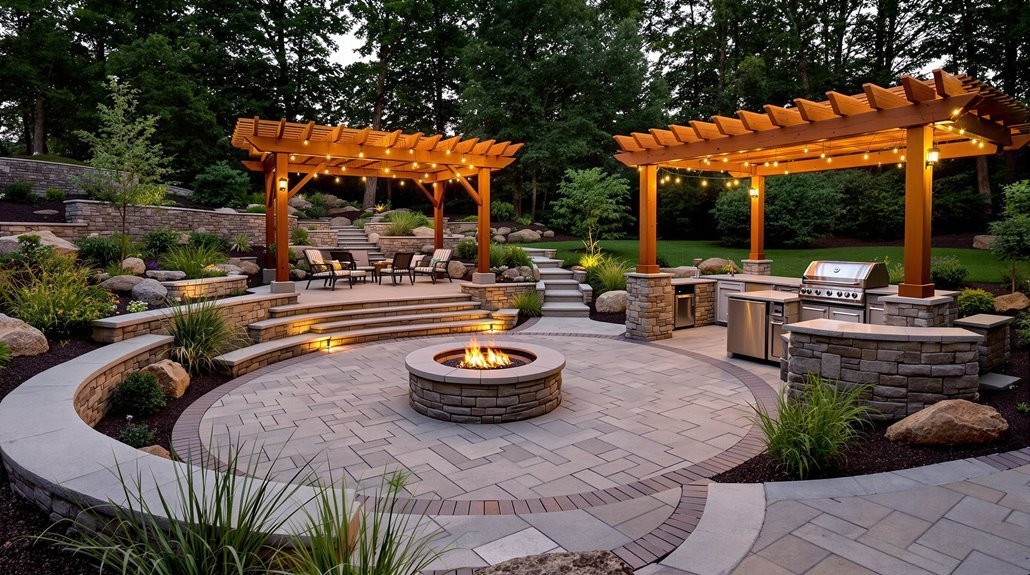
Hardscaping elements form the structural foundation of your Wildwood outdoor living space, defining circulation patterns and establishing visual hierarchy through materials like natural stone, pavers, and concrete. Retaining walls serve dual purposes—they manage Wildwood’s terrain elevation changes while creating defined planting beds and seating opportunities that integrate seamlessly with your grounds design. Walkways and pathways direct movement through your property, connecting functional zones while their material choices, widths, and edge treatments establish the aesthetic character of your entire outdoor environment.

Retaining Walls and Borders

Sloped terrain and elevation changes throughout Wildwood properties demand structural solutions that prevent erosion while creating usable outdoor zones. You’ll need retaining walls that balance engineering requirements with aesthetic integration into your surroundings design.

Strategic retaining wall materials and border design techniques transform challenging grades into functional terraces:

  1. Natural stone veneer provides authentic texture while maintaining structural integrity
  2. Segmental block systems offer engineered stability with varied cap and color options
  3. Timber walls create warm, organic shifts in woodland settings
  4. Decorative borders define planting beds and pathways with clean edges

You’re not just building barriers—you’re crafting pathways that guide guests through outdoor spaces while protecting your investment. Proper drainage integration and footer preparation guarantee these features serve your community for decades.

Walkways and Pathways

While retaining walls establish elevation shifts, walkways define circulation patterns that connect your Wildwood outdoor living zones with purposeful movement and material clarity. Your pathway materials should complement existing hardscape elements while addressing site-specific drainage requirements and freeze-thaw cycles common to this region. Consider permeable pavers, natural stone, or decomposed granite that harmonize with your patio’s aesthetic vocabulary.

Strategic placement guides guests from entry points to gathering areas while protecting garden plantings from compaction. Width specifications matter—primary routes require 48-inch clearances for accessibility, while secondary paths function at 36 inches. Integrate lighting options that illuminate changes without overwhelming the space: low-voltage LED fixtures along borders, step lights at grade changes, and bollard systems for extended pathways guarantee safe navigation while serving evening entertainment needs.

Incorporating Native Plants and Landscaping Into Your Outdoor Design

When designing outdoor living spaces in Wildwood, native plant selection forms the foundation of a resilient, low-maintenance scenery that thrives in Missouri’s climate zone 6b. You’ll find native plant benefits extend beyond aesthetics—they support local pollinators, require less irrigation, and resist regional pests naturally.

Sustainable landscaping strategies for your outdoor design include:

  1. Layer Eastern redbud and serviceberry trees above Missouri black-eyed Susan perennials
  2. Position switchgrass and little bluestem as structural anchors near hardscape edges
  3. Integrate limestone boulders that echo Wildwood’s natural geology
  4. Establish rain gardens with cardinal flower and swamp milkweed in drainage zones

You’re creating habitat corridors that serve wildlife while reducing maintenance demands. These plant communities establish deep root systems, preventing erosion around patios and fire pits while complementing your hardscape investments.

Budgeting and Timeline: What to Expect for Your Outdoor Living Project

budget and timeline overview

Budget allocation for outdoor living projects in Wildwood typically ranges from $25,000 to $150,000, with material costs reflecting Missouri’s regional pricing and the site-specific challenges of working with the area’s clay-heavy soils and varying topography. Your budget breakdown should allocate 40% for hardscape materials, 25% for labor, 20% for site preparation and drainage solutions, and 15% for plantings and finishing elements.

The project timeline extends 8-12 weeks from design approval to completion. You’ll need two weeks for permitting, three weeks for excavation and base preparation, two weeks for hardscape installation, and one week for plantings. Weather delays during spring and winter months can extend timelines by 2-3 weeks. Schedule your project between May and October for ideal construction conditions.

Conclusion

Think of your outdoor space as a canvas where Wildwood’s natural character becomes the foundation. Each paver you’ll select, every fire pit placement you’ll determine, and all hardscape elements you’ll integrate must respond to your site’s unique topography and microclimate. You’re not simply installing features—you’re orchestrating a dialogue between built elements and native scenery. Your investment transforms raw terrain into functional artistry, where materials weather gracefully alongside Missouri’s indigenous flora, creating spaces that’ll endure through seasons.

Filed Under: Another Blog Category Tagged With: fire pits, outdoor living, Wildwood patios

Why Ellisville Homeowners Choose Professional Landscaping Services Over DIY

October 30, 2025 By Zac Terrill Leave a Comment

You’ll find professional landscaping more cost-effective than DIY in Ellisville due to clay-heavy soils, unpredictable freeze-thaw cycles, and specialized equipment requirements create hidden expenses. Professionals possess terrain-specific expertise for soil amendments, drainage solutions, and cultivar selection that tolerates alkaline conditions. While quarter-acre properties demand 8-12 weekly maintenance hours, certified teams complete projects faster while avoiding costly remediation mistakes. Their ergonomic techniques prevent musculoskeletal injuries from handling 2,500-pound paver pallets and mature trees. Extensive warranty protection and evidence-based sustainable practices guarantee your outdoor space investment delivers long-term value and ecological resilience.

Key Takeaways

  • Professional landscapers avoid DIY hidden costs like specialized equipment purchases, material waste, and expensive mistakes requiring remediation.
  • Ellisville’s clay-heavy soils and freeze-thaw cycles demand expert knowledge in soil amendments, drainage solutions, and alkaline-tolerant plant selection.
  • Certified professionals provide site-specific assessments ensuring proper plant compatibility, strategic placement, and sustainable native species selections for Missouri’s climate.
  • Hiring professionals saves busy families 8-12 weekly maintenance hours while eliminating risks of musculoskeletal injuries from heavy lifting and equipment operation.
  • Comprehensive warranty protection spanning 1-5 years safeguards homeowners against material defects and workmanship failures with documented maintenance protocols.

The Hidden Costs of DIY Landscaping Projects

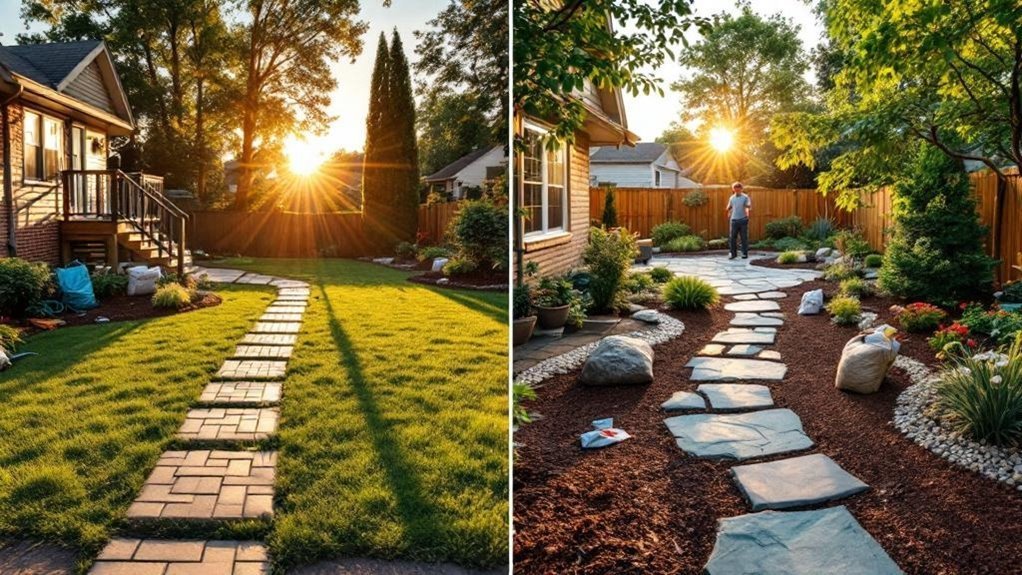
hidden costs of diy landscaping

While DIY gardening initially appears cost-effective, homeowners frequently underestimate the financial burden of equipment acquisition, material waste, and corrective interventions. You’ll encounter budget overruns when purchasing specialized tools you’ll rarely use again—aerators, sod cutters, and compactors represent significant capital expenditures. Material calculations often prove inaccurate, resulting in excess mulch, pavers, or insufficient quantities requiring additional delivery fees. Project delays compound costs when you’re juggling responsibilities while serving your family and community commitments. Inexperienced grading leads to drainage problems requiring professional remediation. Improperly installed hardscapes settle unevenly, demanding costly reconstruction. When you factor in your time’s value and potential mistakes, professional gardeners deliver superior outcomes while freeing you to focus on meaningful service to others.

Ellisville’s Unique Soil and Climate Challenges

Since Ellisville sits at the convergence of Missouri’s shifting climate zone, your terrain faces clay-heavy soils with pH levels ranging from 6.8 to 7.5 and unpredictable freeze-thaw cycles that challenge plant establishment. Professional horticulturists understand this soil composition requires strategic amendments—incorporating organic matter, adjusting drainage patterns, and selecting cultivars that tolerate alkaline conditions. Climate variability demands expertise in hardiness zone changes, as Ellisville experiences both Zone 6a and 6b characteristics. You’ll need specialists who can implement proper root protection systems, design moisture management solutions, and choose plant materials that withstand temperature fluctuations. When you’re committed to creating environments that serve your family and community long-term, partnering with professionals who master these technical challenges guarantees sustainable results that honor your investment.

Professional Expertise in Plant Selection and Placement

expert plant selection strategies

Since Ellisville’s microclimates create distinct growing conditions within individual properties, professionals conduct site-specific assessments that map sun exposure patterns, wind corridors, and moisture retention zones before recommending plant palettes. You’ll benefit from their understanding of plant compatibility—ensuring species share similar water, nutrient, and pH requirements while avoiding competitive root systems. Professionals strategically layer plantings by height, texture, and bloom sequences to maintain year-round visual interest and aesthetic balance. They’ll specify cultivars with proven hardiness ratings for Zone 6b conditions, selecting disease-resistant varieties that minimize maintenance demands. This expertise prevents costly mistakes like placing moisture-loving specimens in drainage swales or shade-preferring perennials in southern exposures. You’re ultimately investing in sustainable environments that serve your community through proper stewardship of resources.

Time Savings for Busy Professionals and Families

Professional grounds maintenance demands 8-12 hours weekly for a typical quarter-acre property when you account for mowing cycles, edge trimming, mulch replenishment, pruning schedules, and irrigation system adjustments. When you’re managing career responsibilities and family commitments, outsourcing outdoor upkeep isn’t luxury—it’s strategic resource allocation.

Professional services eliminate weekend yard work that competes with family involvement in community activities, youth sports, and volunteer initiatives. Your time management strategies improve considerably when you redirect those hours toward mentoring, coaching, or serving your neighbors. Licensed landscaping crews complete tasks in 90 minutes that consume your entire Saturday, applying specialized knowledge of turfgrass nutrition, seasonal pruning protocols, and integrated pest management. You’ll serve your household more effectively by focusing on relationships rather than repetitive maintenance tasks.

Access to Specialized Equipment and Materials

professional equipment and materials

You’ll gain immediate access to commercial-grade equipment that would cost thousands to purchase outright—aerators, sod cutters, stump grinders, and specialized spreaders that homeowner models simply can’t match in power or precision. Professional groundskeepers maintain established relationships with wholesale nurseries and material suppliers, securing higher-quality plants, premium soil amendments, and hardscaping materials at contractor pricing you can’t access as a retail customer. This equipment advantage combined with superior material sourcing translates directly into faster project completion times and longer-lasting results that justify the service investment.

Professional-Grade Tools Matter

High-end gardening equipment—commercial-grade mowers, aerators, soil compactors, and precision irrigation tools—delivers results that consumer-grade alternatives can’t match. You’ll notice the difference immediately when professionals deploy specialized gardening tools that handle challenging terrain and dense vegetation efficiently. Equipment maintenance costs alone make ownership impractical for occasional use.

Professional EquipmentHomeowner Alternative
Hydraulic sod cuttersManual edging tools
Commercial zero-turn mowersResidential push mowers
Truck-mounted sprayersHandheld spray bottles
Laser-guided grading systemsManual leveling methods

Professional gardeners maintain calibrated equipment that guarantees precision results for your property. Their investment in specialized machinery—from stump grinders to trenchers—means you’re accessing tools worth thousands without the storage requirements or depreciation concerns. This equipment efficiency translates directly into superior outcomes for your gardening projects.

Quality Material Sourcing Advantages

Beyond equipment superiority, established gardening contractors maintain wholesale relationships with specialty nurseries, hardscape suppliers, and soil amendment manufacturers that aren’t accessible to retail customers. You’ll benefit from premium-grade topsoil, professionally blended mulches, and disease-resistant cultivars that big-box retailers don’t stock. These sourcing benefits translate directly into longevity and performance for your gardening investment.

Professional material quality extends to hardscaping components—pavers, retaining wall systems, and aggregate materials—where contractors access commercial-grade products with superior load ratings and freeze-thaw durability. They’ll source pH-balanced soil amendments, mycorrhizal inoculants, and specialized fertilizers formulated for your region’s specific deficiencies. This procurement advantage means you’re getting materials engineered for peak plant establishment and structural integrity, not consumer-grade alternatives designed primarily for shelf appeal and price-point competitiveness.

Long-Term Property Value Enhancement

While aesthetic improvements deliver immediate curb appeal, strategic outdoor design investments compound annual property values by 15-20% through sustainable design implementation. Professional landscapers engineer drainage systems, erosion control, and native plantings that reduce maintenance costs while maximizing property aesthetics. You’re investing in infrastructure that serves future homeowners and strengthens neighborhood appeal.

Investment TimelineDIY DepreciationProfessional ROI
Year 1-3Material failure, replanting costsEstablished root systems, warranty protection
Year 4-7Erosion damage, drainage issuesMature canopy development, thermal efficiency
Year 8-10Outdoor design replacement requiredPeak valuation enhancement, ecosystem establishment

Your commitment to professional outdoor design creates generational value, transforming properties into community assets while providing environmental stewardship that benefits everyone.

Sustainable Design Practices for Missouri Landscapes

sustainable missouri landscape practices

Missouri’s continental climate—characterized by temperature swings exceeding 100°F annually, variable precipitation patterns, and USDA hardiness zones 5b through 7a—demands region-specific terrain architecture that withstands environmental stressors while conserving resources. Professional gardeners implement sustainable frameworks through strategic native plant selection, incorporating species like Missouri black-eyed Susan, purple coneflower, and serviceberry that require minimal irrigation once established. You’ll reduce maintenance costs while supporting local pollinators and wildlife corridors.

Experts integrate eco-friendly materials including permeable pavers, recycled composites, and locally sourced stone that minimize environmental impact. Rain gardens, bioswales, and xeriscaping techniques manage stormwater runoff effectively while reducing municipal strain. These evidence-based approaches create resilient environments that serve your property and community through reduced resource consumption, improved biodiversity, and long-term ecological health.

Physical Demands and Safety Considerations

You’ll face significant physical risks in landscaping operations, from musculoskeletal injuries during material handling to equipment-related accidents and environmental stressors. Understanding proper lifting mechanics, implementing lockout-tagout procedures for powered equipment, and establishing heat illness prevention protocols are non-negotiable aspects of your safety program. These hazards require systematic controls through engineering solutions, administrative policies, and personal protective equipment to maintain OSHA compliance and reduce workers’ compensation claims.

Heavy Lifting Injury Risks

Landscaping professionals face significant musculoskeletal injury risks when handling materials like pavers, natural stone, soil bags, and mature plants that routinely exceed 50 pounds. You’ll encounter constant strain on your lower back, shoulders, and knees without proper lifting techniques and equipment. Professional crews implement injury prevention protocols that DIY homeowners typically lack.

Material TypeAverage Weight
Paver pallets2,500-3,000 lbs
Natural stone slabs100-300 lbs each
Soil bags (bulk)40-80 lbs
Mature trees (balled)200-500 lbs

Professional teams utilize mechanical assists—skid steers, pallet jacks, and tree spades—reducing heavy lifting exposure. They’ve mastered ergonomic techniques, wear supportive equipment, and rotate physically demanding tasks. You’re protecting your long-term health by delegating these hazardous activities to trained specialists.

Equipment Operation Hazards

Operating power equipment like walk-behind trenchers, plate compactors, and stump grinders exposes you to vibration-related injuries, noise-induced hearing loss, and laceration risks that require specialized training to mitigate. Without proper operator training, you’re vulnerable to kickback incidents, blade contact injuries, and repetitive strain disorders that can sideline you from serving your clients effectively.

Professional groundskeepers maintain current certifications in equipment safety protocols, understanding load capacities, maintenance schedules, and emergency shutdown procedures. They’ve invested hundreds of hours mastering each tool’s operational parameters and recognizing warning signs of equipment failure. This expertise protects not only themselves but also your property and family. When you hire trained professionals, you’re ensuring that complex tasks are executed with the precision and safety consciousness that homeowners simply can’t replicate through occasional DIY attempts.

Heat Exhaustion Prevention

When ambient temperatures exceed 85°F and humidity climbs above 60%, your risk of heat-related illness increases exponentially during extended outdoor work sessions. Professional horticulturists implement thorough heat awareness protocols that protect both crew members and property outcomes.

Warning SignProfessional Response
Dizziness, nauseaImmediate work cessation
Excessive sweatingHydration station deployment
Muscle crampingElectrolyte replacement
Confusion, weaknessEmergency medical protocols

Effective hydration strategies require consuming 16-32 ounces of water hourly during peak heat conditions. Licensed gardening teams rotate personnel through shaded rest intervals, monitor core temperature indicators, and schedule heat-intensive tasks during cooler morning hours. You’ll avoid the dangerous combination of physical exertion and thermal stress that sends thousands to emergency rooms annually.

Warranty Protection and Ongoing Maintenance Support

Beyond the initial installation, extensive warranty coverage safeguards your investment against material defects, workmanship failures, and plant mortality during the establishment period. Professional landscapers typically offer tiered protection plans spanning 1-5 years, addressing irrigation components, hardscape materials, and vegetation health. You’ll benefit from documented maintenance protocols that preserve warranty validity while ensuring optimal outdoor environment performance.

Structured maintenance plans provide your clients with seasonal pruning, fertilization schedules, integrated pest management, and system diagnostics. These programs prevent minor issues from escalating into costly repairs while maintaining property values. Licensed contractors document all service interventions, creating thorough care histories that support long-term landscape health. This proactive approach demonstrates your commitment to sustainable stewardship rather than transactional service delivery.

Conclusion

You might think professional landscaping’s upfront investment outweighs DIY savings, but consider the lifecycle costs. When you factor in equipment rentals, material waste, soil amendments for Ellisville’s clay-heavy terrain, and potential installation failures, you’re often spending more without professional results. Licensed contractors leverage bulk purchasing power, proper grading techniques, and zone-specific plant selection that’ll reduce your long-term maintenance costs by 30-40%. You’re not just buying labor—you’re investing in engineered solutions that protect your property value.

Filed Under: Uncategorized Tagged With: clay soils, DIY projects, landscaping services

The Complete Guide to Landscape Maintenance in St. Louis: Year-Round Care Tips From Local Experts

October 23, 2025 By Zac Terrill Leave a Comment

You’ll need to adapt your terrain maintenance to St. Louis’s Zone 6b climate by selecting cool-season grasses like tall fescue and Kentucky bluegrass that thrive in clay soil. Start spring protocols when soil reaches 50-55°F with core aeration and pre-emergent applications, shift to deep watering twice weekly during summer heat, and apply winterizer fertilizer in fall before temperatures drop below 32°F. Your success depends on amending clay soil with compost at a 2:1 ratio while monitoring for Japanese beetles and fungal diseases throughout the growing season.

Key Takeaways

  • Select cool-season grasses like tall fescue and Kentucky bluegrass suited for St. Louis’s Zone 6b climate and clay soil conditions.
  • Apply pre-emergent herbicides and core aeration in early spring when soil temperatures reach 50-55°F for optimal lawn health.
  • Water deeply twice weekly during summer heat and mulch plantings with 3-4 inches of hardwood to retain moisture.
  • Aerate compacted turf and apply winterizer fertilizer in fall when temperatures drop below 70°F to strengthen root systems.
  • Maintain mowing heights between 2.5-4 inches seasonally to improve drought tolerance and prevent disease in cool-season grasses.

Understanding St. Louis’s Zone 6b Climate and Soil Conditions

st louis climate and soil

Since St. Louis sits in USDA Zone 6b, you’ll need to understand its unique environmental challenges to serve your clients effectively. The region experiences temperature fluctuations from -5°F to 0°F in winter, demanding climate adaptation strategies for plant selection and protection protocols.

Your soil management requires attention to the area’s mainly clay composition, which retains moisture but restricts drainage and root penetration. You’ll want to implement strategic soil amendments—incorporating compost, aged manure, and sand—to improve structure and fertility. Test pH levels regularly, as local soils typically range from 6.0 to 7.0.

Consider the region’s 40-inch annual rainfall pattern, with peak precipitation in spring. You’ll need drainage solutions and erosion control measures. Understanding these conditions guarantees you’re designing resilient environments that thrive year-round.

Spring Landscape Maintenance: March Through May

Spring maintenance in St. Louis begins when soil temperatures consistently reach 50-55°F, typically in mid-March, signaling ideal conditions for core aeration and pre-emergent applications. You’ll need to coordinate fertilization schedules with local lawn care ordinances, particularly St. Louis County’s fertilizer restrictions near waterways and storm drains. Pruning dormant trees before budbreak and applying 2-3 inches of mulch around plantings creates the foundation for seasonal growth while addressing both functional drainage requirements and aesthetic design continuity.

Lawn Fertilization and Aeration

As temperatures stabilize above 55°F and soil conditions permit workability, your St. Louis lawn requires strategic nutrient management. Apply a slow-release nitrogen fertilizer (0.75-1.0 lb N/1000 sq ft) when grass reaches 3 inches, typically mid-April. You’ll support ideal lawn health by timing applications with active growth phases rather than calendar dates.

Core aeration becomes critical in spring for compacted clay soils prevalent throughout the region. Remove plugs 2-3 inches deep at 3-inch intervals when soil moisture reaches field capacity—firm but not saturated. This process improves root development, water infiltration, and nutrient uptake efficiency.

For properties serving high-traffic applications, overseed immediately post-aeration with quality turf-type tall fescue blends. Proper nutrient timing synchronized with aeration maximizes establishment rates while minimizing environmental runoff concerns under Missouri’s stormwater regulations.

Pruning and Mulching Tasks

While dormant-season pruning windows close in March, spring maintenance focuses on selective cuts for flowering shrubs and structural corrections that protect property values. You’ll apply proper pruning techniques after spring-blooming plants finish flowering—removing spent blooms on azaleas, lilacs, and forsythias prevents energy waste while maintaining scenery aesthetics for clients and visitors.

Strategic mulching benefits extend beyond appearance. You’ll apply 2-3 inches of organic mulch around trees and beds, leaving proper spacing at trunks to prevent moisture-related diseases. This practice suppresses weeds, regulates soil temperature, and conserves water—reducing maintenance costs while demonstrating environmental stewardship. Document mulch depths and coverage areas to maintain consistency across properties, ensuring your scenery investments deliver long-term returns for those you serve.

Summer Care Strategies for Hot and Humid Months

summer plant care strategies

St. Louis summers demand strategic interventions to protect your greenery investment. You’ll need to adjust irrigation schedules to compensate for 90°F+ temperatures and 70% humidity levels—deep watering twice weekly outperforms daily shallow applications. Install shade gardening solutions in southern exposures where turf struggles; hostas and ferns thrive under these conditions while reducing maintenance requirements.

Transition vulnerable plantings to heat tolerant plants like coneflowers, salvia, and ornamental grasses that meet municipal water conservation guidelines. Apply 3-4 inches of hardwood mulch to regulate soil temperatures and retain moisture, keeping material 2 inches from plant crowns to prevent fungal issues. Monitor for Japanese beetles and bagworms during peak activity periods. You’re supporting community aesthetics while practicing environmental stewardship through these targeted summer protocols.

Fall Preparation and Seasonal Transition Tasks

When temperatures drop below 70°F in mid-September, you’ll initiate critical fall protocols that determine spring performance across your St. Louis environment. Execute thorough fall clean up by removing diseased foliage, thatch accumulation, and debris that harbors overwintering pathogens. Aerate compacted turf zones while soil temperatures remain above 50°F, enabling root development before dormancy. You’ll implement bulb planting between late September and mid-November, positioning tulips, daffodils, and crocuses at depths three times their diameter in well-draining amended soil. Apply winterizer fertilizer with 24-0-10 NPK ratios to strengthen root systems. Prune storm-damaged branches and apply dormant oil treatments to suppress scale insects. Mulch perennial beds with three-inch hardwood layers, protecting crown structures while preventing frost heaving that compromises client properties throughout winter months.

Winter Protection and Dormant Season Management

winter plant protection measures

Your winter management protocols begin once temperatures consistently remain below 32°F, typically from late December through February in the St. Louis region. Implement plant protection measures by applying 2-4 inches of organic mulch around tree bases and shrub rootballs, maintaining a 3-inch clearance from trunks to prevent moisture-related disease. Wrap vulnerable specimens—particularly young ornamentals and broadleaf evergreens—with burlap windbreaks on north and west exposures where cold weather damage occurs most frequently. Monitor irrigation systems for freeze damage and maintain proper drainage to prevent ice accumulation near foundations. Apply anti-desiccant sprays to evergreens before sustained freezing temperatures arrive. Document winter injury for spring remediation planning. Prune only damaged limbs; reserve structural pruning for late winter when disease transmission risks decrease considerably.

Native Plants and Adapted Species That Thrive in St. Louis

Since St. Louis falls within USDA Hardiness Zone 6b, you’ll achieve superior terrain performance by selecting regionally appropriate species. Native plants require minimal intervention while supporting local ecosystems through pollinator gardens that benefit butterflies, bees, and hummingbirds.

Consider these drought resistant natives for your maintenance program:

  1. Purple Coneflower (Echinacea purpurea) – Survives dry periods, attracts pollinators, requires deadheading for extended bloom
  2. Little Bluestem (Schizachyrium scoparium) – Ornamental grass providing year-round structure with minimal water needs
  3. Missouri Evening Primrose (Oenothera macrocarpa) – Ground cover tolerating clay soils and summer heat
  4. Aromatic Aster (Symphyotrichum oblongifolium) – Late-season nectar source requiring fall division every three years

These selections reduce irrigation demands, fertilizer applications, and pest management interventions while creating environments that serve community ecological health.

Lawn Care Best Practices for Missouri Grasses

seasonal lawn care practices

St. Louis’s shift zone climate requires you to select cool-season grasses like tall fescue or Kentucky bluegrass that withstand both summer heat and winter freezes. You’ll need to adjust mowing heights seasonally—maintaining 3-4 inches during summer stress periods and lowering to 2.5-3 inches in spring and fall for ideal photosynthesis and root development. Your fertilization schedule must align with Missouri’s Extension recommendations, applying nitrogen in September and November for cool-season varieties while timing irrigation to deliver 1-1.5 inches weekly during active growth periods.

Ideal Grass Types

Cool-season grasses dominate Missouri’s terrain due to the region’s shifting climate zone, where temperatures vary considerably between seasons. You’ll achieve ideal results by selecting varieties that withstand St. Louis’s humid summers and cold winters.

Primary cool-season grasses for residential environments:

  1. Tall Fescue – drought-tolerant with deep root systems requiring minimal supplemental irrigation
  2. Kentucky Bluegrass – self-repairing through rhizomes, ideal for high-traffic areas
  3. Perennial Ryegrass – rapid germination for quick establishment and overseeding applications
  4. Fine Fescue – shade-tolerant option for challenging areas under tree canopies

While warm-season grasses like zoysia perform adequately in southern Missouri, they’ll brown earlier in St. Louis’s climate. Your selection should prioritize disease resistance, particularly for brown patch and dollar spot prevalent in this region’s humidity.

Seasonal Mowing Heights

Proper mowing height directly influences your lawn’s drought tolerance, disease resistance, and overall vigor throughout Missouri’s distinct growing seasons. To serve your community’s environment effectively, implement these evidence-based mowing techniques:

SeasonCool-Season GrassesWarm-Season Grasses
Spring2.5-3.5 inches1.5-2 inches
Summer3-4 inches2-2.5 inches
Fall2.5-3.5 inches2-2.5 inches
Winter2-3 inchesDormant

Taller summer heights promote deeper root development and shade soil, reducing water requirements for clients. Never remove more than one-third of blade length per cutting. For seasonal grasses requiring ideal health, adjust cutting frequency based on growth rates—typically every 5-7 days during peak seasons. These precise measurements align with University of Missouri Extension guidelines, ensuring professional-grade results.

Fertilization and Watering Schedules

Beyond establishing ideal mowing practices, nutrient management and irrigation protocols form the foundation of sustainable turf health in Missouri’s variable climate. You’ll serve your clients best by implementing evidence-based approaches that maximize resource efficiency while maintaining regulatory compliance.

Optimal Application Framework:

  1. Spring fertilization (April): Apply slow-release nitrogen formulations at 0.75-1.0 lb per 1,000 sq ft using granular fertilizer types
  2. Fall fertilization (September-October): Deliver balanced NPK ratios to strengthen root systems before dormancy
  3. Deep watering methods: Irrigate 1-1.5 inches weekly during active growth, preferably dawn applications
  4. Moisture monitoring: Install rain sensors and conduct soil assessments to prevent overwatering and nutrient leaching

This strategic combination of fertilizer types and watering methods protects watershed quality while delivering superior environment performance.

Managing Common Regional Pests and Plant Diseases

pest and disease management

St. Louis’s humid continental climate creates ideal conditions for specific terrain threats you’ll need to address proactively. Effective pest identification starts with recognizing Japanese beetles, bagworms, and emerald ash borers—three destructive species prevalent in our region. You’ll want to monitor plants weekly during peak seasons, examining leaf undersides and branch junctions where pests typically congregate.

Disease prevention requires understanding fungal pathogens like powdery mildew and cedar-apple rust, which thrive in our humidity. You’ll achieve better results by implementing proper air circulation through strategic pruning, avoiding overhead watering after morning hours, and applying preventive fungicides according to Missouri Extension guidelines. When selecting treatments, you’ll need to follow EPA-approved protocols and maintain application records. Your clients depend on you to protect their environments while ensuring environmental stewardship and regulatory compliance.

Irrigation and Watering Guidelines for Inconsistent Rainfall

Owing to St. Louis’s unpredictable rainfall patterns, you’ll need strategic irrigation planning to maintain healthy environments for your clients. Drip irrigation systems deliver water directly to root zones, minimizing waste while maximizing moisture retention in your soil.

Implement these evidence-based practices:

  1. Install rain sensors on automatic systems to comply with water conservation ordinances
  2. Water deeply but infrequently—targeting 1-1.5 inches weekly including rainfall
  3. Schedule irrigation for early morning (4-8 AM) to reduce evaporation losses
  4. Apply 2-3 inches of organic mulch around plantings to improve moisture retention

Monitor soil moisture at 4-6 inch depths using tensiometers or moisture meters. Clay-heavy soils common in St. Louis require adjusted watering frequencies to prevent runoff and root diseases.

Working With Clay Soil: Amendment and Drainage Solutions

clay soil amendment strategies

St. Louis’s heavy clay soils present significant challenges for terrain establishment, requiring strategic amendment protocols to achieve proper drainage and root penetration. You’ll need to incorporate organic matter at a ratio of 2:1 native soil to compost, working amendments to a depth of 12-18 inches to break up compacted clay layers and improve soil structure. For areas with persistent drainage issues, install French drains or curtain drains that redirect water away from planting beds while maintaining compliance with local stormwater management ordinances.

Amending Clay for Plants

Clay soil amendment requires strategic incorporation of organic matter and mineral additives to transform St. Louis’s challenging native soil into a plant-supporting medium. You’ll need to apply clay amendments systematically to achieve ideal growing conditions for your clients’ gardens.

Effective soil conditioners include:

  1. Compost (3-4 inches): Increases porosity and microbial activity while maintaining Missouri Department of Natural Resources guidelines for organic content
  2. Gypsum (40 lbs per 1,000 sq ft): Improves structure without altering pH, crucial for hardscape-adjacent plantings
  3. Expanded shale (2-3 inches): Provides permanent drainage improvement in rain garden installations
  4. Composted pine bark: Offers long-term aeration benefits for ornamental beds

You’ll achieve best results by tilling amendments 8-12 inches deep, ensuring proper integration for sustainable plant establishment.

Improving Drainage Systems

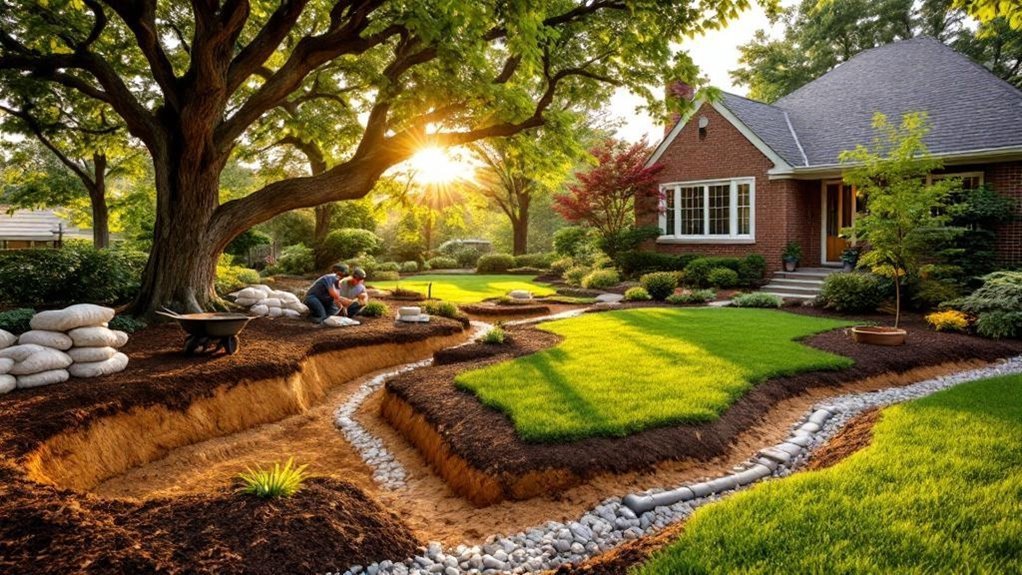
When drainage problems persist in spite of soil amendments, you’ll need to install engineered systems that redirect water away from planting areas and hardscape features. French drains, channel drains, and dry wells serve as effective drainage solutions for St. Louis properties with challenging clay conditions. You’ll want to evaluate terrain grading first—slopes should direct water at minimum 2% grade away from structures. For severe pooling issues, consider installing perforated pipe systems surrounded by gravel and geotextile fabric. These intercept subsurface water before it saturates plant roots. Your clients will benefit from proper drainage that prevents foundation damage, erosion, and plant loss. Always verify local codes before excavation, as St. Louis County requires permits for significant grading modifications and stormwater management installations.

Conclusion

Your scenery stands as a living blueprint—each season’s maintenance task represents a line in the specifications, every soil amendment a calculated adjustment to grade. You’ve engineered resilience through Zone 6b’s cycles, where dormant turf becomes your winter foundation and summer irrigation systems function as critical infrastructure. Clay soil amendments aren’t merely improvements; they’re structural corrections ensuring long-term viability. Execute these protocols consistently, and you’ll construct a sustainable ecosystem that performs beyond aesthetic requirements.

Filed Under: Uncategorized Tagged With: landscape maintenance, seasonal care, St. Louis

Transform Your Wildwood, MO Property: Expert Hardscape Design Ideas for West County Homes

October 16, 2025 By Zac Terrill Leave a Comment

hardscape design for homes

Your Wildwood property’s karst topography and expansive clay soils require engineered hardscape solutions that address St. Louis County’s stormwater ordinances while maximizing outdoor functionality. You’ll need geogrid-reinforced retaining walls for slope stabilization, permeable pavers that satisfy drainage codes, and native Missouri limestone that provides contextual harmony with the region’s geological character. Strategic site grading, subsurface drainage systems, and material selections based on load-bearing requirements transform challenging terrain into multi-level outdoor living spaces. The sections below detail specific design strategies tailored to West County’s unique environmental conditions.

Key Takeaways

  • Engineered retaining walls with geogrid reinforcement stabilize slopes on Wildwood’s challenging terrain with expansive clay soils and elevation changes.
  • Native Missouri limestone and permeable pavers provide drainage performance while meeting St. Louis County’s stormwater management ordinances.
  • Multi-level patios with 6-8″ risers create functional outdoor rooms while minimizing grading costs on sloped properties.
  • Circular driveways require 150-foot minimum frontage and enhance curb appeal through intuitive wayfinding and reduced vehicle reversing.
  • Premium porcelain pavers offer 8,000+ PSI freeze-thaw resistance, ideal for Wildwood’s climate and vehicular applications.

Why Wildwood’s Unique Terrain Makes Professional Hardscape Design Essential

professional hardscape design essential

As Wildwood sits atop the Ozark Plateau’s eastern edge, residential properties here contend with dramatic elevation changes, karst topography, and expansive clay soils that shift seasonally—conditions that render standard hardscape installations inadequate. You’ll need engineered retaining walls with proper geogrid reinforcement to manage slope stabilization. Terrain challenges demand site-specific grading analysis and subsurface drainage systems that redirect stormwater away from structures while preventing soil migration. Professional design solutions incorporate permeable pavers over compacted aggregate bases to accommodate clay expansion cycles. Your hardscape must integrate erosion control measures, proper footings below frost lines, and comply with St. Louis County’s stormwater management ordinances. Without thorough site assessment and structural engineering, installations fail prematurely, compromising both property value and neighborhood aesthetics.

Popular Hardscape Materials That Complement West County’s Natural Aesthetic

Once you’ve addressed Wildwood’s structural requirements, material selection becomes the determining factor in achieving hardscape installations that respond to West County’s limestone-rich woodland character. Native Missouri limestone establishes contextual harmony while providing exceptional drainage performance. Flagstone presents natural texture contrasts against native plantings, creating distinct circulation zones that improve accessibility for residents and guests. Permeable pavers represent eco-friendly options that satisfy stormwater management codes while reducing heat island effects across larger patio installations. Decomposed granite pathways integrate seamlessly with informal garden areas, offering ADA-compliant passages between hardscape zones. Weathered steel edging provides contemporary definition without overwhelming the site’s organic woodland aesthetic. Material combinations should reference existing geological formations visible throughout your property, ensuring your hardscape design functions as an extension of West County’s regional terrain character rather than imposed ornamentation.

Custom Patio Designs That Maximize Your Outdoor Living Potential

maximize outdoor living space

Strategic patio programming transforms underutilized rear yards into calibrated outdoor rooms that extend your home’s functional square footage throughout three seasons. Your design should address circulation patterns, sight lines, and microclimatic conditions specific to West County’s clay soils and seasonal temperature fluctuations.

Zone your patio according to use: dining areas require minimum 12’x14′ dimensions to accommodate patio furniture and ADA-compliant clearances. Cooking zones need proper setbacks from combustible materials per IRC guidelines. Shift spaces between hardscape and planting beds should incorporate permeable pavers to manage stormwater runoff.

Integrate outdoor lighting at grade changes and along primary pathways to guarantee safe navigation while highlighting key architectural features. Multi-level designs with 6-8″ risers create visual interest while responding to existing topography, minimizing grading costs for clients.

Stone Pathways and Walkways: Creating Flow Throughout Your Property

Well-conceived circulation networks establish spatial hierarchy while connecting disparate program areas across your property’s grade shifts and microclimatic zones. Your material selection directly impacts ADA compliance, drainage coefficients, and long-term maintenance requirements.

MaterialPermeability RateRecommended Application
FlagstoneHigh (gaps allow infiltration)Primary circulation routes
Decomposed GraniteMedium-HighSecondary pathways, ADA-accessible routes
Cut BluestoneLow (tight joints)Formal entries, high-traffic zones

Strategic pathway lighting improves wayfinding while meeting 0.5 foot-candle minimum illumination standards. You’ll want to integrate edge restraints and proper base preparation—typically 4-6 inches of compacted aggregate—to prevent settling and maintain grade changes. Consider sight lines, turning radii, and universal design principles when laying out your circulation framework.

Retaining Walls That Solve Drainage Problems While Adding Visual Appeal

functional terraced drainage solutions

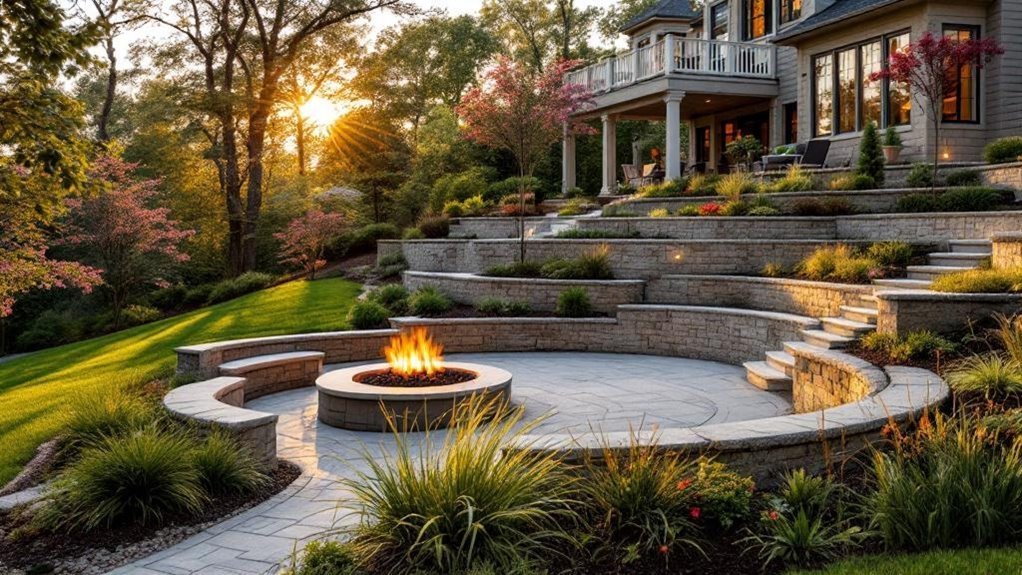
Retaining walls transform problematic slopes into functional terraced zones while intercepting subsurface water before it reaches your foundation or hardscape elements. When you’re addressing West County’s clay-heavy soils, integrate weep holes and perforated drainage pipes behind walls exceeding 18 inches in height. Engineered backfill systems channel water laterally, preventing hydrostatic pressure buildup that compromises structural integrity.

Select materials that complement your home’s architecture—natural limestone for traditional aesthetics, segmental concrete units for contemporary designs. You’ll maximize drainage solutions by incorporating stepped wall systems on severe grades, reducing individual wall heights while creating planting opportunities between tiers. Proper base preparation with compacted aggregate guarantees stability. These structures provide vital aesthetic improvement while solving erosion challenges, protecting your investment and creating usable outdoor spaces your family will enjoy for decades.

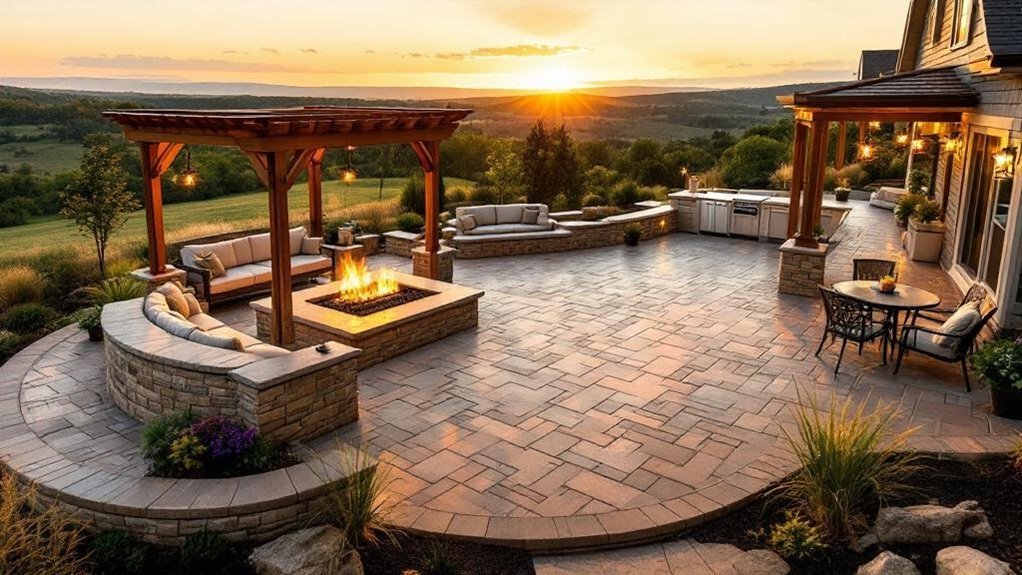
Outdoor Kitchen and Fire Feature Integration for Year-Round Enjoyment

Your outdoor kitchen’s functional success hinges on proper work triangle dimensions—position your grill, prep counter, and refrigeration within a 4-to-9-foot zone while maintaining minimum 42-inch traffic clearances per residential building codes. Fire features require strategic setoff distances: position fire pits at least 10 feet from structures and 3 feet from combustible materials, while integrating them as focal points that anchor conversation areas without compromising smoke dispersal patterns. In West County’s microclimate zones, orient cooking stations to leverage prevailing winds for smoke management and incorporate overhead structures at 7-foot minimum clearances to extend usability during shoulder seasons.

Cooking Stations and Layouts

When integrating cooking stations into West County hardscape designs, the spatial relationship between preparation zones, heat sources, and fire features determines both functional efficiency and year-round usability. Your outdoor cooking triangle should maintain 4-6 foot clearances between grill, sink, and prep surfaces while adhering to Missouri residential code requirements for combustible material setbacks.

Layout ConfigurationPrimary AdvantageIdeal Lot Condition
Linear GalleyMaximizes efficiencyNarrow yard setbacks
L-Shaped StationImproved workflowCorner patio positions
Island Integration360-degree accessExpansive hardscape zones

Layout improvement requires strategic placement of utilities—gas lines, water supply, electrical runs—within the hardscape substrate before material installation. Position cooking zones perpendicular to prevailing winds while maintaining adequate ventilation for enclosed structures.

Strategic Fire Feature Placement

Strategic fire feature positioning transforms outdoor kitchens into three-season entertainment spaces by creating thermal comfort zones that extend usability beyond St. Louis’s temperate months. When determining ideal placement, you’ll maximize both functional warmth and social connectivity for your guests.

Consider these fire feature types and spatial relationships:

  1. Linear gas features positioned 12-15 feet from primary seating establish ambient warmth without overwhelming conversation areas
  2. Circular fire pits centered between kitchen and lounge zones create natural gathering nodes while maintaining code-compliant clearances
  3. Fireplace installations anchoring outdoor room perimeters provide directional heat and architectural definition
  4. Portable features offering flexibility for varied entertainment configurations

Proper siting accounts for prevailing winds, smoke dispersal patterns, and minimum clearances from combustible materials—ensuring safe, comfortable experiences.

Driveway and Entrance Upgrades That Boost Curb Appeal

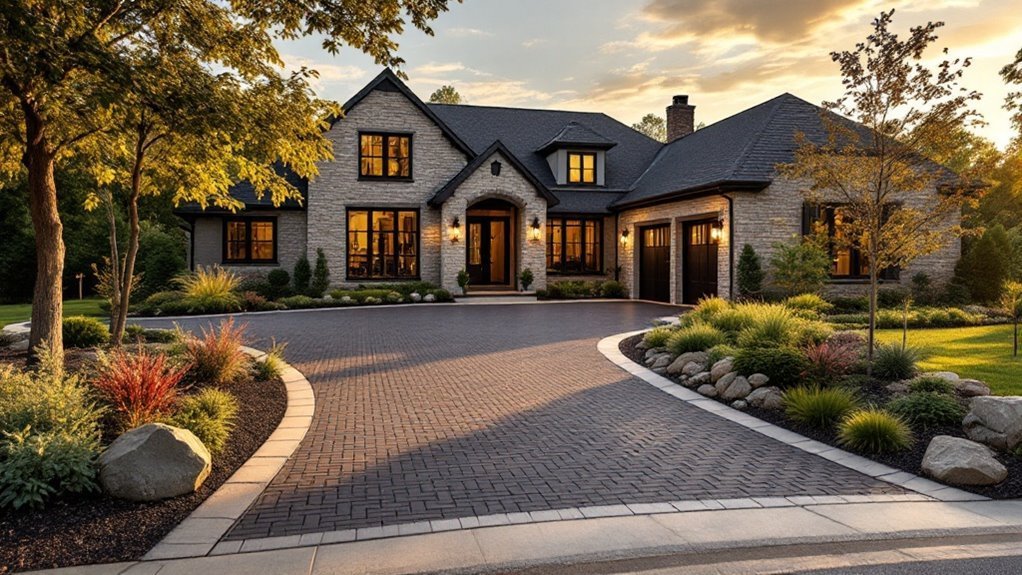
driveway design enhances aesthetics

Your driveway functions as the primary circulation element and sets the compositional tone for your entire property’s street-facing facade. Circular configurations reduce vehicle turning radius requirements while creating a formal forecourt condition that enhances arrival sequences beyond standard linear approaches. Material selection—whether permeable unit pavers, cut natural stone, or exposed aggregate concrete—must address West County’s drainage ordinances while establishing visual continuity with your home’s architectural character and existing hardscape palette.

Circular Driveway Design Options

A circular driveway reconfigures site circulation through a continuous loop that connects two points along your property’s street frontage, eliminating the need for vehicle reversing while establishing a formal arrival sequence. Your design requires minimum frontage widths of 150 feet and adequate setbacks to accommodate the turning radius while maintaining clear sight triangles per municipal standards.

Consider these material configurations for ideal performance:

  1. Permeable pavers with open-graded aggregate base to meet stormwater infiltration requirements
  2. Asphalt options with decorative borders defining the circulation path and entry court
  3. Gravel designs utilizing stabilization grids to prevent rutting in high-traffic zones
  4. Segmental concrete units creating geometric patterns that reinforce the axial approach to your entrance

You’ll achieve functional elegance while serving visitors through intuitive wayfinding.

Premium Paver Material Choices

While standard concrete provides serviceable performance, premium paver selections establish dimensional richness and tactile variation that conventional monolithic surfaces can’t achieve. You’ll find that paver thickness options directly correlate with load-bearing requirements—60mm units suit pedestrian applications, while 80mm specifications handle vehicular loads per ASTM C936 standards.

Material TypeCompressive StrengthWest County Suitability
Porcelain Pavers8,000+ PSIExceptional freeze-thaw resistance
Clay Brick3,000-5,000 PSITraditional aesthetic compatibility
Concrete Pavers8,000+ PSICost-effective versatility

Your color selection tips should prioritize coordination with existing masonry elements while considering long-term UV stability. Earth tones integrate seamlessly with Wildwood’s natural surroundings, creating unified shifts between hardscape zones and adjacent terrain materials.

Water Features and Pond Design for a Tranquil Backyard Oasis

Water features transform ordinary hardscape installations into dynamic sensory environments through deliberate integration of hydraulic systems, structural basins, and circulation mechanisms. Your Wildwood property benefits from professionally engineered pond designs that serve both aesthetic and ecological functions.

Consider these critical design elements:

  1. Excavation specifications: Achieve proper depth zones for aquatic plants and seasonal freeze protection
  2. Water filtration systems: Install mechanical and biological filtration to maintain clarity and ecosystem balance
  3. Edge detailing: Integrate natural stone coping with existing hardscape materials for seamless transitions
  4. Circulation infrastructure: Position pumps and plumbing for ideal flow patterns and maintenance access

You’ll create restorative outdoor spaces that improve community wellness while demonstrating environmental stewardship through thoughtful water resource management.

Maintaining Your Hardscape Investment: Tips for Long-Term Beauty and Function

hardscape maintenance for longevity

Every hardscape installation requires systematic maintenance protocols to preserve structural integrity and aesthetic performance across seasonal cycles. You’ll need to implement targeted seasonal maintenance schedules addressing West County’s freeze-thaw conditions. Inspect joint sand levels in permeable pavers quarterly, replenishing as needed to maintain structural interlock and drainage capacity. Schedule annual pressure washing at 1,500-2,000 PSI to remove organic accumulation without compromising surface integrity. Monitor grading around retaining walls and drainage systems, particularly after storm events. Address hardscape repairs immediately when you observe settlement patterns, mortar deterioration, or efflorescence on stone surfaces. Seal natural stone every 2-3 years using breathable penetrating sealers that accommodate thermal expansion. Your proactive maintenance approach protects installation investment while ensuring code-compliant performance standards that serve your community’s long-term environment resilience.

Conclusion

You’ll find that Wildwood’s topographic complexity—with slopes averaging 8-12% grade variation—demands hardscape solutions that aren’t merely decorative but structurally integral to your site’s performance. Your investment in properly engineered retaining systems, permeable paving, and graded drainage pathways protects against soil erosion while creating functional outdoor rooms. When you’re working with a professional who understands West County’s soil composition and municipal setback requirements, you’re actually building infrastructure that responds to your property’s unique hydraulic patterns and spatial constraints.

Filed Under: Latest News Tagged With: hardscape design, outdoor living, stormwater management

  • « Previous Page
  • 1
  • 2
  • 3
  • Next Page »

Contact Us

St. Louis Landscaping Company Call us for a free quote 636.405.2443

Follow Us

  • Facebook
  • LinkedIn
  • Twitter

Authorized Belgard Dealer

Client Log In | Terms & Services | Privacy Policy

Copyright © 2017 Terrill Landscape Contracting. All Rights Reserved.